Virginia Woolf’s Moments of Being

Ground breaking author Virginia Woolf is certainly one of the most respected writers of the twentieth century and any current writer, whether mainstream or cutting edge, can improve their work by learning something about her unique abilities. What was at the heart of Woolf’s unusual approach to writing? She once said, “I have some restless searcher in me,” indicating that a process of discovery was the basis of her life and work. For what was she searching?
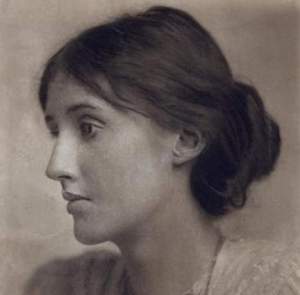
Young Virginia Woolf, 1902

Woolf believed even trivial incidents can have intense emotional significance. She treasured certain moody moments of being and used them to great effect in her work. (Image: public domain)

We find the answer in Woolf’s first novel, The Voyage Out. Her young impressionable protagonist, Rachel Vinrace, takes ship for South America on a vessel owned by her father. During the voyage, her interaction with an odd assortment of passengers radically broadens her horizons. She has come from a secluded life in a London suburb, but exposure to challenging intellectual discourse and stimulating new ideas starts a process of rapid growth. She quickly transcends the limitations of her stuffy upbringing. She has begun an exciting psychological voyage of self-discovery.

Continue reading “Virginia Woolf’s Moments of Being”
Remembering a Falling Leaf

I have kept a diary on and off for over twenty years. The other day, while glancing through some pages, I came across an unusual entry from November 16, 1997. At that time, Carl Jung’s ideas about the unconscious mind had taken over as my primary interest. His notions of archetypes, the anima / animus, and the collective unconscious intrigued me. I had begun to notice the little clues the unconscious always leaves for those who are paying attention.

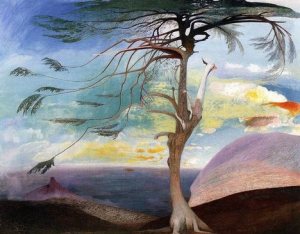
Tree by Varadi Zsolt

On a still autumn evening I could hear withered leaves slithering to the ground. My unconscious mind began making associations…
(Image: public domain.)

Some Christians believe that to be close to the unconscious is to be close to God. I am not religious, but I do understand why they might feel that way. In 1997, I was living in the country on a heavily wooded five-acre hillside lot. Young cottonwood trees surrounded the house. Placid deer grazed clover at my back door. Elusive cougars, following the deer herd, left huge paw prints on the driveway’s soft sandy edges. In that wilderness setting, one remarkably calm autumn evening in November, I experienced a particularly charming example of unconscious magic.

Continue reading “Remembering a Falling Leaf”

The Nature of Genius

What is genius? There is no such thing in the usual usage of the word. Genius is a title we confer on those who do remarkable things in their field. It is like being knighted, made a Commander of the British Empire, or winning a lifetime achievement award. In a way similar to such honours, which persons are awarded the status of genius is largely a matter of circumstance.

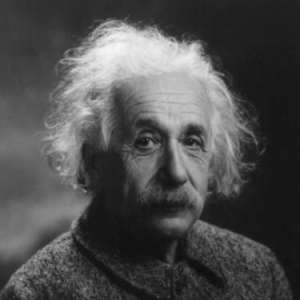
Albert Einstein

Genius combines reason with imagination, a unity most easily seen in the visual arts, but also there in the ground-breaking work of scientists such as Albert Einstein. (Image: public domain.)

What we ultimately label as genius is the product of a highly evolved mind. We are not born with such minds. We acquire them through long effort. To become a genius one must pursue some line of enquiry, or some art, long enough and thoroughly enough to acquire a high degree of sophisticated knowledge. In turn, that accumulating knowledge generates increasingly powerful thinking about the enquiry or art. Creativity research has shown that the mind is self-organizing. The process of becoming skilled enough to earn the title “genius” happens without our conscious awareness.

Continue reading “The Nature of Genius”

Art Imitates and Instructs

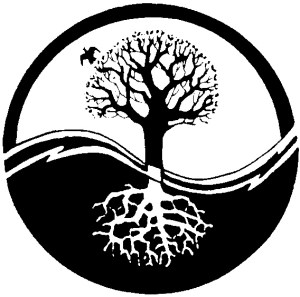
Yin Yang Tree

In a two-sided manner, artists imitate life while presenting a moral or aesthetic message. (Image: public domain.)

The Two Aspects of Art

Art has a dual role: to imitate life and to instruct. Nowhere in art is this duality more important than in the art of writing. Words can tackle complex issues in ways that painting, sculpting, or dance, simply cannot. This is not to suggest other art forms have nothing to say. It is just that writing goes beyond the brilliant snapshots of painting and sculpture, however perceptive, suggestive, and evocative they may be, and can pack more into a couple of hours exposure than any ballet or modern dance performance. Words transcend emotion, beauty, and grace to tackle the difficult worlds of abstract ideas and morality.

Does this seem beyond the concern of genre writers who may be working in, for example, the science fiction or fantasy categories? It simply is not so. As I have pointed out in my earlier post, “Indie Writers Are Artists Too,” even the most genre-oriented writers need to understand that everything they write has a message, even if they are unaware of what that message is. Good writers – good artists – take charge of their message to make sure their work says something they believe in.

Continue reading “Art Imitates and Instructs”

The Tao of Writing

“A good artist lets his intuition lead him wherever it wants.” – Lao Tzu

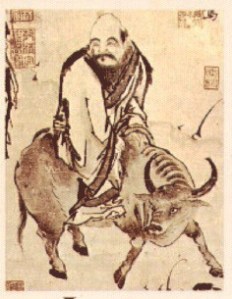
Ancient drawing of Lao Tzu riding the ox

In practice, relying on intuition to guide your writing can lead you badly astray in ways that are hard to fix. (Image: public domain.)

In my experience, following your intuition can lead to poorly organized works of unwieldy size. Doesn’t that remind you of the movie, “The Princess Bride”? You know, the part in the fire swamp with the ROUS or “rodents of unusual size.” Big rats, in other words. Anyway, I started my first fantasy novel (still unfinished!) in the mid-nineties. I decided to write “off the cuff” (no outline, no plan – I was really big on Taoism in those days) and set myself the goal of writing six pages every evening. The pace was too much for me, yet three months or so later, I had 200 pages of prose on my trusty Macintosh Classic II (with the deluxe 40 MEGAbyte hard drive – quaint, yes?).

Continue reading “The Tao of Writing”

A Visionary View of Writing

Often quoted on art, visionary British poet and painter, William Blake, had very definite views on what makes art great. “The great and golden rule of art is this: that the more distinct, sharp and wiry the bounding line, the more perfect the work of art: and the less keen and sharp, the greater is the evidence of weak imagination, plagiarism and bungling.”

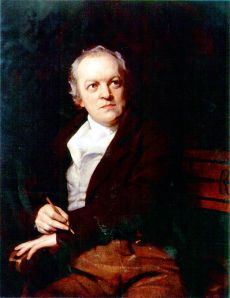
William Blake by Thomas Phillips

William Blake’s insightful thoughts on writing and creativity have long inspired famous creators. (Image: public domain.)

This is sound advice every writer should absorb. Blake means you must avoid the general and go for the particular, the specific, the unique, the distinctive. These days we might use the word “generic” to describe what he stands so vehemently against.

Continue reading “A Visionary View of Writing”

Indie Writers Are Artists Too

Brian S. Pratt

Fantasy author Brian S. Pratt is an excellent example of an indie writer who has achieved remarkable success.

All writing is a kind of art. The most popular forms (fantasy, for instance, or horror and vampire novels) are examples of folk art. They are to literature what country music is to classical. (That is, unless you happen to be Bram Stoker!) Indie writers can be rough around the edges, but they are artists nonetheless. If you are an indie, seeing yourself as an artist can help you take yourself – and your work – more seriously. Writers who take themselves seriously become better writers.

Writing about art has always been a popular pastime for artists of every kind, and a few philosophers as well. Younger indies, however, may not yet have seen much of this, so I will put a few choice tidbits on the table.

Tolstoy writes, “The business of art lies in just this, – to make that understood and felt which, in the form of an argument, might be incomprehensible and inaccessible…” For writers, this means the dramatizations of fiction can make clear what real life discussion, or even the carefully worded arguments of non-fiction, cannot. Fiction can arouse our emotions in just the right way to drive the point home.

Continue reading “Indie Writers Are Artists Too”

Dedicating Your Life to Writing

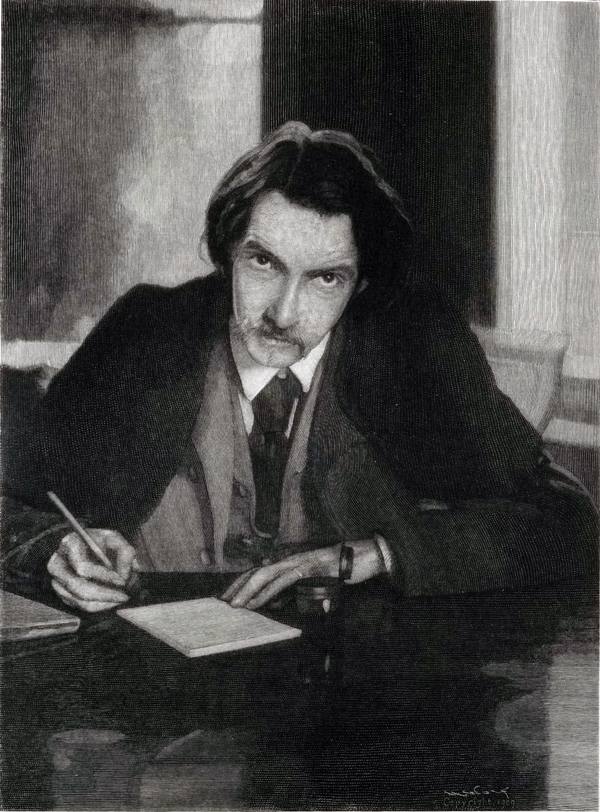
Robert Louis Stevenson writng at his desk.

Unable to sway his obstinate father, young Robert Louis Stevenson had to justify to himself his decision to pursue writing rather than a more realistic means of earning a living. (Image: public domain)

The Dedicated Writer

Not all writers want to dedicate their lives to their art, but as Virginia Woolf has noted, many people who write want to do nothing else. Those who love literary biographies can attest to the remark’s salient truth. Are you among those for whom the urge to write is so strong it eclipses all other ambitions? If you are, then you have – whether you consciously realize this or not – joined those who want to dedicate their lives to art. Give this some thought. The single most effective way to enhance your work’s power is to have a clear understanding of what you want and what you are doing.

Continue reading “Dedicating Your Life to Writing”

Guides to Understanding Creativity

If you are at all serious about being a writer, you need to know something about what it means to be a creative person. Few successful writers reach the heights without at least a rudimentary philosophical take on what they are doing. Luckily, creativity has spawned an entire writing genre with many fine books on the topic.

The Dynamics of Creation Cover

Anthony Storr is unsurpassed when it comes to writing about creative people and the mysteries of the creative process.

My Favourite Creativity Author

When it comes to books about creativity, my favourite author has to be Anthony Storr. No one does a better job of choosing the revealing anecdotes from creators’ lives. Being a psychiatrist himself, he is unsurpassed when discussing the motivation and attitudes behind the activities of creative individuals. He skilfully weaves anecdote and psychology into a lively, fascinating, and enlightening view of what creative people are like. His strong emphasis on creativity’s rewards is inspiring. All of Storr’s books are jargon-free and a pleasure to read. Here are three of his titles with a comment or two about each one.

Continue reading “Guides to Understanding Creativity”

Review: Revolution by Rachel Cotterill

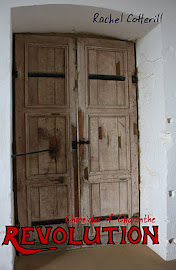
Revolution - front cover

Revolution is a fast paced, engrossing, and enjoyable read.

Rachel Cotterill’s second novel, Revolution, is another fast-paced adventure fantasy, and something of an accomplishment. A sequel to Rebellion, the book continues the exciting adventures of the interesting and remarkably independent hero Eleanor. The knife fights keep coming, the rousing action remains all pell-mell and helter-skelter, yet, astonishingly, Eleanor gives birth to two children in the course of the book. Even more surprising is the way Cotterill manages to keep Eleanor in the thick of things – and make it believable.

The political situation laid out in Rebellion is – as you might infer from the title – overturned in Revolution and the story heads off in a fresh direction. Martial arts share centre stage with the classic “ordinary people versus the oppressors” theme. As the book progresses, and Eleanor takes on a major leadership role, she comes across increasingly like a feminine Robin Hood. She even has her own Little John. A fellow revolutionary – by the name of Dash – upends her in a practice knife fight. As with good old Robin after Little John and his quarterstaff have knocked him into the drink, Eleanor takes it all in stride.

Continue reading “Review: Revolution by Rachel Cotterill”