Where Creative People Get Their Ideas

Where do creative people get their inspiration? There are probably as many answers to that question as there are creators, and in all likelihood, every creator uses more than one source. However, such non-specific statements explain nothing. An example or two, while indicating only a miniscule portion of the possibilities will be far more illuminating.

The painting titled Golden Light by John Atkinson Grimshaw.

Trivial incidents in an artist’s life can inspire complex works. Art can sometimes inspire art.

This may not always be obvious, but all inspiration is actually a two-part process. There is an outer stimulus, and there is an inner response. The inward component goes beyond the pure emotional response to the experience. What the creative individual feels, stimulates some deeply held emotion-laden idea or value. There is energizing resonance.

Continue reading “Where Creative People Get Their Ideas”

Is Genre Fiction Junk Fiction?

In these days of inclusivity, equality, and the breaking down of barriers, there are those (both writers and readers) who would abolish the boundary between literary and genre fiction. Some now say that genre writers are striving for the same things as literary writers; they just do it in a different, more accessible, reader-friendly kind of way. That is to say, literary writers are just a bunch of stuck-up snobs who look down on hard-working genre writers for no good reason. If this is true, then either everything is literature, or everything is genre fiction. The argument has successfully removed the time-honoured distinction.

Row of Old Leather Bound Books

In this age of inclusivity we must not lose sight of the difference between literature and genre fiction.  (Image: public domain.)

Continue reading “Is Genre Fiction Junk Fiction?”

The Creative Magic of Absorption

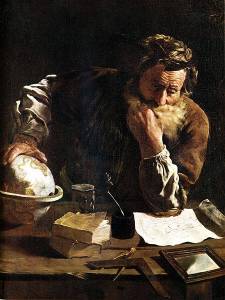
The way to get creative projects rolling is to get enthusiastic about them. We must keep thinking about what we propose to do long enough for the priming effect of absorption to begin drawing forth the relevant ideas and information from our inner and outer lives. Isaac Newton believed that to solve a problem required “thinking on it continually.”

Archimedes by Domenico Fetti (1620)

We are at our creative best when completely absorbed in what we are doing. (Photo: Wikipedia)

By continually thinking about our project, we get into the creative mood specific to that project. A cocoon or atmosphere of feeling surrounds what we are doing. We have enveloped ourselves in a creative possibility cloud. As our mood-focussed attention gathers the relevant ideas, images, and bits of information around the emotional nucleus, the proposed project will take shape and the momentum will steadily increase. American sculptor Louise Nevelson said of the artist’s work, “It absorbs you totally, and you absorb it totally, everything must fall by the wayside by comparison.”

Continue reading “The Creative Magic of Absorption”

Androgynous Minds Generate Synergistic Thinking

I have written elsewhere that the most creative among us possess the power to combine linear conceptual thinking with non-linear associative thinking. This ability to unite the two thinking modes works the creative magic that sets these people apart. A person who heavily favours one mode of thought over the other will inevitably lack outstanding creative powers.

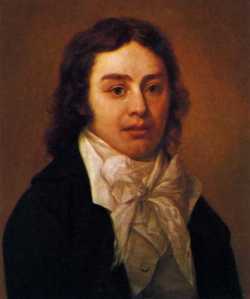
Samuel Taylor Coleridge

Samuel Taylor Coleridge claimed that a “great mind must be androgynous.” (Image: Wikimedia)

Just such a situation exists in the minds of ordinary men and women. It is unfashionable to say so, but the fact remains that, overall, men favour a preponderance of abstract, conceptual, linear thinking while women prefer a greater reliance on associative non-linear thinking, source of the old-fashioned, and misnamed, “women’s intuition.” Therefore, being normally one-sided, most of us are limited in our creative reach.

Continue reading “Androgynous Minds Generate Synergistic Thinking”

Using Mood to Enhance Your Creativity

Scientists studying human cognition have found that memory and mood are inextricably intertwined. Even more interesting is that we can take advantage of this situation by using a simple technique known as nuance priming.

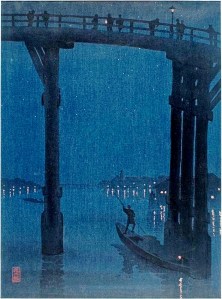
Moody Night Scene on the River

We can deliberately use mood to enhance our ability to notice relevant information within ourselves and in the world around us. (Image: Vintage Printable)

Nuance priming is also a creativity research term. It means recalling or getting into a particular mood in order to exploit the brain’s habit of using feeling tones to sort and store information in related clusters called emotional cognitive structures. This is a fancy way of saying that the brain files ideas and memories in groups according to their feeling tone. Recall feeling tone X and we will get access to other things stored with the same, or similar, mood. This is a kind of deliberate associative (as opposed to logical) thinking. However, we are not actually doing the associative thinking. We are setting up a scenario to make use of the brain’s natural associative way of doing things.

Continue reading “Using Mood to Enhance Your Creativity”

Creativity Can Cause Anxiety

Being Creative Means Taking Risks

Creativity involves a thought that goes beyond the generally accepted, provokes anxiety in others and tests the security of one’s own perceptions. – Peter Lomas in Cultivating Intuition

Anxiety is the hand maiden of creativity. – T. S. Eliot

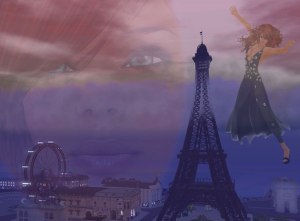
Surreal image of a ghostly face, and a woman flying near the Eiffel Tower

Strong innovation, striking originality, and prolonged gestation periods can all generate feelings of anxiety.
(photo: publicdomainpictures.net)

These quotes may explain why so many great creators show signs of psychological stress. Depression is famously common among writers, for example. However, this is not to say that mental disorder is necessary for creativity to flourish.

Continue reading “Creativity Can Cause Anxiety”

How Artists and Scientists Explain the World

The Cosmos We Seek to Explain

Artists and scientists explain the world in very different ways. Surprisingly, scientists are abstract while artists are concrete. (Image: public domain.)

A crucial aspect of all creative work is the attempt to garner, and then communicate, insights into our lives and the world in which we live. The shallower forms of popular psychology seem to have influenced many creativity researchers and authors who write books about the creative process. One commonly meets the claim that the creative process is identical in both artists and scientists. In fact, to wander just a bit, some writers go so far as to say everyone probably has the same capacity for creativity. It just manifests in different ways depending on where the individual’s interests lie or what his life situation is. These notions may sell books by making the average person feel they are as creative as anyone else is, but they do nothing to explain the obvious reality that some folks stand far above the rest when it comes to creative ability.

Continue reading “How Artists and Scientists Explain the World”

Writing Gives Thoughts Value

A few useful thoughts and inspiring insights on creativity and the writing process.

 An Illustrated Version of William Blake's Poem, The Tyger

Do your thoughts have any value if you keep them to yourself? (Image: public domain.)

Writing Begins Things

Writing is about making beginnings. It is about bringing something into existence that did not exist before. All true art works in this way.

Finding a Way In

The hardest part of any task is getting started, finding a way in. This can be especially true with writing where one must establish so much early on.

Plan Writing Ahead

It is easier to get out of bed in the morning if one has a clear and precise knowledge of the work one will be doing that day. I think it a wise thing to plan the next day’s work the evening before.

Continue reading “Writing Gives Thoughts Value”

Living the Creative Life

Creative people view life a little differently than does the average person. They manifest a much greater degree of commitment to their work. A notable result of this dedication is their highly selective attitude towards what they will and will not do with their time. Much more than the typical individual, they recognize that time is a limited resource and must not be squandered if something is to be accomplished.

Thomas Edison in His Lab

We have all heard the stories of how the creative Thomas Edison practically lived at his lab. (Photo: Wikimedia)

Creative individuals do not waste energy on unsolvable problems. They do not indulge in what Virginia Woolf so aptly referred to as “woolly thinking.” To achieve this efficiency, they develop the skill to recognize what is feasible and what is not. Going back another step, they are able to acquire the ability to assess feasibility because they immerse themselves completely in their work (commitment again) and learn its parameters and boundaries with unusual thoroughness. When they decide to tackle a project, they know it is workable in the long run.

Continue reading “Living the Creative Life”

How Artists Develop Their Artistic Vision

Artists must develop over time, and they do this by examining and exploring the implications and ramifications of their personal vision of existence. In other words, they explore their philosophy of life. When the artist combines this activity with their view of a particular branch of the arts, what emerges is their artistic vision; the artist’s preferred subject matter and style. The combination is sometimes so unique that the artist’s works, whatever they may be, are instantly recognizable.

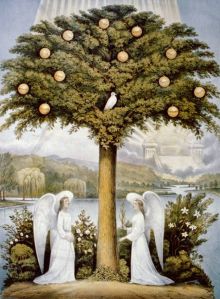
Tree of Life with Angels and Rivers

Many creators hold their personal artistic vision with religious zeal. (Image: public domain)

Artists create because they want to express their vision. Their powerful need to make sense of life  means they create for their own edification as much as anyone else’s. Yet each artist has his own way of thinking about the nature of vision. Joseph Conrad described vision as, “the inward voice that decides.” Things were more fluid for Virginia Woolf who declared, “The vision must be perpetually remade.”

Continue reading “How Artists Develop Their Artistic Vision”