How to Develop Your Story Idea into a Plot

Overview

Here are some insights into the process of turning a basic story idea into a structured plot. The brief discussion is tailored for the writer of plot-dominated stories or genre fiction.
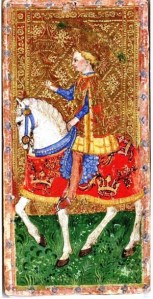
Tarot card showing a knight on horseback

The hero of your story faces change and must struggle against a villain to reach a clearly stated goal.

Start with a Critical Moment of Change

All stories start with an idea, but an idea is only the kernel, the seed. The way to transform an idea into a story is to generate a plot. Within the context of your idea, begin with a moment of change for the main character. This has power because change of any kind is threatening. Right away, the reader wants to know how your character will deal with the threat. Therefore, the realization of change is the point where your story begins. To work well, the change must be of sufficient depth and seriousness; it must matter to the character; it must be something the reader can relate to and identify with.

In essence then, a situation exists, but something important has changed. The main character is threatened. Their position is no longer secure. They vow to struggle. They choose a goal and take action towards achieving it. Bingo! The story is underway. Once things are moving, the main character must encounter a variety of difficulties, complications, and opposition. Make sure there are many fights (these can be merely verbal). The main character, or “hero,” needs a rival, the “villain,” with goals that oppose and conflict with the goal chosen by the hero at the beginning of the story.

Continue reading “How to Develop Your Story Idea into a Plot”
Virginia Woolf’s Moments of Being

Ground breaking author Virginia Woolf is certainly one of the most respected writers of the twentieth century and any current writer, whether mainstream or cutting edge, can improve their work by learning something about her unique abilities. What was at the heart of Woolf’s unusual approach to writing? She once said, “I have some restless searcher in me,” indicating that a process of discovery was the basis of her life and work. For what was she searching?

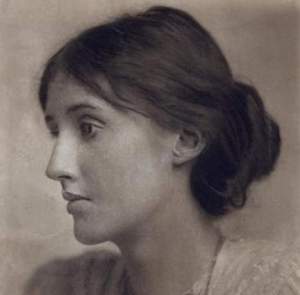
Young Virginia Woolf, 1902

Woolf believed even trivial incidents can have intense emotional significance. She treasured certain moody moments of being and used them to great effect in her work. (Image: public domain)

We find the answer in Woolf’s first novel, The Voyage Out. Her young impressionable protagonist, Rachel Vinrace, takes ship for South America on a vessel owned by her father. During the voyage, her interaction with an odd assortment of passengers radically broadens her horizons. She has come from a secluded life in a London suburb, but exposure to challenging intellectual discourse and stimulating new ideas starts a process of rapid growth. She quickly transcends the limitations of her stuffy upbringing. She has begun an exciting psychological voyage of self-discovery.

Continue reading “Virginia Woolf’s Moments of Being”

The Nature of Genius

What is genius? There is no such thing in the usual usage of the word. Genius is a title we confer on those who do remarkable things in their field. It is like being knighted, made a Commander of the British Empire, or winning a lifetime achievement award. In a way similar to such honours, which persons are awarded the status of genius is largely a matter of circumstance.

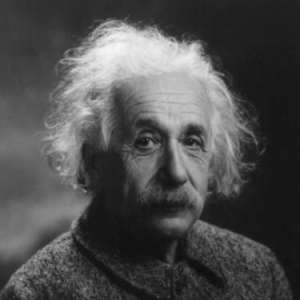
Albert Einstein

Genius combines reason with imagination, a unity most easily seen in the visual arts, but also there in the ground-breaking work of scientists such as Albert Einstein. (Image: public domain.)

What we ultimately label as genius is the product of a highly evolved mind. We are not born with such minds. We acquire them through long effort. To become a genius one must pursue some line of enquiry, or some art, long enough and thoroughly enough to acquire a high degree of sophisticated knowledge. In turn, that accumulating knowledge generates increasingly powerful thinking about the enquiry or art. Creativity research has shown that the mind is self-organizing. The process of becoming skilled enough to earn the title “genius” happens without our conscious awareness.

Continue reading “The Nature of Genius”

Art Imitates and Instructs

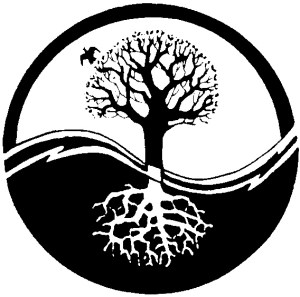
Yin Yang Tree

In a two-sided manner, artists imitate life while presenting a moral or aesthetic message. (Image: public domain.)

The Two Aspects of Art

Art has a dual role: to imitate life and to instruct. Nowhere in art is this duality more important than in the art of writing. Words can tackle complex issues in ways that painting, sculpting, or dance, simply cannot. This is not to suggest other art forms have nothing to say. It is just that writing goes beyond the brilliant snapshots of painting and sculpture, however perceptive, suggestive, and evocative they may be, and can pack more into a couple of hours exposure than any ballet or modern dance performance. Words transcend emotion, beauty, and grace to tackle the difficult worlds of abstract ideas and morality.

Does this seem beyond the concern of genre writers who may be working in, for example, the science fiction or fantasy categories? It simply is not so. As I have pointed out in my earlier post, “Indie Writers Are Artists Too,” even the most genre-oriented writers need to understand that everything they write has a message, even if they are unaware of what that message is. Good writers – good artists – take charge of their message to make sure their work says something they believe in.

Continue reading “Art Imitates and Instructs”

The Tao of Writing

“A good artist lets his intuition lead him wherever it wants.” – Lao Tzu

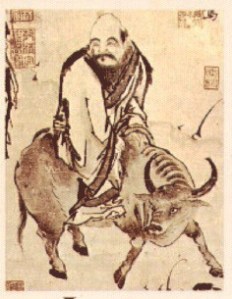
Ancient drawing of Lao Tzu riding the ox

In practice, relying on intuition to guide your writing can lead you badly astray in ways that are hard to fix. (Image: public domain.)

In my experience, following your intuition can lead to poorly organized works of unwieldy size. Doesn’t that remind you of the movie, “The Princess Bride”? You know, the part in the fire swamp with the ROUS or “rodents of unusual size.” Big rats, in other words. Anyway, I started my first fantasy novel (still unfinished!) in the mid-nineties. I decided to write “off the cuff” (no outline, no plan – I was really big on Taoism in those days) and set myself the goal of writing six pages every evening. The pace was too much for me, yet three months or so later, I had 200 pages of prose on my trusty Macintosh Classic II (with the deluxe 40 MEGAbyte hard drive – quaint, yes?).

Continue reading “The Tao of Writing”

A Visionary View of Writing

Often quoted on art, visionary British poet and painter, William Blake, had very definite views on what makes art great. “The great and golden rule of art is this: that the more distinct, sharp and wiry the bounding line, the more perfect the work of art: and the less keen and sharp, the greater is the evidence of weak imagination, plagiarism and bungling.”

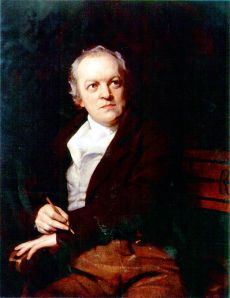
William Blake by Thomas Phillips

William Blake’s insightful thoughts on writing and creativity have long inspired famous creators. (Image: public domain.)

This is sound advice every writer should absorb. Blake means you must avoid the general and go for the particular, the specific, the unique, the distinctive. These days we might use the word “generic” to describe what he stands so vehemently against.

Continue reading “A Visionary View of Writing”

Dedicating Your Life to Writing

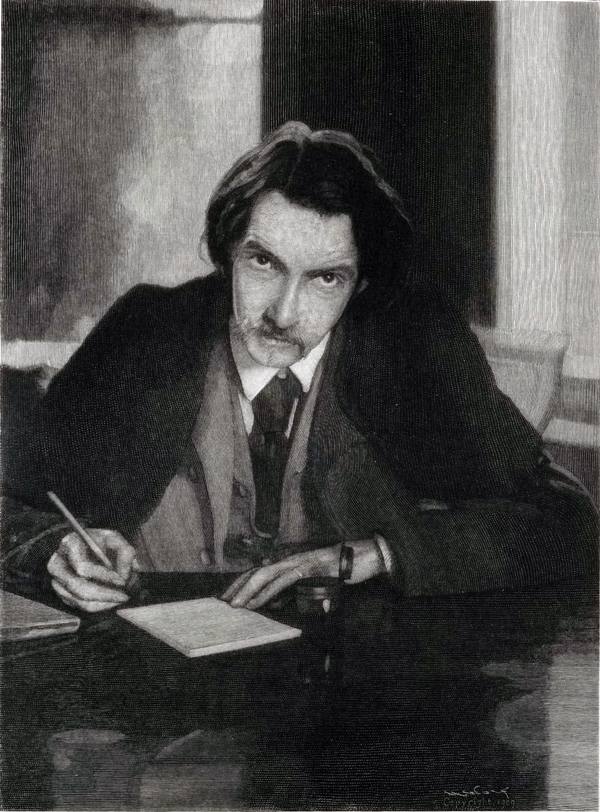
Robert Louis Stevenson writng at his desk.

Unable to sway his obstinate father, young Robert Louis Stevenson had to justify to himself his decision to pursue writing rather than a more realistic means of earning a living. (Image: public domain)

The Dedicated Writer

Not all writers want to dedicate their lives to their art, but as Virginia Woolf has noted, many people who write want to do nothing else. Those who love literary biographies can attest to the remark’s salient truth. Are you among those for whom the urge to write is so strong it eclipses all other ambitions? If you are, then you have – whether you consciously realize this or not – joined those who want to dedicate their lives to art. Give this some thought. The single most effective way to enhance your work’s power is to have a clear understanding of what you want and what you are doing.

Continue reading “Dedicating Your Life to Writing”

Guides to Understanding Creativity

If you are at all serious about being a writer, you need to know something about what it means to be a creative person. Few successful writers reach the heights without at least a rudimentary philosophical take on what they are doing. Luckily, creativity has spawned an entire writing genre with many fine books on the topic.

The Dynamics of Creation Cover

Anthony Storr is unsurpassed when it comes to writing about creative people and the mysteries of the creative process.

My Favourite Creativity Author

When it comes to books about creativity, my favourite author has to be Anthony Storr. No one does a better job of choosing the revealing anecdotes from creators’ lives. Being a psychiatrist himself, he is unsurpassed when discussing the motivation and attitudes behind the activities of creative individuals. He skilfully weaves anecdote and psychology into a lively, fascinating, and enlightening view of what creative people are like. His strong emphasis on creativity’s rewards is inspiring. All of Storr’s books are jargon-free and a pleasure to read. Here are three of his titles with a comment or two about each one.

Continue reading “Guides to Understanding Creativity”

Writers, Solitude, and Creativity

“Conversation enriches the understanding, but solitude is the school of genius…” – Edward Gibbon

Writers sometimes live solitary lives in remote places so they can devote more time to their work.

Writers sometimes live simple solitary lives in remote places so they can devote more time to their work. Yet there are times when solitude is just a state of mind. (Image: public domain)

The widespread self-publishing phenomenon is new, and while there are plenty of older people such as myself involved – or soon to be involved – a majority of new writers are young. A great many of these new or wannabe authors are too young to have the usual underpinnings acquired by writers in the traditional publishing paradigm. With that system, seeing their work in print often took many years, so struggling writers had plenty of time to learn the more philosophical aspects of their profession. Those aspects deepen writers giving their work more intellectual penetration, emotional depth, intensity, and sophistication.

Continue reading “Writers, Solitude, and Creativity”

A Few Select Books About Writing

I would like to recommend a few how-to-write titles. Every author collects a small shelf of these books as they learn their craft. You may have a few (or a lot) already. If you do, then you probably have your own favourites. Perhaps I can add a title or two to your list. If you are just beginning, the books here will ensure you get off to a good start.

Bookshelves with assorted books.

From the earliest days of writing, aspiring authors have garnered shelves of books about writing in all its aspects. A few select titles become inspiring favourites. (Image: Wikimedia)

I am new to being an indie, but I have been writing for over twenty years – mostly as a keep-me-sane hobby in a chaotic world. Yet, I still like to revisit the odd how-to-write manual now and then. Doing this helps eject any bad habits that may have crept in (and they do keep creeping in!). Some of the recommended books go back a ways, but sound writing principles have not changed over the years. The classic books about writing are the ones found useful by large numbers of writers. Many of today’s most successful writers (of any kind) got started with these very books.

Continue reading “A Few Select Books About Writing”