The Constant Self Is Real

When feelings such as loneliness, loss, and placelessness assail them, people often get into serious emotional trouble. It is interesting to note that, when some people experience such feelings, they do not turn inward for an explanation of their own emotions. They do not even turn to psychology or philosophy, external knowledge bases which would give them some inkling of what is happening to them and are therefore relevant to their condition. Instead, they turn to spiritual belief systems. With Christianity, the West’s traditional religion, now fallen from favour, troubled individuals feel they must look elsewhere for spiritual comfort and understanding. With increasing regularity, they turn to godless belief systems such as Buddhism and Taoism. The absence of any moralizing god and the possibility of solitary spiritual practice are powerful attractions. That is, people prefer a godless belief system with no churches or temples and no organized religious service. We might call this, “do it yourself” spirituality.
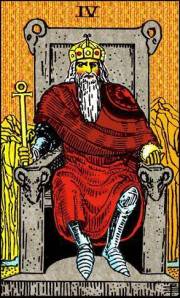
Tarot card showing the emperor on his throne

The authentic self is real, constant, and stable. Once found and accepted, it can provide a centre, still point, and anchor in life. (Image: public domain.)

Continue reading “The Constant Self Is Real”

Does Old Age Mean Nothing Left to Lose?

Jungian analyst and author, Helen M. Luke, wrote a number of volumes of insightful literary criticism and numerous philosophical essays with a strong spiritual aspect. In the collection titled simply, Old Age, she writes about growing old wisely. Her work is always worth reading. However, as she grew old herself she became something of a defeatist, and as have so many others in the West, seems to have fallen under the influence of Buddhism. She nihilistically exhorts us, as we grow old, to “let go of much that has been central even to our inner lives.” She proposes abandoning “the wisdom and grace which have come to us through the active years of our lives.”

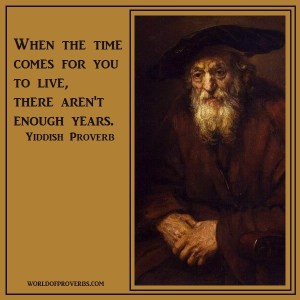
Old Man and Old Age Proverb

While much else may have fallen away, wisdom and strengthening inner resources are the just rewards of a long life. Make sure you preserve them.

Continue reading “Does Old Age Mean Nothing Left to Lose?”

The Guiding Hand of the Unconscious Mind

Many people who work with, or are simply aware of, the unconscious see this portion of the mind in a reverential way. Jungian psychologist Helen M. Luke called it the “mystery within.” This inner mystery is thought to harbour all sorts of powers, some wonderful, some potentially dangerous. For Luke, one wonderful power was dreams. All her life she assiduously recorded and analyzed her dreams, and used them as a guide. Reading her journals and diaries, we acquire the distinct impression that her dream life meant more to her than her waking one. Luke also venerated the unconscious powers of creation that inspired her writing.

Galahad by George Frederic Watts

The sense of the numinous generated by the unconscious mind can lead us on a great quest for self-discovery and lifelong self-realization. (Photo: Wikimedia)

Continue reading “The Guiding Hand of the Unconscious Mind”

Do You Know What You Really Want?

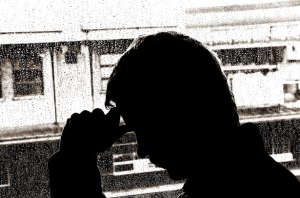
Have you become discouraged in life? Has it occurred to you to question what you are doing, or where you are going? Does the nagging feeling that “there must be more to life than this” eat away at you? Worse, have you entered the “midlife crisis” or had a full-blown psychological breakdown? All these things are distressing to one degree or another, and all, even the less pressing, require a remedy. They all stem from a loss of personal vision. That loss has come about because of an inner conflict, a conflict that probably remains below the threshold of conscious awareness.

Silhouette of depressed man

Not knowing what you want can cause debilitating depression. There is a remedy, and you are already carrying it around with you. (Photo: Public Domain Pictures)

Continue reading “Do You Know What You Really Want?”

Revealing New Angles on Psychology

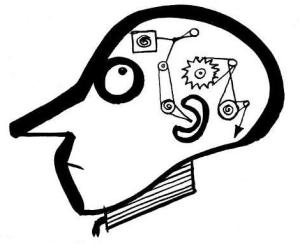
The best way to understand anything complex is to view it from more than one angle. Assimilating different perspectives provides insights not attainable in any other fashion. In that spirit, I offer a concise attempt to understand human psychology from the perspective of the creativity and human cognition researchers. I have positioned everything around the key concept of emotional cognitive structures, the brain’s way of storing its data in emotionally related clusters.

Inner Workings of the Brain

It can be useful to view psychology from the more concrete perspectives of creativity research and recent investigations into brain function and human cognition. (Image: public domain)

Continue reading “Revealing New Angles on Psychology”

Personal Transformation Through Writing

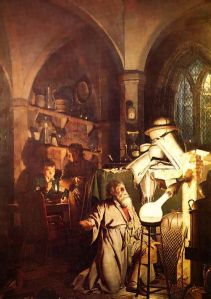
Alchemy was the medieval forerunner of chemistry. It was particularly concerned with trying to convert base metals (such as lead) into gold or to find a universal elixir – more popularly known as the philosopher’s stone – that would perform the conversion upon contact. In recent times, the word alchemy has evolved to indicate any process of transformation, creation, or combination that seems magical.

Alchemist kneeling beside his alembic

Writing over a long period can be a powerful alchemical process of personal transformation. (Image: public domain.)

Even the ancients realized that alchemy is as much about refining the alchemist as it is about distilling some raw material into the philosopher’s stone. Jung popularized this notion in his writings. In this process of self-refinement, the alchemist must pass through three stages:

Continue reading “Personal Transformation Through Writing”

Human Beings Are Always Half-Asleep

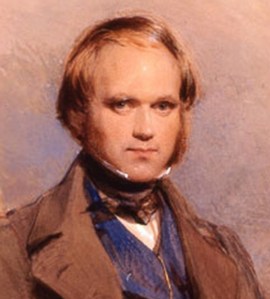
Young Charles Darwin

Evolution recognizes that humans are a work in progress. We are not yet, and perhaps never will be, completely conscious. (Image: public domain.)

In spite of our fond beliefs to the contrary, we Homo sapiens are not yet a fully conscious species. Perhaps our need for sleep reflects this reality, for the old argument that we must slumber while our bodies repair themselves does not withstand the verifiable truth that there are those who get by on just thirty minutes each “night.” These alert folk also demolish the idea that sleep is necessary to facilitate integration of the day’s experiences.

What purpose then, do our somnolent ways serve?

Continue reading “Human Beings Are Always Half-Asleep”

Remembering a Falling Leaf

I have kept a diary on and off for over twenty years. The other day, while glancing through some pages, I came across an unusual entry from November 16, 1997. At that time, Carl Jung’s ideas about the unconscious mind had taken over as my primary interest. His notions of archetypes, the anima / animus, and the collective unconscious intrigued me. I had begun to notice the little clues the unconscious always leaves for those who are paying attention.

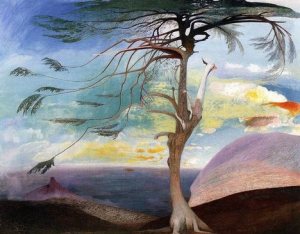
Tree by Varadi Zsolt

On a still autumn evening I could hear withered leaves slithering to the ground. My unconscious mind began making associations…
(Image: public domain.)

Some Christians believe that to be close to the unconscious is to be close to God. I am not religious, but I do understand why they might feel that way. In 1997, I was living in the country on a heavily wooded five-acre hillside lot. Young cottonwood trees surrounded the house. Placid deer grazed clover at my back door. Elusive cougars, following the deer herd, left huge paw prints on the driveway’s soft sandy edges. In that wilderness setting, one remarkably calm autumn evening in November, I experienced a particularly charming example of unconscious magic.

Continue reading “Remembering a Falling Leaf”