Doctrine Is Not the Only Alternative to Scepticism

“But still you must understand that knowledge is neither a tower nor a well, but a human habitation.” These inspiring words belong to French philosopher and spiritual writer, Antonin Sertillanges. He means we must not regard knowledge as something external to ourselves, something to which we refer or draw upon from time to time. Knowledge must be more personal than that, more intimate and immediate. We must embody what we know and literally live our day to day lives according to our own set of authentically preferred truths.
Anton Chekhov

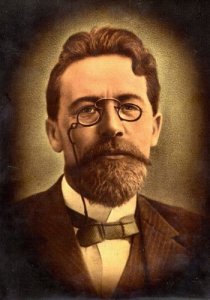
A biographer has suggested that Chekhov had no world view and was thus free of illusions. But what is the cost? (Image: public domain)

For Sertillanges, having a philosophical frame of reference is essential. “It is undeniably useful to possess, as early as possible, even if at starting [one’s intellectual life] if it may be, a body of directive ideas forming a whole, and capable, like the magnet, of attracting and subordinating to itself all our knowledge. The man without some such equipment is, in the intellectual universe, like the traveller who easily falls into scepticism through getting to know many dissimilar civilizations and contradictory doctrines.

Continue reading “Doctrine Is Not the Only Alternative to Scepticism”
Love, Will, or Reason: What Is Your Approach to Life?

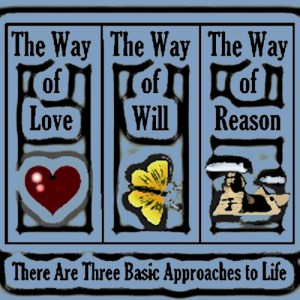
Given the realities inherent in the human psyche, there are three ways of approaching life in this world. No one exists entirely within a single stream, but each mode has its own distinct set of characteristics. For the first approach, I have used love as a substitute for emotion since people who choose the feeling life emphasize love above all other emotions.

The Three Ways of Life: Love, Will, and Reason

Your authentic self will determine which approach to life you favour. (Image: Thomas Cotterill)

The way of love is a life dominated by instinct with its accompanying emotions. Rewards in this mode of existence arise almost exclusively from emotional gratification and the experience of sensual pleasure, which prompts a sense of eagerly desired physical happiness. It is a crudely conceptualized, non-intellectual, irrational, bodily approach to life, with little manifestation of will, a sort of corporeal drifting from one source of satisfaction to the next. Life lived in this way is often haphazard or even chaotic. People in love with falling in love epitomize the type.

Continue reading “Love, Will, or Reason: What Is Your Approach to Life?”

Considering the God Gene

In The God Gene, Dean Hamer argues that we are predisposed to believe in gods or things supernatural because we are genetically programmed to believe in something larger than ourselves. We do appear to be so inclined, but our need to believe in something greater than ourselves does not have to entail religion. The questions Hamer presents often lead to religion of some kind simply because the society in which we live has for so long expected that they must. However, we now live in a more sophisticated and philosophical age. There are other ways to think about “the big questions.”

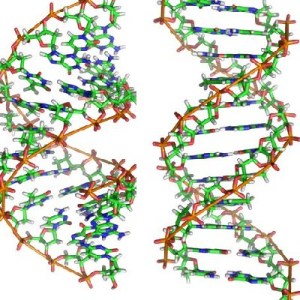
Colourful strands of DNA

The gene that makes us want to be part of something greater than ourselves does not have to make us religious. (Image: public domain)

Continue reading “Considering the God Gene”

Do You Believe History Must Be Fair?

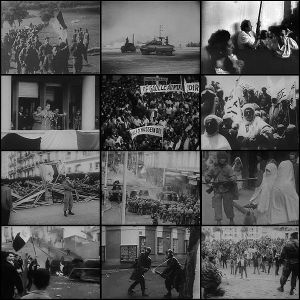
The Algerian War of Independence began in 1954 and sputtered on until 1962 when the nation gained its independence from France. A noteworthy feature of the conflict was the use of terrorism against civilians. Millions of French citizens lived in Algeria at the time and regarded the country as their rightful home. In fact, many in both Algeria and France itself regarded Algeria as an extension of France proper. This situation led to civil war inside Algeria as pro- and anti-France factions battled one another for dominance.

Collage of Algerian War photos

War in Algeria prompted Camus’ insight that some people believe in history and also want history to be fair, even if settling accounts means tolerating terrorist attacks on the formerly dominant. (Photo: Wikipedia)

Continue reading “Do You Believe History Must Be Fair?”

The Difference between Being and Identity

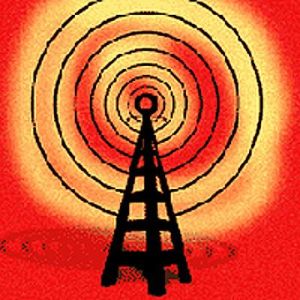
Modern man has reached a “fallen” state by becoming obsessed with being when what we really need is to know who we are. We cannot learn who we are through being. Being is a kind of essence; a state of awareness or consciousness of our surroundings and our own existence; it simply is; it has no identity. We discover who we are by learning about our own culture, about our own society, about the history of our own people, about our own personal past. To have an identity, to define ourselves, we must first put ourselves firmly in context.

Radio Tower with Outgoing Waves

Being is analogous to a radio carrier wave. Identity is the music that modulates the wave and gives it meaning. (Image: public domain)

Continue reading “The Difference between Being and Identity”

The Search for Personal Moral and Ethical Truth

German philosopher, mathematician and man of affairs (i.e. businessman), Gottfried Wilhelm Leibniz always said that he found no book so bad that he could get nothing from it. He was referring to serious works of non-fiction and meant that he could glean a few bits of worthwhile material from any book he read. There is a more powerful way to think about bad books. The fact that they are obviously wrong helps you to clarify your own thinking. (Perhaps Leibniz had this in mind as well.) You can view your own notions in the light of the wrong ideas in the bad book, make comparisons, and work out arguments to knock down what you are reading. I make a habit of reading books (not necessarily bad ones!) that present views opposed to my own.

Portrait of German philosopher Gottfried Wilhelm von Leibniz

Philosophers such as Leibniz work out entire philosophical systems. Ordinary people settle for a set of personal values. (Image: wpclipart.com)

There is a vital clue to being an intellectual in this.

Continue reading “The Search for Personal Moral and Ethical Truth”

Schiller’s Idea of the Heroic

German poet, philosopher, historian, and playwright Friedrich Schiller had some strange notions about the nature of the heroic. He singled out Medea, in Greek mythology the princess of Colchis who aided Jason in taking the Golden Fleece from her father. However, rather than the daring deed of fleecing Papa, it is boiling her own children alive that earns Schiller’s accolade of heroism. She is heroic because she “defies nature, defies her maternal instinct, defies her own affection for her children, she rises above nature and acts freely.” (Berlin, 1999) The argument is, because she is able to set aside her genetically inherited emotions and maternal instincts, she has transcended the natural limitations of being human and somehow heroically liberated herself. Observe the assumption that the natural limitations of being human are somehow undesirable.

Portrait of Friedrich Schiller

Schiller thought Medea’s boiling of her children alive was an act of heroism! (Image: Wikipedia)

Continue reading “Schiller’s Idea of the Heroic”

Monotheism Ends Religion

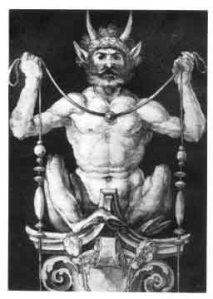
Monotheism inevitably leads to agnosticism, and then atheism, because it cannot adequately explain the origins of evil. As Christians became increasingly better educated and more sophisticated they realized that the concept of an incredibly powerful evil spirit (the Devil) with a domain of his own (Hell) gave their religion a distinctly dualistic air. Since dualism is incompatible with monotheism, the notion of an evil entity opposed to God and responsible for the world’s and humanity’s evils had to be rejected. This left the concept of evil without an explanation.

Portrayal of the Devil

Monotheism weakens religion by removing the Devil as an explanation for evil. (Image: public domain)

The blame for all that was evil in the world then fell upon human beings. However, the idea that all evil comes from humankind while all good comes from God seems unsatisfying to most. The notion that humans alone originate evil leads many to question why an omnipotent God does not cure them of their evil ways, or why such a God tolerates evil in the first place. The idea of God granting free will does not evade these questions. Why allow humanity to do wrong and then judge them for having gone astray? Why not create morally-good people to start with and shield all the tempted sinners from falling into wicked ways? What are we to make of the victims of the evildoers? Why should they suffer for the crimes of others? An incredibly complex web of dubious explanations is required to deal with these issues.

Continue reading “Monotheism Ends Religion”

Sartre on Freedom

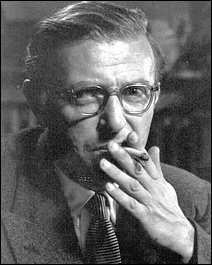
French existentialist philosopher Jean-Paul Sartre saw freedom, not just as a state of being or of mind, but as something with a distinct psychological or philosophical purpose. In his existential classic, Being and Nothingness, he writes, “Freedom is the way human beings put their past out of play by secreting their own nothingness.”

Jean Paul Sartre

Sartre had an exaggerated need for freedom, which may have come from his experiences in Nazi-occupied France. (Photo: WPClipart)

Sartre proposed that “nothing” is both the ground of human existence and what makes human existence possible. Unfortunately, this strange reality also generates an anxiety so unbearable that we all yearn to fill the nothing with something. From the psychological perspective, arbitrarily filling the nothing with something is an attempt to falsify ourselves and become what we are not. The something with which we choose (using our freedom) to replace the nothing is the foundation of our personal inauthenticity. In other words, there is nothing within us so we must “fill the vacuum,” so to speak, with an artificially constructed sense of self. Sartre’s motive for taking this unusual line is his desire to eliminate the old notion of dualism and replace it with a new monistic vision. To eliminate the perceived inside versus outside duality of the human being, he had to propose a situation where there was but one thing.

Continue reading “Sartre on Freedom”

Tradition Can Ease the Fear of Death

Fear of death is mostly dread of the permanent loss of conscious awareness. We see that expiration, the snuffing out of the light, as the final irrevocable end of who we are, the irremediable dissolution of our identity. However, our consciousness is not who we are – it is only our way of knowing who we are. We prove this every night when we sleep and consciousness dissolves, only to magically reappear the next day. If consciousness is who we are, how do we survive this regular extinction? We survive because the self is who we really are.

Man with sword fighting Death

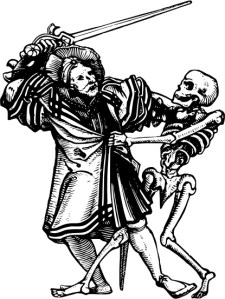
Tradition can ease the fear of death by overcoming social- and self-alienation and providing assurance that some part of us will live on.
(Image: wpclipart.com)

The self lives in the unconscious and the unconscious never sleeps. Picture it as a well-furnished room. We store our memories there. Consciousness is the light that enables us to see and know them. Switch off the light – as in sleep – and the furnished room remains, and we see it once more when consciousness, the light, returns.

Continue reading “Tradition Can Ease the Fear of Death”