Bertrand Russell’s Philosophical Loneliness

While not the most sympathetic, Ray Monk is perhaps the most thorough biographer of the English philosopher and mathematician Bertrand Russell. According to Monk, Russell felt lonely and separated. He felt trapped inside the prison walls of his self, and believed only another person could alleviate the agony of imprisonment by seeing into his soul. (For clarity, I should mention that Russell was one of those who used the word “self” to describe the conscious “I.”) This is the desire, so commonly met with, to find a profoundly understanding soul mate.
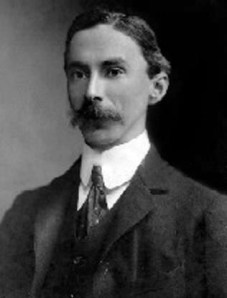
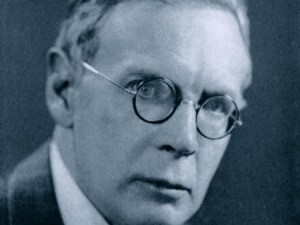
Bertand Russell

Bertrand Russell craved someone who could see into his soul and relieve his sense of loneliness and separation. (Image: public domain)

In reality, Russell was agonizingly self-alienated. As someone who stressed conscious reasoning above all else, he was partially cut off from his unconscious mind. The resulting isolation of his ego, or “self” as Russell would have it, was the source of his painful loneliness. A sound connection with the unconscious adds richness to life. A more plentiful supply of allusive symbols and subjective images would have balanced the dry logic of mathematics and the cold sterility of abstract reasoning that were the centrepieces of Russell’s world. He would have had a greater sense of meaning. In all likelihood, an improved connection with the unconscious would have enhanced his emotional life as well.

Continue reading “Bertrand Russell’s Philosophical Loneliness”
Repressed Wishes Can Sink You

For all the blocked writers and troubled individuals out there, here is something useful from Susan Quinn’s biography of psychologist Karen Horney. The book is titled, A Mind of Her Own. Quinn writes, “Only guilt feelings toward repressed wishes have an inimical influence on life, restrictive, making for illness.” In other words, all other psychological (as opposed to medical) scenarios are not severe enough to generate mental illness. Anyone who enters psychoanalysis is feeling guilty about repressed wishes. Many people not in analysis have the same problem.

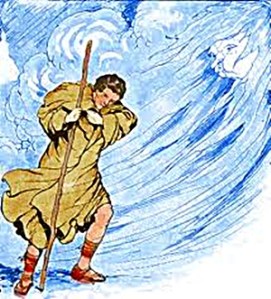
Traveller with a staff leaning into a stiff headwind.

Trying to press on when you want to do something else can feel like battling a stiff headwind. You are waging war on yourself.

Once someone has entered analysis there are four key aspects to the procedure:

Continue reading “Repressed Wishes Can Sink You”

The Useless Passion

French writer and feminist intellectual Simone de Beauvoir was Jean Paul Sartre’s long-time lover and companion. She did not consider herself a philosopher, but nevertheless advanced some challenging ideas. One of these was her concept of the “useless passion,” the desire to be God. De Beauvoir posited two sides to this passion: violence and merging. Violence, the attempt to wound or destroy others is a bid for omnipotence. Merging with the world or cosmos, what we might call the “all-is-one” philosophy is a bid for omnipresence and omniscience. At the philosophical level, the useless passion stems from the truth of human existence; that is, that we are finite and that we will die. The useless passion is our desire to escape from our finiteness. It is important to realize that those who espouse violence and the all-is-one philosophy may be unaware of their true motives for doing so.

Simone de Beauvoir

Simone de Beauvoir’s useless passion is the desire to escape death by becoming God.

Continue reading “The Useless Passion”

Does the Self Have a Future?

The concept of self has become fundamental to our thinking about the human psyche. Drawn from the work of Carl Jung, I use the word constantly in my posts as I discuss writing, creativity, self-realization, will, genius, solitude, spirituality, and philosophy. I see the self as a core cluster of emotionally-important ideas that define who and what we are. It is the origin of will and a compass by which to steer through life. Others, including Jung himself, define it more broadly. My definition is tight because I believe that vague concepts can do nothing for you. As the creativity researchers have shown: concretization is power. When reading what follows, keep in mind this broad flexibility in the use of the word “self.”

Flowchart Depicting the Self's Problematic Future

Self-awareness makes life more worthwhile, but it can also be surprisingly destructive. Can we afford to indulge today’s luxurious sense of self? (Image: Thomas Cotterill)

The cultivation of various aspects of self has become immensely popular. We have self-discovery, self-realization, self-esteem, self-confidence, self-worth, self-improvement, and so on. Clearly, some of these concepts deal with consciousness while other focus on the unconscious. Yet they all use the word “self.” Central to all of these concepts is the sense of self itself. There are numerous theories about how that sense emerged, what (if anything) it does, and why we even need it. For the religious, the sense of self is the human soul, the thing that survives physical death and sets us apart from the animals.

Continue reading “Does the Self Have a Future?”

Natural Selection Works on Societies

In nature, Darwinian evolution works at the level of individual creatures as they compete to survive and procreate. The process is ruthlessly simple and incredibly effective. Those individuals who leave behind the most offspring become the norm for their species. This is what we call “survival of the fittest.” On the surface, then, it would seem that the stress we humans place on individuality is the right thing to do; at least from a strict Darwinian perspective. Assuming we each make of our own brief lives what we can, evolution will select the most successful among us, and the species will prosper.

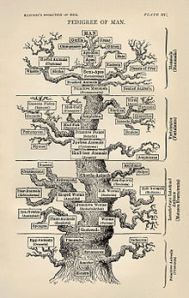
Drawing of the tree of life by Haeckel

Humans are much less subject to evolutionary pressures at the individual level. Those forces now apply at the level of society. (Image: public domain.)

Remember that those with the most children are the most successful. Like it or not, there are no other rules. Making more money and having a higher standard of living do not count unless you deploy that money and standard of living in the service of having, and successfully raising, more children. Mother Nature does just one thing. She counts heads.

Continue reading “Natural Selection Works on Societies”

Wisdom Nourishes the Human Spirit

For decades now, many in the West have suffered from a peculiar kind of spiritual anorexia. This disease of the spirit, extremely widespread, stems from our anti-introspection and anti-intellectual attitude. We favour extraversion over introversion and regard the pursuit of knowledge (as opposed to mere information) as the work of boring nerds and eccentric geeks. However, such wilful myopia comes at a cost. When we turn our backs on genuine understanding, we turn our backs on wisdom. But wisdom is the nourishing food of the spirit. Therefore, on the spiritual plane we are like anorexic girls — we refuse to “eat.”

Emblem depicting wisdom standing on the world.

Hard-won personal wisdom is the only cure for spiritual hunger. (Image: public domain.)

Continue reading “Wisdom Nourishes the Human Spirit”

Literature Is Philosophy for Its Time

German literary scholar, Rudolf Unger, argued that literature does not merely translate philosophical knowledge into imagery and verse. He claimed that literature expresses the general attitude towards life prevalent in a particular period and place. Therefore, poets (and by extension, writers) tackle important questions which are also within the sphere of philosophy. However, where philosophy is organized and structured, the poetic or prosaic approach is unsystematic. Where philosophy is scholarly and academic, literature is vivid and dramatic.

Ophelia by John William Waterhouse

Literature is philosophy in that it expresses the general attitude towards life prevalent in a particular period and place. (Image: public domain)

Literature typically deals with a narrowed set of philosophical problems that engage even the most ordinary person.

The Problem of Fate

The critical issue with fate is the relation between freedom and necessity. The key question is how much control we have over our own lives. Are we completely free to do as we please? Conversely, do the harsh dictates of necessity determine what we can and must do? Is there middle ground? Do we at least have free will with the ability to choose among a limited number of viable alternatives?

Continue reading “Literature Is Philosophy for Its Time”

Affirmation or Negation – Two Ways to Approach Life

Charles Williams

Inklings member and author Charles Williams surprisingly demonstrated that either affirmation or negation of life can be a legitimate path to personal fulfillment. (Image: public domain.)

As is now widely known, C. S. Lewis (The Chronicles of Narnia) was a member of a writer’s circle known as the Inklings. J. R. R. Tolkien also belonged to this remarkably talented group. A lesser-known member of the circle was the poet, novelist, and literary critic Charles Williams who, like Lewis, wrote a number of books about his deeply held religious beliefs.

The occult also fascinated Williams. He went on creatively to merge religion with the occult in a series of unusual novels that he referred to as “metaphysical thrillers.” (T. S. Eliot used the word “supernatural” when writing about them.) They read like speculative fiction yet manage to include elements such as the Holy Grail, tarot cards, King Solomon’s Stone, Platonic archetypes, doppelgangers, and a succubus all surrounded by insights into the eternal struggle between good and evil and the effects (both good and bad) of possessing great power. Williams is rare in assuming that great power can sanctify. When was the last time you saw a film or read a book where that was the case?

Continue reading “Affirmation or Negation – Two Ways to Approach Life”

Only the Strong Can Be Solitary Thinkers

Thinking requires solitude. It is a simple fact that it is impossible to think – deeply at any rate – while interacting with others. Add another mind and right away, the path ahead becomes tortuous. Human minds tend to diverge. Opinions seem always to vary. Except when they are trying hard to get along, minds agree on precious little. Inevitably, discussing any topic will lead to disagreement and the taking up of positions. This can be interesting and enlightening, but conversation definitely will not take one where one would go on one’s own. To think anything through to one’s own fully developed conclusions, one needs to be alone.

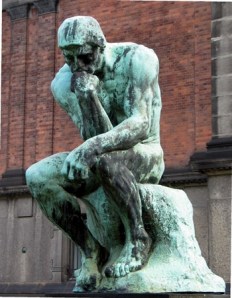
The Thinker by Auguste Rodin

Rodin’s famous statue of the thinker shows him alone. Sustained solitude is a requisite for insightful thinking. (Image: public domain.)

We are walking a lightly trod, yet millennia-old path here. The thinking tradition is illustrious and those given to habitual thinking have left us a fine legacy of insights into the nature of solitude.

Continue reading “Only the Strong Can Be Solitary Thinkers”

The Lonely Thinker’s Path

Nowadays, we strongly emphasize emotion. Our IQs seem to matter little while our EQs loom large. I thought it would be useful to remind ourselves of what it means to be a thinker.

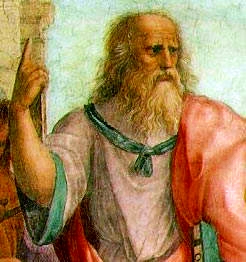
Plato as Imagined by Raphael

With the emphasis now on feelings are we, as a society, losing sight of the value of thinking? (Image: public domain)

The Desire of Knowledge

French philosopher and spiritual writer Antonin Sertillanges writes: “The desire of knowledge defines our intelligence as a vital force … it is the thinker’s special characteristic to be obsessed by the desire for knowledge.”

In other words, for the thinker, the acquisition of knowledge is an emotionally important idea. It is what American psychologist Carl Rogers would call a “subjectively formed guiding principle.” This means acquiring knowledge is one of the primary objects of the thinker’s authentic will. The activity is not an add-on, an external “interest” he has acquired; it is a fundamental part of his self and personality. The behaviour will have been there from early childhood remaining unrecognized until the thinker matures and turns to matters that are more serious and noteworthy.

Continue reading “The Lonely Thinker’s Path”