Battling Our Inner Conflicts

One of my favourite psychology books is Karen Horney’s, Our Inner Conflicts. No one explains psychological conflicts better than this German-American psychiatrist does. Horney makes the brilliant point that both sides of an inner conflict are not wanted – a real conflict that is, not just a bad case of indecision over two equally desirable alternatives. She believes a victim of conflict gets hung up on the two opposed “trends” and is thus unable to pursue the outcome they really desire.

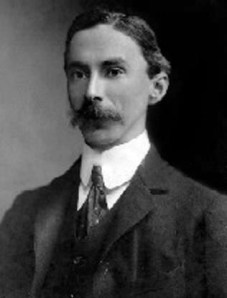
Karen Horney

Karen Horney explained how both sides of an inner conflict are things we do not want! (Image: public domain.)

Here is how this mechanism gets started.

The about-to-be conflicted individual represses what they truly want (for any number of reasons) and then goes looking for alternatives, all of which are, of course, less desirable than what has been pushed out of sight. The human mind being what it is, the moment we conceive one alternative its opposite immediately springs to mind. Several pairs of opposites may be generated in this way, but eventually one possibility, along with its inevitable opposite, will seem like the most probable choices.

Continue reading “Battling Our Inner Conflicts”
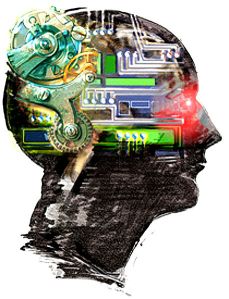

What Powers the Human Psyche?

Nothing happens in this world without some kind of energy to power it, to make it manifest. That being the case, what powers the human psyche where so much of what is important in this world occurs? The most obvious candidates are the powerful urges of urges of emotion and the more precise logical functions of reason. Most often, opinion divides between these two options while a minority (trying to be moderate and sophisticated) take the middle ground and say that both reason and emotion power the psyche in a sort of psychic balancing act. This, they claim, yields the proverbial well-balanced person.

Cross-section of an electronic and mechanized brain.

Does reason or emotion rule the mental roost? Or is there another factor? (Image: public domain.)

Continue reading “What Powers the Human Psyche?”

Cargo Cults of the Unconscious Mind

We have all heard of the South Seas islanders who belong to bizarre cargo cults. The cults got started shortly after WW II when the Americans pulled out of their many military bases scattered across the Pacific. It was cheaper to leave large quantities of supplies and gear behind than to transport them home so, as is so often the case with the Americans, they generously donated the materiel to the inhabitants of the islands. Having seen all this abundance arrive in airplanes, but not understanding where it came from, the less sophisticated natives decided they could get more of this cargo (and thus secure eternal peace and happiness) by simply luring passing planes from the sky. All they had to do was clear a rough runway, build a wooden plane for a decoy, and set up some homemade landing lights by making fires lined up in neat parallel rows.

Douglas C-47 Cargo Plane

Not all cargo cults have to do with South Seas islanders and US supply planes. The West has its own peculiar cargo cults. (Image: public domain)

Continue reading “Cargo Cults of the Unconscious Mind”

Emotions Turned Art into Communication

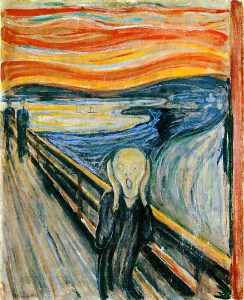
Expressionism is a style of painting, music, or drama in which the artist or writer expresses an inner emotional response rather than merely depicting an external reality. A deliberately exaggerated or altered rendition of reality allows the portrayal of subjective inner feelings. As an art movement, it was popular in Germany early in the 20th century. Edvard Munch’s familiar painting, ‘The Scream,’ was a precursor to the movement and the renowned canvas gives some idea of the technique.

The Scream. Edvard Munch's most famous painting.

Edvard Munch’s famous painting, The Scream, gives some idea of the emotional expressionist technique. (Image: public domain)

The German philosopher Johann Gottfried Herder provided expressionism with a powerful new philosophical underpinning. This was the idea that self-expression is a primal need of human beings. Moreover, unless they cripple themselves with inhibition or self-constraint, whatever a person does expresses their whole nature. A new attitude toward works of art themselves arises from the view that an artist reveals himself in what he does. Philosopher and historian Isaiah Berlin has pointed out that, prior to the advent of expressionism, works of art were valued primarily as objects. Their value had nothing to do with the artist who made them or why they had come into being. In fact, for most people today, this view of art objects still prevails. Herder believed that, since a work of art is an expression of the whole being of the artist, including his cultural identity, it must be valued within that larger frame.

Continue reading “Emotions Turned Art into Communication”

The Constant Self Is Real

When feelings such as loneliness, loss, and placelessness assail them, people often get into serious emotional trouble. It is interesting to note that, when some people experience such feelings, they do not turn inward for an explanation of their own emotions. They do not even turn to psychology or philosophy, external knowledge bases which would give them some inkling of what is happening to them and are therefore relevant to their condition. Instead, they turn to spiritual belief systems. With Christianity, the West’s traditional religion, now fallen from favour, troubled individuals feel they must look elsewhere for spiritual comfort and understanding. With increasing regularity, they turn to godless belief systems such as Buddhism and Taoism. The absence of any moralizing god and the possibility of solitary spiritual practice are powerful attractions. That is, people prefer a godless belief system with no churches or temples and no organized religious service. We might call this, “do it yourself” spirituality.

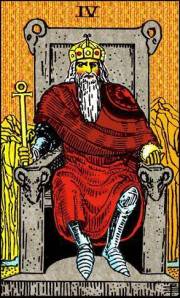
Tarot card showing the emperor on his throne

The authentic self is real, constant, and stable. Once found and accepted, it can provide a centre, still point, and anchor in life. (Image: public domain.)

Continue reading “The Constant Self Is Real”

Bertrand Russell’s Philosophical Loneliness

While not the most sympathetic, Ray Monk is perhaps the most thorough biographer of the English philosopher and mathematician Bertrand Russell. According to Monk, Russell felt lonely and separated. He felt trapped inside the prison walls of his self, and believed only another person could alleviate the agony of imprisonment by seeing into his soul. (For clarity, I should mention that Russell was one of those who used the word “self” to describe the conscious “I.”) This is the desire, so commonly met with, to find a profoundly understanding soul mate.

Bertand Russell

Bertrand Russell craved someone who could see into his soul and relieve his sense of loneliness and separation. (Image: public domain)

In reality, Russell was agonizingly self-alienated. As someone who stressed conscious reasoning above all else, he was partially cut off from his unconscious mind. The resulting isolation of his ego, or “self” as Russell would have it, was the source of his painful loneliness. A sound connection with the unconscious adds richness to life. A more plentiful supply of allusive symbols and subjective images would have balanced the dry logic of mathematics and the cold sterility of abstract reasoning that were the centrepieces of Russell’s world. He would have had a greater sense of meaning. In all likelihood, an improved connection with the unconscious would have enhanced his emotional life as well.

Continue reading “Bertrand Russell’s Philosophical Loneliness”

Filter the Junk from Your Experience

The reliability of the senses, perception, and memory has long been the subject of debate. A great many thinkers have weighed in with their opinions on these essential functions of the brain. Science is currently expending enormous effort in making experimental assessments. A lot is at stake. It is vital that we know just how far we can trust our innate abilities to collect information about the world around us. We need to know how well we convert sensory data into basic concepts (tree, rock, person, and so on). We must also have some idea of how well we remember those reflexive perceptions once we have formed them.

Cloud Resembling a UFO

UFO or cloud? It is foolish to be uncritical of your own experiences; you must make them a matter of conscience and knowledge. How you choose to interpret and remember the experience does matter.

Continue reading “Filter the Junk from Your Experience”

Repressed Wishes Can Sink You

For all the blocked writers and troubled individuals out there, here is something useful from Susan Quinn’s biography of psychologist Karen Horney. The book is titled, A Mind of Her Own. Quinn writes, “Only guilt feelings toward repressed wishes have an inimical influence on life, restrictive, making for illness.” In other words, all other psychological (as opposed to medical) scenarios are not severe enough to generate mental illness. Anyone who enters psychoanalysis is feeling guilty about repressed wishes. Many people not in analysis have the same problem.

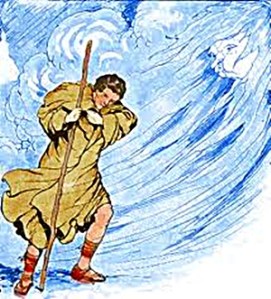
Traveller with a staff leaning into a stiff headwind.

Trying to press on when you want to do something else can feel like battling a stiff headwind. You are waging war on yourself.

Once someone has entered analysis there are four key aspects to the procedure:

Continue reading “Repressed Wishes Can Sink You”

The Useless Passion

French writer and feminist intellectual Simone de Beauvoir was Jean Paul Sartre’s long-time lover and companion. She did not consider herself a philosopher, but nevertheless advanced some challenging ideas. One of these was her concept of the “useless passion,” the desire to be God. De Beauvoir posited two sides to this passion: violence and merging. Violence, the attempt to wound or destroy others is a bid for omnipotence. Merging with the world or cosmos, what we might call the “all-is-one” philosophy is a bid for omnipresence and omniscience. At the philosophical level, the useless passion stems from the truth of human existence; that is, that we are finite and that we will die. The useless passion is our desire to escape from our finiteness. It is important to realize that those who espouse violence and the all-is-one philosophy may be unaware of their true motives for doing so.

Simone de Beauvoir

Simone de Beauvoir’s useless passion is the desire to escape death by becoming God.

Continue reading “The Useless Passion”

Idealism and Perfectionism Are Enemies of Creativity

Idealists can only love, respect, or admire that which they recognize as superior. Nothing else will do. The impractical idealist routinely overestimates some of the people and things around them. They want to believe they have found something or someone who is ideal rather than ordinary. Naturally, when idealists indulge in this behaviour they are inevitably disappointed. Rather than learning their lesson, the idealist sets out on an endless quest for the superior. Once established, the habit of idealization spreads into all areas of the idealist’s life making mischief wherever it goes. The true situation can be hard to grasp since many consider idealism a virtue. It is high-mindedness or even noble-mindedness. How could something so wonderful-sounding be a problem? The ego-enhancing benefits of being “an idealist” obscure the actual damage done by holding the belief.

Lady Justice with sword and scales

Idealism and perfectionism prevent creative people from seeing their work objectively, thereby impairing the ability to assess its worth. (Image: public domain)

Continue reading “Idealism and Perfectionism Are Enemies of Creativity”