Your Worldview Will Sneak into Your Novel

The Concept of “World” in a Novel

A novel’s “world” is the general impression readers absorb from the interwoven effects of plot, characters, authorial tone, atmosphere, and setting. Writers impart this vital yet elusive quality as their own worldview inevitably pervades the work. The process is partially inadvertent and the resulting worldview may differ somewhat from the worldview purposely expressed in the work. For example, authors who write religious thrillers may or may not be religious people themselves. An unbeliever’s attitude towards the clergy may lack the sympathy of a believer. We pick up the author’s “true” worldview by sensing their way of presenting the story. We detect subtle philosophical clues such as what an author chooses to emphasize and how they go about ordering events and tying the story together.
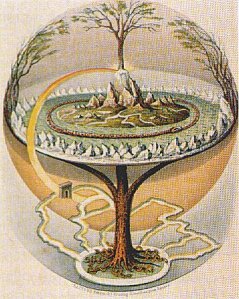
Yggdrasil by Oluf Olufsen Bagge 1847

Yggdrasil, the world tree, was the Nordic symbolic representation of the world. These days, worldview varies on an individual basis, but always has an underlying humanness shared by all. (Image: public domain)
Continue reading “Your Worldview Will Sneak into Your Novel”

Writers Are Often Early Birds or Night Owls

At what time of the day do you prefer to write? Do you have a choice as to when you do your writing or are you limited by a day job and other important responsibilities? Constraints can be a problem since writers often have unusually strong preferences for when they like to get the work done. In fact, it may go beyond being just a preference. There is good evidence from creativity research that people function best at certain times of the day, and what time that is varies on an individual basis.

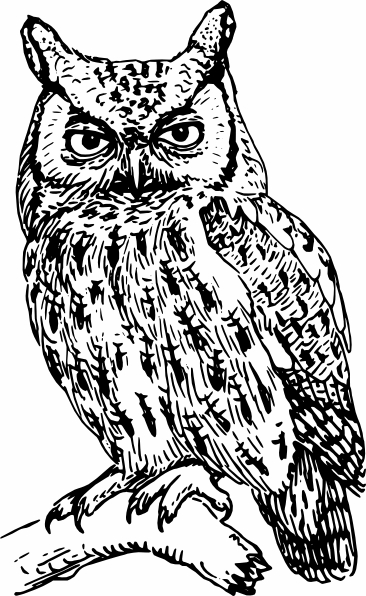
Owls are the quintessential image for the night person

Writers can use hours of the day when little is happening. The need for a more certain income may leave them no choice. (Image: public domain.)

As for preference, there are two main camps: the morning crowd and the late evening / nighttime set. There are even philosophical and psychological arguments supporting the two strategies.

Continue reading “Writers Are Often Early Birds or Night Owls”

What Is Your Life’s Theme?

What is the theme of your life? Everybody has at least one; most of us have a number of them, each taking a turn in the spotlight, and then fading for a time. However, it may not have occurred to you to see things in that way. Writers consciously make use of themes in their works so they are accustomed to employing them as an important aspect of writing fiction. Not surprisingly, many great writers use the themes from their own lives as the themes in their books and stories. To put it another way, writers tend to write about what deeply interests or preoccupies them. Readers tend – often unconsciously – to choose writers and books that deal with their own themes.

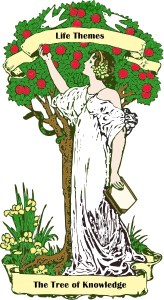
Wisdom Harvests the Tree of Knowledge

Many great writers have used the themes from their own lives as the themes in their books and stories. Do you know what your themes are? (Image: public domain.)

Writers embody the theme or “idea” behind any particular story in the work’s characters, places, and events. They usually settle on a strategy during the conception and design stage of the writing process. You might say that the basic theme or idea of a novel has something to do with what the author “loves well.” In the course of the story, authors contrast what they love with what they reject, thus clearly presenting the theme, and their position on it, to the reader.

Continue reading “What Is Your Life’s Theme?”

Lifestyles of Writers and Other Creative People

High-level creativity takes time, lots of it. It also needs peace and quiet. To secure the requisite time and tranquility, creators of all kinds have traditionally turned away from mainstream lifestyles and embraced less conventional ways of life. The taste among intelligent middle-class English writers for living quietly – and inexpensively – in the unsophisticated countryside is the stuff of literary legend. The goal is always the same: liberate as much time as possible for the creative work while ensuring congenial conditions for getting it done.

George Orwell's Country Retreat in the Hebrides

Cheap rural retreats such as George Orwell’s remote home in the Scottish Hebrides are a staple in the lives of creative people. (Image: public domain.)

Continue reading “Lifestyles of Writers and Other Creative People”

Make Bliss Your Creative Compass

We all know that enjoying the work we must do to earn a living makes life more pleasant. Tastes vary, naturally, but most people regard creative work of any kind as a highly desirable occupation. Many would gladly trade their “day job” for the chance to participate. We see one aspect of this yearning in the explosion of self-published authors currently flooding a startled world with oceans of novels and short stories. However, the idea of doing what we love applies at another level. Within the world of creative endeavour itself, it is especially important to do what we find most congenial.

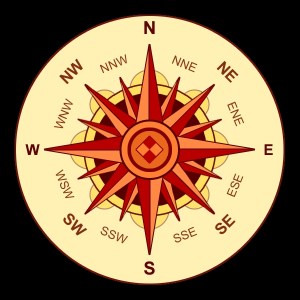
Decorative Compass Rose

Certain shades of feeling are associated with your authentic will and can be used as a reliable inner guide or compass. (Image: public domain.)

Continue reading “Make Bliss Your Creative Compass”

Synergize Your Creativity with Concurrent Projects

Creativity research has a lot to say about the work habits of creative people. Let us look at the issue of working on one thing at a time versus having a number of projects going all at once. What approach do you take with your creative process? Are you among those who single-mindedly work on just one project and carefully avoid being “sidetracked” by something else? Or do you happily juggle several projects at once, switching back and forth among them as you see fit or the mood takes you?

Repeating mirror images of a woman

Creators often have several intuitively-related projects in progress at the same time and exploit the situation to synergize their creative powers with constant cross-fertilization. (Image: public domain)

The Power of Monomania

It can be tempting to insist on working with just one project at a time, starting it, and then continuing with it until it is completed. The idea is simple, straightforward, and produces finished work faster than any other technique. If you can keep going, that is. It may surprise you to learn that many creators are unable to do this. At some point, for any number of reasons, they run into difficulties that prevent them from finishing what they have started. Sometimes they abandon the project and start another – hopefully more easily completed – work. A small number cease working altogether and go through a period of renewed gestation or learning before resuming the interrupted project. Among authors, writer’s block is a frustrating form of this poorly understood process. In the situations with the best outcome, the creator will set the stalled work aside and begin with something else, something new, yet thematically related to what they had previously been doing.

Continue reading “Synergize Your Creativity with Concurrent Projects”

How to Ensure You Finish Your Writing Project

One of the most common mistakes made by inexperienced creators is putting too much material in one work. No one is immune to this problem. Later in life, Beethoven himself ruefully remarked that his Symphony No. 1 had enough musical ideas crammed into it to make several symphonies. Having too much going on in a project will make it unnecessarily complex, large, and unwieldy. For those who lack experience, this puts them at serious risk of not finishing the work. They have unwittingly bitten off more than they can chew.

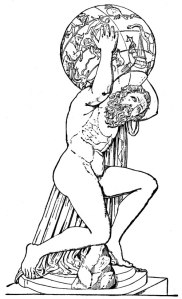
The Roman god Atlas holding up the world

Unless you are the Roman god Atlas, too much material in your work could put you at risk of not finishing it. (Image credit: public domain)

Luckily, there are remedies. Once creators have an idea in mind for a project, they can take steps to keep things at a manageable scale. Here are a few of those steps specifically aimed at writers. The technique essentially generates a simple outline.

Continue reading “How to Ensure You Finish Your Writing Project”

Stephen King’s Work Habits

One of the oldest battles in the arena of writing technique is the debate over outlining versus writing off the cuff. When I read Stephen King’s book, On Writing: A Memoir of the Craft, I learned he had some unusual ideas about how to get the work done. In fact, his work habits are so different from my own that I took the time to write up a little summary of how he went about things. While I carefully keep notes and create outlines, King just heroically plunges right in. For years, I believed that outlining was the most common approach to writing longer works, but wider experience on the web has taught me that a great many people come at writing in somewhat the same way as the famous horror writer. While King has his detractors, his remarkable output and amazing success indicate that his methods warrant some consideration.

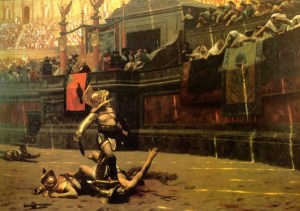
Jean-Leon Gerome's Famous Gladiator Painting (Pollice Verso) of 1872

Outline or extempore? Which writing gladiator do you favour? (Image: Wikimedia)

Continue reading “Stephen King’s Work Habits”

Where Creative People Get Their Ideas

Where do creative people get their inspiration? There are probably as many answers to that question as there are creators, and in all likelihood, every creator uses more than one source. However, such non-specific statements explain nothing. An example or two, while indicating only a miniscule portion of the possibilities will be far more illuminating.

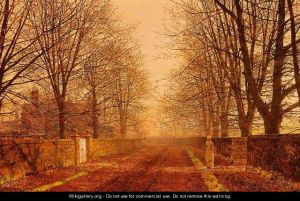
The painting titled Golden Light by John Atkinson Grimshaw.

Trivial incidents in an artist’s life can inspire complex works. Art can sometimes inspire art.

This may not always be obvious, but all inspiration is actually a two-part process. There is an outer stimulus, and there is an inner response. The inward component goes beyond the pure emotional response to the experience. What the creative individual feels, stimulates some deeply held emotion-laden idea or value. There is energizing resonance.

Continue reading “Where Creative People Get Their Ideas”

Is Genre Fiction Junk Fiction?

In these days of inclusivity, equality, and the breaking down of barriers, there are those (both writers and readers) who would abolish the boundary between literary and genre fiction. Some now say that genre writers are striving for the same things as literary writers; they just do it in a different, more accessible, reader-friendly kind of way. That is to say, literary writers are just a bunch of stuck-up snobs who look down on hard-working genre writers for no good reason. If this is true, then either everything is literature, or everything is genre fiction. The argument has successfully removed the time-honoured distinction.

Row of Old Leather Bound Books

In this age of inclusivity we must not lose sight of the difference between literature and genre fiction.  (Image: public domain.)

Continue reading “Is Genre Fiction Junk Fiction?”