Doctrine Is Not the Only Alternative to Scepticism

“But still you must understand that knowledge is neither a tower nor a well, but a human habitation.” These inspiring words belong to French philosopher and spiritual writer, Antonin Sertillanges. He means we must not regard knowledge as something external to ourselves, something to which we refer or draw upon from time to time. Knowledge must be more personal than that, more intimate and immediate. We must embody what we know and literally live our day to day lives according to our own set of authentically preferred truths.
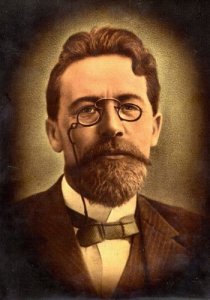
Anton Chekhov

A biographer has suggested that Chekhov had no world view and was thus free of illusions. But what is the cost? (Image: public domain)

For Sertillanges, having a philosophical frame of reference is essential. “It is undeniably useful to possess, as early as possible, even if at starting [one’s intellectual life] if it may be, a body of directive ideas forming a whole, and capable, like the magnet, of attracting and subordinating to itself all our knowledge. The man without some such equipment is, in the intellectual universe, like the traveller who easily falls into scepticism through getting to know many dissimilar civilizations and contradictory doctrines.

Continue reading “Doctrine Is Not the Only Alternative to Scepticism”
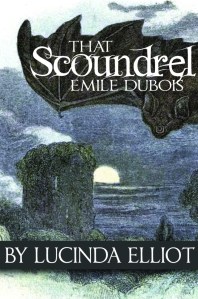
Review: That Scoundrel, Emile DuBois by Lucinda Elliot

Lucinda Elliot describes her novel as a “cod gothic,” a seriocomic parody of a venerable genre that often satirizes itself. The book is a delightful read, with an intriguing story, lively sometimes-outrageous characters, and well-placed touches of humour. An outstanding feature of this amusing vampire tale is the delicious contrast between the staid nobility of settled aristocrats intent upon keeping up appearances and the scandalous behaviour of an arch scoundrel (himself of noble blood) named Emile Dubois.

That Scoundrel, Emil DuBois

A sophisticated and sensual blend of humour, horror, and romance.

Complicating matters is a regal country house full of bloodthirsty half-vampires, one of whom, Goronwy Kenrick, schemes to harness “thought forms” so he can travel through time. Throughout the tale, serious trouble with vampires alternates with episodes of good-natured fun or even all out farce. Especially droll are the scenes where the vampire elite angrily holler down corridors and stairwells at reluctant servants (who often distantly shout back).

Continue reading “Review: That Scoundrel, Emile DuBois by Lucinda Elliot”

Love, Will, or Reason: What Is Your Approach to Life?

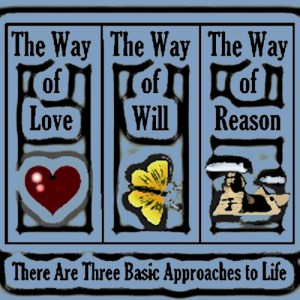
Given the realities inherent in the human psyche, there are three ways of approaching life in this world. No one exists entirely within a single stream, but each mode has its own distinct set of characteristics. For the first approach, I have used love as a substitute for emotion since people who choose the feeling life emphasize love above all other emotions.

The Three Ways of Life: Love, Will, and Reason

Your authentic self will determine which approach to life you favour. (Image: Thomas Cotterill)

The way of love is a life dominated by instinct with its accompanying emotions. Rewards in this mode of existence arise almost exclusively from emotional gratification and the experience of sensual pleasure, which prompts a sense of eagerly desired physical happiness. It is a crudely conceptualized, non-intellectual, irrational, bodily approach to life, with little manifestation of will, a sort of corporeal drifting from one source of satisfaction to the next. Life lived in this way is often haphazard or even chaotic. People in love with falling in love epitomize the type.

Continue reading “Love, Will, or Reason: What Is Your Approach to Life?”

The Mental Gatekeeper

One of psychology’s most popular images is that of the gatekeeper strategically positioned between the conscious and unconscious minds to prevent certain unconscious contents from emerging into conscious awareness. We imagine some sort of autonomous process that filters out the unacceptable while allowing only “the good stuff” to pass. The trouble with this notion is the way it absolves ego of any responsibility for what is happening. If the process is autonomous, who, or what, is deciding what will pass through the gate and what will not?

Gatekeeper at Work

Our mental gatekeeper, the origin of repression is entirely of our own making. (Image: Wikipedia)

What we are talking about here is repression and how it happens.

Continue reading “The Mental Gatekeeper”

Ego Must Vow Obedience to the Self

One of the most interesting aspects of religion is that, if you come at it from the right angle, much of it translates well into modern psychology. In “Exploring the Sufi Concept of Nafs,” I linked the Nafs with the psychological concept we call the false persona. Here, I will return to the work of Jungian analyst Helen M. Luke to examine her Catholic notion of the vow to obey God.

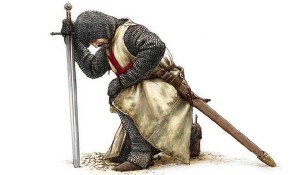
Templar Knight Swearing Fealty

For there to be peace in the psyche, ego must recognize its proper role and swear obedience to authentic will as a knight swears to obey his liege lord. (Image: public domain)

“The third vow of obedience [blessed are the meek for they shall inherit the earth] is a commitment to total response at whatever cost to the voice of the Holy Spirit within.” By the voice of the Holy Spirit, Luke means “the still small voice,” the voice of God within. However, the voice need not be still and small; the voice is really the prompting of one’s own true will, not the will of God. Those who know themselves well hear the voice very clearly.

Continue reading “Ego Must Vow Obedience to the Self”

Language Outperforms Symbols

We tend to see symbols as dripping with meaning. A symbol, we believe, is so much more compact, vivid, and dynamic than mere language. Yet, if you stop to think about it, even some of the world’s most well-known and potent symbols have no meaning without a language “prop” or explanation to get them established. What does a Christian cross mean to someone who has never heard of the religion, a situation that would have existed at the beginning of the Christian era? An explanation would have been necessary. The same situation must have prevailed when the Muslims began to adopt the crescent.

Fremont Rock Art in Thompson Canyon, Utah

Symbolic representation suffers from an excess of ambiguity. (Image: Greg Gnesios)

Continue reading “Language Outperforms Symbols”

Considering the God Gene

In The God Gene, Dean Hamer argues that we are predisposed to believe in gods or things supernatural because we are genetically programmed to believe in something larger than ourselves. We do appear to be so inclined, but our need to believe in something greater than ourselves does not have to entail religion. The questions Hamer presents often lead to religion of some kind simply because the society in which we live has for so long expected that they must. However, we now live in a more sophisticated and philosophical age. There are other ways to think about “the big questions.”

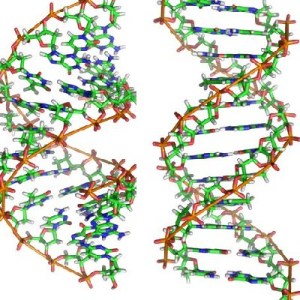
Colourful strands of DNA

The gene that makes us want to be part of something greater than ourselves does not have to make us religious. (Image: public domain)

Continue reading “Considering the God Gene”

Do You Believe History Must Be Fair?

The Algerian War of Independence began in 1954 and sputtered on until 1962 when the nation gained its independence from France. A noteworthy feature of the conflict was the use of terrorism against civilians. Millions of French citizens lived in Algeria at the time and regarded the country as their rightful home. In fact, many in both Algeria and France itself regarded Algeria as an extension of France proper. This situation led to civil war inside Algeria as pro- and anti-France factions battled one another for dominance.

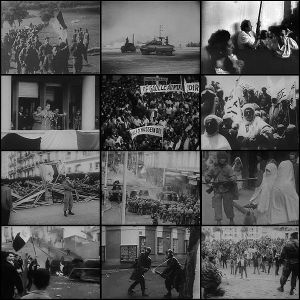
Collage of Algerian War photos

War in Algeria prompted Camus’ insight that some people believe in history and also want history to be fair, even if settling accounts means tolerating terrorist attacks on the formerly dominant. (Photo: Wikipedia)

Continue reading “Do You Believe History Must Be Fair?”

Orwell’s Struggle with the False Self

When reading literary biographies, one is wise to examine the worldview of the biographer as well as that of the subject. In his superb George Orwell: A Life, biographer Bernard Crick says a lot of perceptive things about Orwell, and while doing so, inadvertently illuminates humankind’s chronic problems with the discrepancy between the false persona we create to impress the world and the authentic self that we truly are.

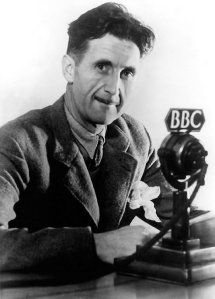
George Orwell sitting at a BBC microphone

George Orwell was driven hard by what one biographer has called his “Puritan daemon.” (Image: BBC)

English literary critic Cyril Connolly lays out the ground of the conflict. He saw George Orwell as standing for independence and offering intelligence as an alternative to character. This view draws a sharp distinction between authenticity (character) and the intellect (ego and its attendant false persona). The idea that one can dispense with character or submerge it beneath intelligence is dubious to say the least, but such thinking reveals the way ego prefers the false persona, identifies with it, and hopes to shield genuine behaviour from view. The intellectual often presents himself as a paragon of moral virtue.

Continue reading “Orwell’s Struggle with the False Self”

The Difference between Being and Identity

Modern man has reached a “fallen” state by becoming obsessed with being when what we really need is to know who we are. We cannot learn who we are through being. Being is a kind of essence; a state of awareness or consciousness of our surroundings and our own existence; it simply is; it has no identity. We discover who we are by learning about our own culture, about our own society, about the history of our own people, about our own personal past. To have an identity, to define ourselves, we must first put ourselves firmly in context.

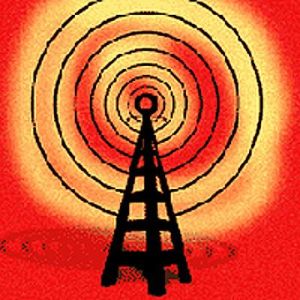
Radio Tower with Outgoing Waves

Being is analogous to a radio carrier wave. Identity is the music that modulates the wave and gives it meaning. (Image: public domain)

Continue reading “The Difference between Being and Identity”