How to Ensure You Finish Your Writing Project

One of the most common mistakes made by inexperienced creators is putting too much material in one work. No one is immune to this problem. Later in life, Beethoven himself ruefully remarked that his Symphony No. 1 had enough musical ideas crammed into it to make several symphonies. Having too much going on in a project will make it unnecessarily complex, large, and unwieldy. For those who lack experience, this puts them at serious risk of not finishing the work. They have unwittingly bitten off more than they can chew.
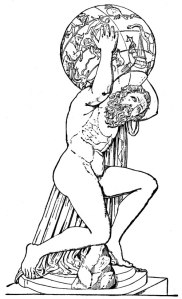
The Roman god Atlas holding up the world

Unless you are the Roman god Atlas, too much material in your work could put you at risk of not finishing it. (Image credit: public domain)

Luckily, there are remedies. Once creators have an idea in mind for a project, they can take steps to keep things at a manageable scale. Here are a few of those steps specifically aimed at writers. The technique essentially generates a simple outline.

Continue reading “How to Ensure You Finish Your Writing Project”

Build Novel Chapters with Scenes

Stonemasons building a cathedral

At the level of structure, writing a novel is like a construction project. Understanding the basics will allow you to use imaginative architecture. (Image: public domain.)

How should we writers construct our chapters? Inevitably, the process starts with scenes. Some authors create lengthy scenes and simply make the big scene into an entire chapter. Novels constructed this way can seem slow moving, weighty, and dull, although skilled writers have made this work throughout the centuries that novels have been written. Writers of a more commercial bent often turn out short scenes and declare each little episode a little chapter. We have all seen the numerous genre books with three-, four-, or five-page divisions. While conceptually simple, and conducive to a fast-paced story, the scheme looks and feels crude. Most writers use multiple scenes, separated by spaces or asterisks, to assemble each medium-length chapter. This most popular arrangement combines reasonable pace with satisfying variety and complexity.

Write enough scenes to reach the desired or planned climax for the chapter. If you end up with too many scenes and your chapter is becoming too long, reconsider what you need to accomplish and look for places where there is already a nice climax and end the chapter there. Do not try to do too much in any one chapter. Only experience can help you here. Get in there and give it a try!

Continue reading “Build Novel Chapters with Scenes”