Edgar Allan Poe, C. S. Lewis, and Monty the Cat

Introduction

For decades, I have loved reading sophisticated literary biographies and the personal diaries of famous writers and painters. This post outlines some thoughts prompted by reading, in close proximity, a biography of Edgar Allan Poe and C. S. Lewis’ diary. However, not everything I read is so substantial. During the sixteen-years I lived as a hermit on the edge of the Great Canadian Wilderness, I also acquired a taste for books written by people living in out of the way places. One of England’s great cat-lovers, Derek Tangye, became a surprise favourite. Tangye, an ex-newspaperman writes simple charming accounts of his life in Cornwall. He and his wife Jeannie lived in “Minack,” an ancient stone cottage perched atop a cliff on Cornwall’s south coast. They grew flowers for the London markets – and kept cats.

Edgar Allan Poe

Edgar Allan Poe could not put his troubled past behind him and move on. (photo: Wikipedia)
Continue reading “Edgar Allan Poe, C. S. Lewis, and Monty the Cat”

Coping with the Complexity of Writing

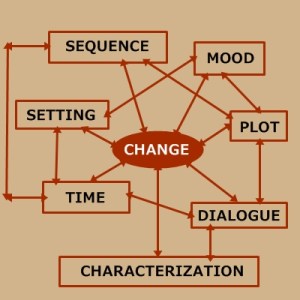
While conceptually simple, in actual practice, writing is a complicated art and all of the approaches involve some considerable degree of complexity. One of the most common reasons why writers fail is the inability to deal with the unforeseen knottiness of writing. To succeed, a writer must find manageable ways of dealing with the endless horrors of ramification or branching. Once a project is underway, any change we make in one place will usually lead to necessary changes in other places – often a great many other places. Since everything in a novel or story must remain consistent from start to finish, we must track down those places and make the needed changes. Then, of course, there is the likelihood that some of these secondary changes will necessitate further alterations of their own; and so on, in what can seem an endless tangle. If no plan is in place to deal effectively with the situation, the work will inevitably bog down – sometimes fatally.

Diagram of interrelated writing elements

Making even small changes in a piece of writing can lead to seemingly endless ramifications. (Image: Thomas Cotterill)

Continue reading “Coping with the Complexity of Writing”

How Mood Inspires Creative People

One of the most striking characteristics of the creative individual is their sensitivity to, and fondness for, particular feeling tones or subtle moods. Artists of all kinds strive to capture their favourite mood (or moods) in their work. The desire to accomplish this combined act of self-gratification and sharing is often a major motivating factor in why the artist chose to work in the arts. However, the preoccupation with mood can infiltrate all aspects of a creator’s life. The taste for a special mood often extends to the creator’s work habits. They not only want to produce the mood in their work, they must inhabit the mood while working. Many artists are so sensitive to feeling tone, so dependent on a particular subtle mood in order to access their creativity, that they quite literally cannot work should the needed feeling tone be absent.

Daphne du Maurier rowing near her old house at Ferryside

Mood (or atmosphere) and a sense of place are intimately related. Writers who have a strong sense of place prefer to work in specific locations. (Image: public domain.)

Continue reading “How Mood Inspires Creative People”

The Intrinsic Rewards of Mental Activity

I once saw a short film about the famous experiment where research scientists gave brushes, paint, and large sheets of paper to a number of chimpanzees, and then left them to their own devices. Soon, the chimps became so engrossed in daubing colour on the paper that they neglected their usual mating and eating habits. In a sense, they had become crude abstract artists! The important thing to note is that, while mating and eating are necessary for survival, daubing paint is not.

Mind Related Activities

Mind related activities can be so absorbing we neglect vital functions such as eating. (Photos: public domain)

The chimps were demonstrating that mind-related activity is so powerfully rewarding it can overpower even such basic life-sustaining drives as hunger and lust. If the effect is so strong in chimpanzees, we can easily see why human creators, with their more-powerful minds, behave the way they do. Here is the doorway that humans have walked through as we evolved beyond being just animals. Once our intelligence reached a certain point, mind became the primary driving force in our evolutionary development. Importantly, this is true not only because we became better at hunting and gathering, but also because mind is useful for much more than sharpening our survival skills.

Continue reading “The Intrinsic Rewards of Mental Activity”

The Origin of High Quality Creativity

In an earlier post on this topic, I stated that artists (of all kinds) develop their artistic vision by “examining and exploring the implications and ramifications of their personal vision of existence. In other words, they explore their philosophy of life.” The most powerful elements of a personal vision of existence or philosophy of life are the product of the creative person’s unique set of emotionally important ideas, which make up the self. High quality creativity springs from the struggle to attain self-knowledge and authenticity. Great literature, poetry, painting, and sculpture tells us something about life as the artist sees and experiences it. By recognizing, and then shining a light on, the archetypal aspects of their vision and their experience, artists include the illuminating sense of the universal in their work.

Writing Desk by Olga Rozanova (cubism)

High level creators learn how to combine their own worldview with the process of self-discovery to develop their unique artistic vision. (image: wikipaintings)

Continue reading “The Origin of High Quality Creativity”

Do Memes Have a Life of Their Own?

We had better start with a clear definition of the term, meme.

“Meme: (biology) a cultural unit (an idea, value, or pattern of behaviour) … passed from one person to another by non-genetic means (as by imitation)” (WordWeb).

Portrait photo of science fiction writer Robert J. Sawyer.

SF writer Robert J. Sawyer often jokes that he is more interested in the survival of his memes than his genes. (Photo: sfwriter.com)

In other words, memes are the cultural counterpart of genes. Like genes, anyone can pass on his or her memes. Unlike genes, individuals who are willing to do the work can create memes.

Canadian science fiction writer Robert J. Sawyer has said on more than one occasion that, “… I like to quip that I’m more interested in the survival of my memes than my genes …” Sawyer knowingly works his memes into his stories and novels thereby making it possible for others to see and adopt them, and then, hopefully, pass them on yet again. Anyone who deliberately includes their own ideas and values in their work shares Sawyer’s openly expressed desire to spread his memes. However, they may be considerably less conscious of what they are doing. I want to play with the sometimes poorly understood impulse to spread one’s memes so let me pose a suggestive question.

Continue reading “Do Memes Have a Life of Their Own?”

Orwell’s Struggle with the False Self

When reading literary biographies, one is wise to examine the worldview of the biographer as well as that of the subject. In his superb George Orwell: A Life, biographer Bernard Crick says a lot of perceptive things about Orwell, and while doing so, inadvertently illuminates humankind’s chronic problems with the discrepancy between the false persona we create to impress the world and the authentic self that we truly are.

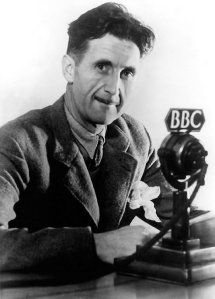
George Orwell sitting at a BBC microphone

George Orwell was driven hard by what one biographer has called his “Puritan daemon.” (Image: BBC)

English literary critic Cyril Connolly lays out the ground of the conflict. He saw George Orwell as standing for independence and offering intelligence as an alternative to character. This view draws a sharp distinction between authenticity (character) and the intellect (ego and its attendant false persona). The idea that one can dispense with character or submerge it beneath intelligence is dubious to say the least, but such thinking reveals the way ego prefers the false persona, identifies with it, and hopes to shield genuine behaviour from view. The intellectual often presents himself as a paragon of moral virtue.

Continue reading “Orwell’s Struggle with the False Self”

Reason and Emotion Clash in the Arts

Whether you write or work in the visual arts, or merely consume writing and objects of art, it is interesting to have some sense of the artistic tradition you follow or prefer. Often, writers and other artists simply get on with their work. While they consciously follow the inspiration of some particular artist or genre, they have no firm sense of where they fit into the artistic tradition. Consumers may also have no idea of where the works they favour fit into the grand scheme of things.

Salvador Dali's Profile of Time

Salvador Dali’s melting clocks and watches are the best known examples of surrealism, one of art’s less rational movements. (Image: Wikipedia)

When we look over the highlights of that artistic tradition, we see that it constitutes a kind of progression as one major art movement superseded another, often reacting against the one that went before. Perhaps unsurprisingly, given our rather eclectic times, all of them persist in one form or another. For example, in writing, the Gothic, fantasy, and science fiction genres draw heavily from the ideas and conventions of one of the oldest and most colourful movements – romanticism.

Continue reading “Reason and Emotion Clash in the Arts”

Ideas Are Key to Writing Success

We can accomplish nothing in life without an idea. However, before we can successfully act, we must have a clear concept of what we are trying to accomplish, a concept that goes beyond the basic idea itself to encompass the entire endeavour. This may sound obvious, but the point is this: using ideas is more complicated than having just one and then vaguely trying to do something with it.

Small Spiral Notebook ith words: Story Ideas Are Just the Start

To succeed as a writer you need more than just a notebook full of story ideas. You also need a clear idea of where you are going with your writing.

Many writers, for example, have plenty of ideas for stories and novels; yet never manage to do anything with them. Their work falters for want of a central, organizing, and motivating idea of what they are doing and why they are doing it. They write, not for well-understood reasons, but because they think they like the work, hope to make some money, and yearn for fame or respect. Unfortunately, it soon becomes apparent that there are other enjoyable things to do, far easier and more reliable ways to make money, and fame is famously elusive. They fall by the wayside. As it happens, thinking, hoping, and yearning are not powerful enough reasons for doing anything, let alone tackling a tough long-term project that requires hard work and dedication.

Continue reading “Ideas Are Key to Writing Success”

How to Recognize Cognitive Dissonance

Cognitive dissonance is usually defined as “the feeling of discomfort when simultaneously holding two or more conflicting cognitions: ideas, beliefs, values, or emotional reactions.” (Wikipedia) Or, “the state of having inconsistent thoughts, beliefs, or attitudes.” (COED) The less familiar aspect of the distressing mental state – that we can also get into trouble when our beliefs and our actions do not coincide – gets less attention. This situation may go beyond the simple case of conscience and morality, of doing something we know is wrong and then feeling guilty (moral cognitive dissonance). It is quite possible to stumble into serious and painful cognitive dissonance without realizing what has happened.

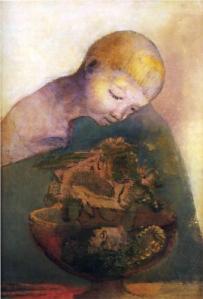
Cup of Cognition - The Childrens Cup, 1894

When we look upon our actions and see they do not coincide with our beliefs, we become distressed. This is one form of cognitive dissonance, a kind of jarring discord within the psyche. (Image: Wikipaintings)

Continue reading “How to Recognize Cognitive Dissonance”