Creative people are famously unstable, both emotionally and in their thinking; the artistic temperament is moody, and creators openly tolerate polarities in ideas and viewpoints that others reject, and then try to bury. Oscillations between two distinctly different modes of thinking may account for a lot of this instability and openness. Creators are more skilled in the combined use of two kinds of thought processes: linear thinking, which is verbal, logical, sequential, and analytic; and non-linear thinking, which is associative, more image oriented, non-sequential, and non-logical (but not irrational).
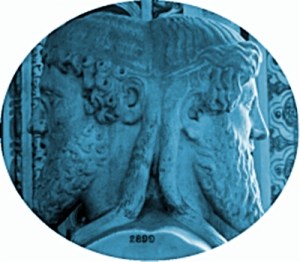
Janusian thinking is the combined use of logical and associative thinking. It can make a creative person appear unstable.
Who among us has not read, and /or seen some film production of, The Wind in the Willows by British author Kenneth Grahame? The memorable children’s classic was inspired by two enchanted years of Graham’s own childhood. During those magical years, he lived a remarkably free and unfettered life at the rambling home of his Granny Ingles in Cookham, a tiny village nestled in the lovely Berkshire countryside. His uncle introduced him to boating on the nearby river. He roamed the surrounding woods and farmland at will letting his young imagination run wild.
The Wind in the Willows author Kenneth Grahame was obsessed with recapturing the rustic magic of his childhood in Berkshire, not only in his works but in his life. (Image: public domain)
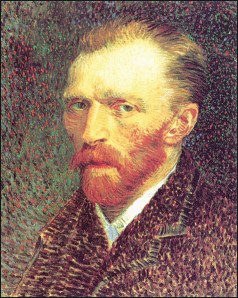
Why do art? For the immense intrinsic reward and the hope of touching others as the artist himself has undoubtedly been touched. The artist hopes to share his own attempt to make sense of his experience, with the aim of adding meaning to the lives of others. Vincent van Gogh was a perfect example of this artistic vision. He is also an example of how it can all go wrong. His early works depict toiling peasants and nature, but as he developed as an artist, he became obsessed with bright colour. He ended his tormented life by shooting himself with a revolver in a field filled with ripe golden wheat, the colour of which must surely have reminded him of the huge yellow sunflowers he loved so much and is so famous for painting.
Vincent van Gogh is a sobering example of how artistic vision can lead a creative person into difficulties. (Image: WPClipart)
The common perception of intuition is that it is blindingly fast, an almost instantaneous comprehension of some problem, question, or situation. In fact, definitions of intuition often describe it in precisely this way. The Concise Oxford English Dictionary says, “… the ability to understand something immediately, without the need for conscious reasoning.” In reality, when solving complex problems, intuition can be extremely slow. Sometimes, years may pass before the needed insight suddenly emerges into conscious awareness.
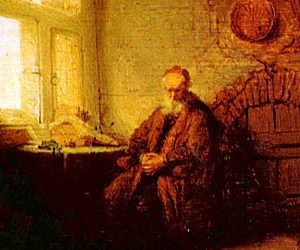
While it might end in a sudden epiphany, the lyric poet Rainer Maria Rilke saw intuition as a years-long process. (Image: Wikipedia)
Rilke’s Advice to a Young Poet
In 1903, the great lyric poet Rainer Maria Rilke wrote ten letters to a student seeking guidance. In the course of giving advice, Rilke reveals an attitude of patience towards garnering insights that would remain with him throughout his life. He reiterated this idea near the end of his days when, living in his lonely stone house in the Swiss countryside, he was finally able to complete his masterpiece, “The Duino Elegies,” which had been a decade in the making.
Regular visitors to this blog know that the French philosopher and spiritual writer Antonin Sertillanges is a favourite of mine and has been a huge influence on my thinking when it comes to living a thinker’s life; his thoughts on the lifestyle, attitudes, and work habits of the serious intellectual are always worthy of careful consideration. In this post, I am going to look at some key considerations that underpin a philosophical work and link them to my own subjective approach.
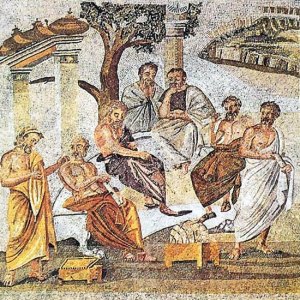
Effective philosophical works need a suitable scale, a unique personal perspective, and a definite focus. (Image: Wikimedia)
French philosopher and spiritual writer Antonin Sertillanges has described three virtues essential for the serious intellectual. I try to live by these virtues myself, or at least, by a slightly modified version, and have expanded Sertillanges’ brief definitions to make the merits more clear.
There are three important intellectual virtues, but you can still be an intellectual without them. (Image: public domain)
THE VIRTUE OF CONSTANCY
Nothing is more useful for an intellectual than the quality of being unchanging or unwavering in purpose. This does not mean you cannot sidle off on a diversion when you stumble on something intriguing. Nor does it mean you must carve your goal in stone. It does mean you must maintain some overarching goal that has enough flexibility to allow for adjustments as the work progresses. Without such a goal, you are unlikely to accomplish much and run the risk of getting lost among the tempting possibilities encountered along the way. A goalless intellectual fritters away the concentrated effort needed to put together a complete work or viable set of new ideas.
The ancient word “daemon” has returned to use as a way to describe the creative spirit within the unconscious. A person’s daemon is in charge of their calling or their life path and works to ensure that developments move forward as they should. It is an unnecessarily fanciful way of describing a genuine and observable phenomenon, but for the moment, we will allow the concept to stand.
Out of work, suffering from tuberculosis, and coughing blood, H. G. Wells saw his situation as a great opportunity. (Photo: public domain)
The daemons of psychologists Carl Jung, James Hillman, and similar others take advantage of accidents in the furtherance of their life goals. If a particular personal mishap does not suit, the daemon will wait for another. If none is forthcoming within a reasonable period, then self-sabotage may occur in order to generate the necessary life experience. The daemon must have what it needs to further the “calling” which it both guards and promotes, although this can be hard to perceive since each daemon, each calling, has its own unique requirements.
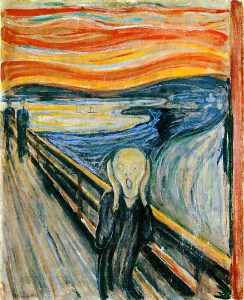
Expressionism is a style of painting, music, or drama in which the artist or writer expresses an inner emotional response rather than merely depicting an external reality. A deliberately exaggerated or altered rendition of reality allows the portrayal of subjective inner feelings. As an art movement, it was popular in Germany early in the 20th century. Edvard Munch’s familiar painting, ‘The Scream,’ was a precursor to the movement and the renowned canvas gives some idea of the technique.
Edvard Munch’s famous painting, The Scream, gives some idea of the emotional expressionist technique. (Image: public domain)
The German philosopher Johann Gottfried Herder provided expressionism with a powerful new philosophical underpinning. This was the idea that self-expression is a primal need of human beings. Moreover, unless they cripple themselves with inhibition or self-constraint, whatever a person does expresses their whole nature. A new attitude toward works of art themselves arises from the view that an artist reveals himself in what he does. Philosopher and historian Isaiah Berlin has pointed out that, prior to the advent of expressionism, works of art were valued primarily as objects. Their value had nothing to do with the artist who made them or why they had come into being. In fact, for most people today, this view of art objects still prevails. Herder believed that, since a work of art is an expression of the whole being of the artist, including his cultural identity, it must be valued within that larger frame.
Idealists can only love, respect, or admire that which they recognize as superior. Nothing else will do. The impractical idealist routinely overestimates some of the people and things around them. They want to believe they have found something or someone who is ideal rather than ordinary. Naturally, when idealists indulge in this behaviour they are inevitably disappointed. Rather than learning their lesson, the idealist sets out on an endless quest for the superior. Once established, the habit of idealization spreads into all areas of the idealist’s life making mischief wherever it goes. The true situation can be hard to grasp since many consider idealism a virtue. It is high-mindedness or even noble-mindedness. How could something so wonderful-sounding be a problem? The ego-enhancing benefits of being “an idealist” obscure the actual damage done by holding the belief.
Idealism and perfectionism prevent creative people from seeing their work objectively, thereby impairing the ability to assess its worth. (Image: public domain)
American philosopher of mind and of art, Suzanne Langer, asserted that the expression of one’s vague feelings, to clarify them for oneself, is artistic creativity’s primary purpose. This is certainly true, but her further claim that communication to others is merely a peripheral by-product does not stand up to close inspection. Research has shown that artists have a powerful need to share what they have learned. Art is the medium chosen for the clarification attempt precisely because the creator can share artistic products with others. However, where the attempt to share fails, as in those cases where the artist cannot win an audience, the artist will usually continue producing art anyway.
Creative people get lost and become blocked when they fail to recognize that the endpoint or goal of their project has shifted. (Image: public domain.)
According to Langer, “Art is the objectification of feeling, and the subjectification of nature.” That is, artists make their feelings about the world concrete by embodying them in some form of art, but since feelings are entirely subjective, the process results in an object that presents a subjective view of the world.




 Thomas Cotterill