Build Novel Chapters with Scenes

Stonemasons building a cathedral

At the level of structure, writing a novel is like a construction project. Understanding the basics will allow you to use imaginative architecture. (Image: public domain.)

How should we writers construct our chapters? Inevitably, the process starts with scenes. Some authors create lengthy scenes and simply make the big scene into an entire chapter. Novels constructed this way can seem slow moving, weighty, and dull, although skilled writers have made this work throughout the centuries that novels have been written. Writers of a more commercial bent often turn out short scenes and declare each little episode a little chapter. We have all seen the numerous genre books with three-, four-, or five-page divisions. While conceptually simple, and conducive to a fast-paced story, the scheme looks and feels crude. Most writers use multiple scenes, separated by spaces or asterisks, to assemble each medium-length chapter. This most popular arrangement combines reasonable pace with satisfying variety and complexity.

Write enough scenes to reach the desired or planned climax for the chapter. If you end up with too many scenes and your chapter is becoming too long, reconsider what you need to accomplish and look for places where there is already a nice climax and end the chapter there. Do not try to do too much in any one chapter. Only experience can help you here. Get in there and give it a try!

Continue reading “Build Novel Chapters with Scenes”

Synergistic Thinking

Creative thinking requires the skilful blending of linear and non-linear thinking. In more commonly used language, this means we must combine logical thinking with associative thinking. Before we go on, let us be clear that associative thinking is not the same as intuition. Associative thinking brings related ideas and events together in imagination or memory in ways that are not necessarily logical. Association may link a red barn with a red car (because they are both red) even though there is no logical reason to connect them. The associative connection may not be rigorously logical, but it is definite and understandable. Intuition is more emotional, more vague, a mere feeling or inarticulate hunch.

3D image of black and white swirls.

Synergistic thinking makes a synthesis of linear and non-linear thinking. In other words, it blends logic and association.  (Image: public domain)

Continue reading “Synergistic Thinking”

Artists Strive to Give Life Meaning

Powerful artists infuse their work with a blend of deliberately chosen emotional themes, their own emotionally important ideas, and subtly distinguished shades of meaning. The great work always starts with the individual, yet manages to present universal aspects of life. Artists do this by looking for the universal elements of their own experience. They never lose sight of the simple fact that we are all human beings. What happens to one of us, in some specific way, has undoubtedly happened to others, in somewhat different ways. Artists suggest the underlying commonality and reveal the universal. In this way, they make the specific general, the individual universal.

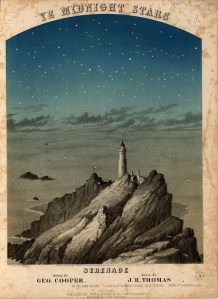
Lighthouses and stars are examples of those images with a rich array of symbolic meanings favoured by writers, poets, and painters. (Image: public domain.)

Continue reading “Artists Strive to Give Life Meaning”

Successful Novels Are Filled with Emotion

British author Colin Wilson highlights a critical aspect of art when he writes, “A work of art holds an emotion as a bottle holds wine.”

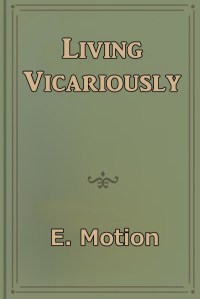
Book Titled Living Vicariously by E. Motion

We read books to enrich our emotional lives by living vicariously through the moving experiences of a novel’s characters. (Image: public domain.)

Writers should never underestimate the novel’s vitally important role as an emotional mechanism. A novel is a “device” to make people feel. Therefore, when planning and writing each scene we need to ask ourselves what emotion we wish to arouse in the reader and toward which character or setting we want to direct the feeling. Paying attention to these two tasks will ensure each scene has the right kind of well-focussed emotion. Our scenes will seem satisfying and have weight.

How do we handle the novel’s cerebral aspects, its “message?” Most people are not intellectually inclined and even fewer enjoy a sermon. Readers will not tolerate long-winded theoretical or ideological explanations. We must transmit all content of an intellectual nature to the reader via the “carrier wave” of feelings. As we search for some emotional way to convey an idea, we should keep in mind that all thoughts carry a mood or feeling just as all emotions have thoughts for companions. The human mind stores its information in what the scientists call emotional-cognitive structures. Note carefully the term’s hybrid nature, the blend of feeling and idea. By wrapping our ideas in a suitable emotional package, we can deliver them to all readers.

Continue reading “Successful Novels Are Filled with Emotion”

How Creative People Think

Highly creative people are different from the average person. It is not that the typical man or woman on the street is not creative. It is just that the quality creator functions at a greater level of sophistication and (often) output.

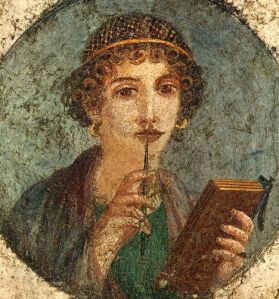
Thoughtful Young Woman of Pompei

Creative people are both more flexible and more selective in the way they think. (Image: public domain.)

Three factors make these creators stand out.

First, such people possess the ability to think profitably by a variety of means. That is, they have at their disposal a range of thinking techniques. There is a characteristic flexibility to their thinking not usually seen in ordinary life. In most cases, they did not consciously acquire this powerful set of thought tools. They picked them up unknowingly as they pursued one interest or another. Often they have explored a series of interests. The primary thinking tools are contradictions, comparisons, images, and metaphors.

Continue reading “How Creative People Think”

Classic Writers and Personal Computers

Among important writers of the past who would have welcomed and used personal computers?

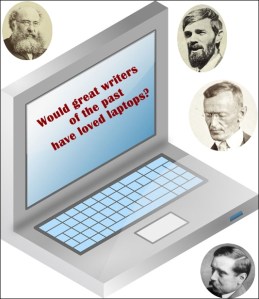
Laptop computer surrounded by faces of classic authors

Word processor anyone? Would great writers of the past have welcomed personal computers? (Image: public domain.)

H. G. Wells was a great believer in science and progress. In fact, he was a science teacher until tuberculosis forced him to give up that profession. Always an early riser, and a disciplined writer who believed in regular daily production, he did all his work at a desk in his study. Writing came before all other tasks for the day. I see him as a definite candidate for a well-equipped desktop computer.

Continue reading “Classic Writers and Personal Computers”

The Wound and the Bow Revisited

Edmund Wilson

Edmund Wilson, author of The Wound and the Bow, argued that suffering was the mother of creativity. But what if suffering and creativity are actually siblings? (Image: public domain.)

Some argue that creativity and genius spring from a profound sensitivity to subtle differences. Such sensitivity, such fine perception, makes possible deep and powerful art. However, it also leaves its possessor wide open to pain and damage from life’s rough and tumble course. The less sensitive miss the subtle insults, the small slights by omission, and the finer points of innuendo. The more sensitive and perceptive do not.

One is, therefore, tempted to speculate that creativity does not, as is so often assumed, come from being wounded or mad or riddled with polarities, ambivalences, and conflicts, but that these difficulties are simply another product of being sensitive. Collateral damage, as the military types would say. Inner torment is not the parent of creativity; it is its sibling.

Continue reading “The Wound and the Bow Revisited”

Henry Miller’s Childhood Reading

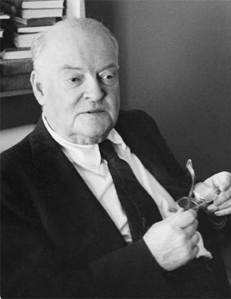
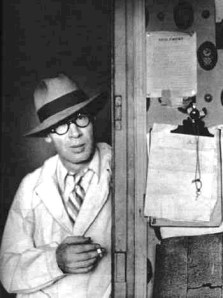
Henry Miller

Henry Miller is a good example of how childhood reading has a powerful effect on the kind, and style, of work writers produce as adults. (Image: public domain.)

I enjoy comparing my own adventures among books with those of famous authors. All writers, whether they are well known, obscure, or as yet unpublished seem to have a lot in common. However, there are exceptions. Henry Miller, author of oft-banned books such as Tropic of Cancer, seems to be one of them.

In The Books in My Life, Miller describes his vivid memories of books read during his childhood. He has astonishingly clear recollections of covers, illustrations, historical eras, famous people, even where he first encountered certain words. Looking carefully at that list of recollections, I decided he must have been a heavy reader of non-fiction. It struck me how much Miller’s rememberings differ from my own memories of youthful encounters with books.

Continue reading “Henry Miller’s Childhood Reading”

Fantasy Writers and the Sense of Enchantment

There are many reasons why people write. Each writer has a reason of their own, and no two are exactly alike. Much of my writing is fantasy. Why that is so may help you understand your own impulse to write fiction of one kind or another.

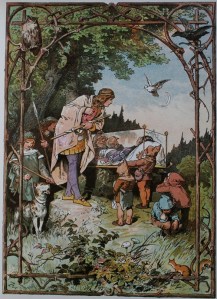
Scene from Snow White and the Seven Dwarves

Writers are often trying to recapture a favourite mood. Work after work is produced as they hone in on the cherished feeling tone, which can be quite specific and durable. (Image: public domain.)

Like so many people, when I was small I possessed a powerful ability to enter a state of enchantment. The feeling prospered until, at twelve, a broken heart drove enchantment from my life completely. How deeply we feel things at that age! Luckily, not all was lost. There were books in the world. My love of reading soon rekindled the magical feeling. It disappeared again during the trials and tribulations of late adolescence. This time I was more aware and made strenuous efforts to retain it. Those efforts were of no avail. The loss of enchantment made life seem grim and not terribly worthwhile. Thinking that enchantment was a thing for children, I entered adulthood in a sadly disillusioned state.

Continue reading “Fantasy Writers and the Sense of Enchantment”

Make Your Story’s Setting Work For You

The most powerful way to depict setting is with telling details that affect and influence characters in the same way as does plot. The technique adds unity by tying the setting to the story’s characters. They are not just in the setting; they are interacting with it. How characters respond emotionally to the setting allows readers to identify and empathize with them. We all know what it is like to enjoy or dislike a particular place. When writers have their characters tell what they feel, readers will, based on their own personal preferences, agree or disagree. Either way, their feelings are engaged.

You can develop a character by showing how he or she reacts to your setting and why. (Image: public domain.)

Continue reading “Make Your Story’s Setting Work For You”