What Socrates Meant by the Examined Life

When Socrates said, “the unexamined life is not worth living” he was not recommending a life spent in endless naval-gazing, the practice of complacent self-absorption. He meant something far more rigorous. Pertaining to our day to day lives, he was telling us that philosophy is a lifelong dedication to accurate analysis and sound critical thinking about what life is and all that it means. Regarding our inner lives, we interpret his words as a call to honest introspection and an indication of the rich rewards that flow from the practice.
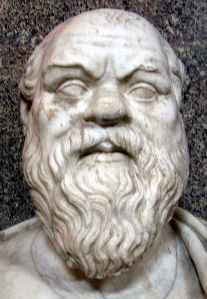
The Socrates Bust in the Vatican

When Socrates said, “the unexamined life is not worth living” he was challenging us to a lifetime of rigorous introspection. (Photo: Wikimedia)

This raises an important question. What is the difference between introspection and self-absorption?

Rumination as a (Possibly Bad) Habit

I am an introvert. Like all introverts, rumination is a way of life for me. Across many years, I was a conscious believer in the act of rumination, which I will define as the fine art of sitting and doing nothing while letting the mind idly wander or perhaps ponder, often somewhat obsessively, some event of the day. What I randomly mulled over might include an anxiety-inducing blunder I had made, something someone had said that seemed to have important overtones, or more happily, my creative writing or a new philosophical idea.

Continue reading “What Socrates Meant by the Examined Life”


Turn Your Anxiety into an Asset

A great deal of confusion surrounds the emotion we call anxiety. The feeling is unpleasant and makes us want to avoid whatever has aroused it, but we all know there are times (like going to the dentist) when we have to press on regardless. Few of us would ever think to describe anxiety as an asset. Yet life coach and holistic psychotherapist Robert Gerzon, author of Finding Serenity in the Age of Anxiety, actually believes anxiety can be extremely useful. In fact, he claims that “follow your anxiety” is as good a dictum as Joseph Campbell’s “follow your bliss”! He sincerely holds the view that anxiety will take us to the same destination as our bliss, a position predicated upon the idea that the pursuit of bliss will inevitably lead us into anxiety-inducing situations that we must face and overcome in order to achieve the bliss we seek.

Man Getting Anxious over His Finances

Contrary to what you might expect, anxiety can be a very useful feeling. (Photo: Public Domain Photos)

Continue reading “Turn Your Anxiety into an Asset”

Debunking the Butterfly Effect

These days we are all familiar with the concept of the “butterfly effect.” The usual formulation goes something like this: when a butterfly flaps its wings in one part of the world (often the Amazon jungle) it can cause a hurricane in another part of the world. The colossal disparity in magnitude between cause and effect embodied in the idea has fired the collective imagination around the globe.

Butterflies surround a glowing ball of energy

At the level of our lives, the famous butterfly effect is largely an urban myth. (Image: Thomas Cotterill)

The butterfly effect was “discovered” in 1961 by MIT meteorologist Edward Lorenz. He was working at the time as an assistant professor in MIT’s department of meteorology where one of his projects involved an early computer program designed to simulate weather. As so often happens in science, his discovery was accidental. Looking to save some input time, he rounded one of a dozen numbers representing atmospheric conditions from .506127 down to .506. To his amazement, the tiny reduction utterly transformed his long-term forecast. Lorenz wrote about the experience in a 1972 paper titled, “Predictability: Does the Flap of a Butterfly’s Wings in Brazil Set Off a Tornado in Texas?” The title was imaginative, intriguing, and provocative. A completely new idea was born. Vast opportunities for exciting scientific speculation suddenly sprang into being.

Continue reading “Debunking the Butterfly Effect”

Simone de Beauvoir on Death

Like all those who place the ego’s false persona before all else, Simone De Beauvoir struggled mightily with the reality of death. She writes of “the scandal of finiteness,” referring to our inescapable mortality. When you insist on emphasizing your separateness and see yourself as merely an isolated conscious ego, it becomes inevitable that fear of the permanent extinction of consciousness — occasioned by physical death — will threaten your peace of mind. Death can become something of a preoccupation.

Sartre and de Beauvoir at Balzac Memorial

Simone de Beauvoir and Jean Paul Sartre wanted more from life than it could give. (Photo: Wikipedia)

The real scandal here is de Beauvoir’s way of ignoring the bigger picture — the immortality of the human race, which transcends individual mortality. Unfortunately, for those locked into believing they are merely a self-made false persona, only the individual counts. They never look beyond the boundaries of self-absorption and never seem to learn that such selfishness comes at a terrible price. Placing too much emphasis on maintaining a false image is a massive source of anxiety. The chronic angst generated by the necessity of maintaining and defending an idealized false persona is confused with fear of death and labelled existential angst. However, it is the dread of humiliation and exposure as a fraud that really drives this kind of continuing anxiety. The more-immediate fear is the death of the false persona.

Continue reading “Simone de Beauvoir on Death”

Unconscious Political Correctness

The other day, I got to wondering why so many who obviously are politically correct deny being so when someone points out to them that they hold such views. I think the answer lies in the way most of us acquire our attitudes and opinions. Few of us are dedicated philosophers or deep thinkers so we form our opinions piecemeal, often over a considerable span of time. We do not suddenly buy into an established ideology or pre-packaged set of ideas. Most of us recognize the foolishness of such a thoughtless swallow-it-whole move.

No Political Correctness Sign

It is possible to absorb politically correct (and other) attitudes without realizing what is happening. (Image: Thomas Cotterill)

Because of this piecemeal approach, participants in the politically correct worldview have probably absorbed the values one at a time as they encountered them. As is now well known, there is a strong leftist bias in education, the arts, the media, television, Hollywood, and so on. We meet political correctness everywhere. Such views are on the six o’clock news, embedded in sitcoms and dramas, presented in magazines and newspapers, flashed across the big screen in the latest Hollywood blockbusters, embedded in novels, and discussed on television talk shows. We may also encounter the worldview among our already-persuaded family members, friends, and co-workers. Seldom do these isolated examples of politically correct thinking bear the specific label “Politically Correct.” However, the notion that they are unquestionably a good thing is implicit in the mode of presentation. It is often very persuasive.

Continue reading “Unconscious Political Correctness”

Why the West Is Falling Apart

A striking feature of socialist Europe is the proliferation of separatist movements. Growing numbers in Northern Ireland want to split from the UK and found a new nation called Ulster. Nationalists in Scotland also want to go it alone. Belgium’s Flemings (the Dutch) want independence and some Walloons (the French) have responded with a proposed state of their own (you cannot fire me, I quit!). Denmark’s Faroe Islands and Greenland both have independence movements. In France, there are separatist rumblings in Brittany, Corsica, and the Basque country. Catalonia has recently expressed its displeasure with being part of Spain. Germany’s Bavaria gets restless now and then. In fact, there are many such movements within most European countries, although not all of them must be taken seriously.

Map of separatist movements in Europe

A preoccupation with ethnicity, minorities, and differences erodes national identities based on what a people have in common. (Photo: public domain)

Continue reading “Why the West Is Falling Apart”

Romanticism’s Claim on Individuality

Romantics like to think of themselves as unique individuals who have the strength of character to go against the flow. They describe anyone who stays in the mainstream as a “conformist,” a word with negative connotations.

A man stands atop a mountain looking down at the clouds

Romanticism promotes an anti-social emphasis on individuality and self-absorption. (photo: public domain)

Academic and novelist Ann Swinfen has some interesting things to say about this topic as it relates to C. S. Lewis’s The Chronicles of Narnia. In her work of literary criticism, In Defence of Fantasy (1984), she points out that Lewis was against individualism and in favour of conforming to religious orthodoxy and societal norms. His fiction reflects this strongly held rational philosophy.

Continue reading “Romanticism’s Claim on Individuality”

Do Memes Have a Life of Their Own?

We had better start with a clear definition of the term, meme.

“Meme: (biology) a cultural unit (an idea, value, or pattern of behaviour) … passed from one person to another by non-genetic means (as by imitation)” (WordWeb).

Portrait photo of science fiction writer Robert J. Sawyer.

SF writer Robert J. Sawyer often jokes that he is more interested in the survival of his memes than his genes. (Photo: sfwriter.com)

In other words, memes are the cultural counterpart of genes. Like genes, anyone can pass on his or her memes. Unlike genes, individuals who are willing to do the work can create memes.

Canadian science fiction writer Robert J. Sawyer has said on more than one occasion that, “… I like to quip that I’m more interested in the survival of my memes than my genes …” Sawyer knowingly works his memes into his stories and novels thereby making it possible for others to see and adopt them, and then, hopefully, pass them on yet again. Anyone who deliberately includes their own ideas and values in their work shares Sawyer’s openly expressed desire to spread his memes. However, they may be considerably less conscious of what they are doing. I want to play with the sometimes poorly understood impulse to spread one’s memes so let me pose a suggestive question.

Continue reading “Do Memes Have a Life of Their Own?”

How We Misunderstand What Is Normal

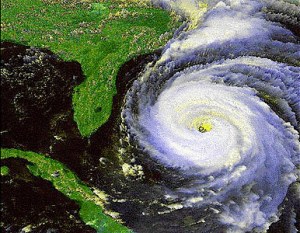
The term “normal” once referred to the statistical idea of average (the norm), but in recent decades the word has acquired instead the medical connotation of “healthy.” Even the hard sciences are affected. In good science, the opposite of normal (abnormal) in the statistical sense means “not average”; that is, above average or below average. No judgement is implied. However, when one switches to the frame of reference acquired from medicine, the opposite of normal is “pathological,” and a value judgement is very definitely evident. This switch or drift in the meaning of normal has become practically universal and increasingly harmful.

Satellite view of a hurricane near Florida

Weather is just one of many areas where we have lost sight of what constitutes normal. We now use a medical model rather than a statistical one. (photo credit: wpclipart.com)

Continue reading “How We Misunderstand What Is Normal”

The Ship as Metaphor for the Self

The authentic self comprises the unique set of our most potent and precious emotionally important ideas. We acquire the basics of these mental constructs as children when, through our behaviour, our genes interact with our physical and social environment. Their uniqueness is what makes us all natural individuals. (Yes, without even trying, if we can stay out of our own way.) Unless we make them conscious – and we can – these assorted emotionally important ideas live in the unconscious where they generate our true will. We are all born with the urge for self-realization and the capacities we want to fulfil are an integral part of the authentic self.

Square-rigged sailing vessel

Functional aspects of the authentic self may be compared to the working parts of an old-fashioned sailing ship. (Image freeclipartnow.com)

An old-fashioned sailboat or square-rigged ship makes a useful metaphor for illustrating the importance of our emotionally important ideas. (Or as some would say, subjectively formed guiding principles). Once we are aware of them, these ideas or principles give our “ship of self” a number of useful qualities:

Continue reading “The Ship as Metaphor for the Self”