Creative Freedom Is Overrated

Many myths surround the creative process. One of these is the notion of creative freedom. It seems obvious that having a free rein could only be beneficial. So prevalent is the attitude that many contemporary creators will refuse to tackle a project that has restrictions. They turn up their noses and stalk haughtily away proclaiming that they could not possibly compromise their artistic vision and personal integrity by acquiescing to anything as philistine as limitations.

H. G. Wells

Where anything is possible, nothing is interesting. — H. G. Wells (Photo: public domain)

I am going to argue the counter-intuitive idea that restrictions are actually an asset. You may be surprised to learn that many famous creators share the point of view.

H. G. Wells expressed a related sentiment when he said, “Where anything is possible, nothing is interesting.” He was referring to stories, of course. He believed that a hero who could do anything or a situation where anything was possible meant there were no challenges to overcome, no obstacles to surmount, and no dangers to survive. Where is the interest in such a scenario? Who wants to read a story where there are no limits on what a hero can accomplish? Where is the suspense in a story based on the assumption that at any moment some miraculous turn of events will save the day? Only a story where the hero faces the possibility of humiliation, failure, or even death can engage the reader’s concern.

Continue reading “Creative Freedom Is Overrated”

The Troubled Hero Is a Champion of Individuality

The heroes we see in today’s action movies are quite different from the heroes of legend and literature. Film – being short and dealing largely with externals – does not easily allow for deep insights into a character’s inner life. Heroes played by the likes of Arnold Schwarzenegger or Bruce Willis are neither thoughtful nor subtle. They are never inwardly complex. Their heroism is all in the external world and conflicts are always struggles with other people or life-threatening situations. Such tales are certainly entertaining, but they provide nothing to illuminate the more psychological aspects of being human.

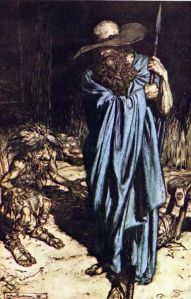
Wotan Visits Mime

Heroes in myth, legend and literature are often profoundly troubled and provide deeper insights than action heroes. (Image: public Domain.)

In myths, legends, and literature heroes serve a greater purpose. Through their heroic struggles, they demonstrate more than just singular physical feats or acts of physical courage. There is an inward component to their heroic adventures. These heroes are often profoundly troubled people. They have inner conflicts that have rendered them social misfits. They may be unusually sensitive, and/or intelligent, and because they are so different from the “well-adjusted” they suffer. Their suffering forces them into seldom-used paths quite far from the collective ones approved by society. They strive for things never attempted by the ordinary person. The battles along the way provide a great opportunity for strengthening personal growth. By trying to ease their pain, they have become extraordinary. They have inadvertently become heroic.

Continue reading “The Troubled Hero Is a Champion of Individuality”

Why Personal Philosophies of Life Are Becoming Rare

The Cosmos Fascinates Us

Einstein had his cosmic religious feeling, but today’s preference for emotion at the expense of reason represses or impairs the urge to work out a personal philosophy of life. (Photo: S. Brunier/ESO)

What Einstein referred to as the “cosmic religious feeling” is a drive, like sex, hunger, thirst, and so on. Fear exists to make one run when flight is necessary. Anger makes one fight when struggle is necessary. Thirst makes one drink to avoid death by dehydration. Hunger makes one eat to avoid death by starvation. Lust makes one copulate to ensure the survival of the species. The cosmic religious feeling makes one quest for answers – the purpose being to advance the cause of Man’s ever-growing consciousness and to enhance our scientific understanding of the cosmos. The tools of this quest or task are introspection and intellectual striving. One of its interesting by-products is art.

Continue reading “Why Personal Philosophies of Life Are Becoming Rare”

Socialism Tramples Unpopular Minorities

A herd of cows symbolizes herd mentality

Who shall we trample next? Socialism allows majority voting blocs to use government as a weapon against minorities. (Image: Public Domain Pictures)

More than ever before, people gleefully identify with and join “the herd.” I believe a lust for power in an age when individuals feel helpless drives this rapacious enthusiasm for joining the “majority.” Socialism is the major contributing factor here. When socialist democracies (and all Western nations are socialist democracies) espouse the idea that any majority has the right to control the property, money, and behaviour of any minority, it inevitably elevates herd thinking and values to the status of duly enacted law. The herd votes to clobber the rich, the one percent, the conservatives, Wall Street, the bankers, or big oil. Even smokers take it on the chin, as does anyone else who has unluckily aroused the herd’s anger or acquired a negative image in the leftist-dominated media. This observable fact makes participation in the herd a way to control others through the government. The aim is to restore, albeit ultimately at one’s own expense, one’s sense of personal empowerment.

Continue reading “Socialism Tramples Unpopular Minorities”

Where Does Will Come From?

Einstein’s recipe for his success – curiosity, obsession, and stubbornness – might also be listed as curiosity, wilfulness, and headstrongness. He was self-willed, possessed a lot of willpower.

Coronation Chair for a King

Will occupies the seat of power in the psyche. But where is that seat? (Image: public domain.)

These days we say will or willpower does not work, pointing to those who fail to diet or quit smoking as proof. The trouble here is that the decision to diet or quit smoking is just that – a conscious decision – and not an act of will. What these folks will is to go on eating and smoking, so in truth, their “failures” are actually proof that willpower does work. To change something about oneself, or to accomplish some difficult thing, one must will that it be so – not decide – will.

Continue reading “Where Does Will Come From?”

How Artists and Scientists Explain the World

The Cosmos We Seek to Explain

Artists and scientists explain the world in very different ways. Surprisingly, scientists are abstract while artists are concrete. (Image: public domain.)

A crucial aspect of all creative work is the attempt to garner, and then communicate, insights into our lives and the world in which we live. The shallower forms of popular psychology seem to have influenced many creativity researchers and authors who write books about the creative process. One commonly meets the claim that the creative process is identical in both artists and scientists. In fact, to wander just a bit, some writers go so far as to say everyone probably has the same capacity for creativity. It just manifests in different ways depending on where the individual’s interests lie or what his life situation is. These notions may sell books by making the average person feel they are as creative as anyone else is, but they do nothing to explain the obvious reality that some folks stand far above the rest when it comes to creative ability.

Continue reading “How Artists and Scientists Explain the World”

Second-Hand Worldview

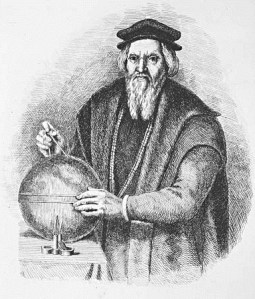
Explorer Sebastian Cabot with Globe

Most folks just buy into the consensus worldview of their time unquestioningly adopting it as they grow to maturity, but this means we have a second-hand worldview made by others. (Image: public domain.)

Human beings have an inborn need to make sense of their lives and the world around them. The drive is stronger in some (such as artists and philosophers) than in others, but generally, we all want to know what things signify. Knowing the meaning of something means knowing how things fit together. To make sense of our lives, to give them meaning, it is essential that we possess a comprehensive, consistent, unified worldview.

Worldview is defined (by COED) as “a particular philosophy of life or conception of the world.” At first glance, this suggests an objective view of things, something you could study in a book and learn, either by rote, or by understanding. Ideologues do just that, adopting viewpoints like the cultural Marxism currently so popular with the left. Religious people do the same, converting to one sect or another’s standard declared creed. Most folks just buy into the consensus worldview of their time unquestioningly adopting it as they grow to maturity.

Continue reading “Second-Hand Worldview”

Are Culture Wars a Symptom of Western Decline?

Victory Arch of Emperor Constantine

The victory arch of Roman emperor Constantine. The arch once symbolized spectacular victory — there are many examples in European cities — but its shape does suggest a process of rise and inevitable fall. (Image: public domain.)

When I was a young man, a popular topic for intellectuals was the decline of the West. As liberal ideas spread and moral standards declined, many writers drew parallels with the Roman Empire in its last days. German historian and philosopher Oswald Spengler had popularized the notion in the 1920s. By the late 20th century, with the complete triumph of the left, the idea had fallen from favour.

As Winston Churchill said, “history is written by the victors.” Today, we see the left rewriting Western history and those who cause a decline seldom see reason to find fault with their role in it. As it happens, the left does not see a decline at all, only an incomplete change to leftist outlooks, values, and policies.

Continue reading “Are Culture Wars a Symptom of Western Decline?”

How Do We Acquire a Calling?

A calling is a strong inner urge to become religious, or take up some specific way of life, vocation, or activity. I cannot speak for today’s churches, but the ancient concept prospers in the arts. Many writers, poets, composers, and painters will happily describe how they were “called” to their particular art form.

Romantic image of a ruined castle on a rugged coast.

The romantic landscape may summon the feeling. Call it joy, delight, enchantment, or bliss, we all spend more time chasing it than we realize. These special feelings point the way to our spiritual or vocational calling.

How does one acquire a calling? The old myth of the soul choosing its life before it is born presents us with an entertaining idea, but one that is, when one stops to think about it, not very enlightening. In the end, such easy mystical explanations leave one feeling unsatisfied. By hiding more than they reveal, they do not assuage the hunger to know and understand. Let us leave aside such colourful fancies and look for a more substantial way of coming to grips with our question.

Continue reading “How Do We Acquire a Calling?”

Are You Living Wilfully?

In this post, I want to take a brief look at one of the oldest philosophical questions: Do we humans enjoy free will or are we subject to what the ancients referred to as Fate? The West has long believed that free will prevails. Although confusion is growing – as this post will reveal – by and large both Western philosophical thought and the Christian religion have upheld the notion of humankind’s inherent right to self-determination. The philosophers do not believe in any limiting supernatural forces and, in the case of the religious, God can only judge.

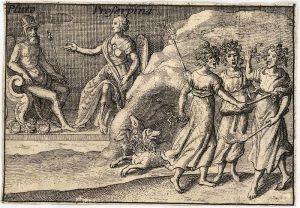
Hades, Persephone, and Cerberus with The Fates

In the ongoing explosion of irrationality, some modern thinkers are trying to deny the power of human wilfulness and restore the old notion of Fate. The ancient Greeks personified the belief as three goddesses called The Three Fates. (Image: public domain.)

Continue reading “Are You Living Wilfully?”