Androgynous Minds Generate Synergistic Thinking

I have written elsewhere that the most creative among us possess the power to combine linear conceptual thinking with non-linear associative thinking. This ability to unite the two thinking modes works the creative magic that sets these people apart. A person who heavily favours one mode of thought over the other will inevitably lack outstanding creative powers.
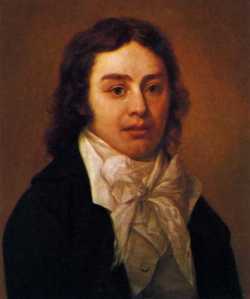
Samuel Taylor Coleridge

Samuel Taylor Coleridge claimed that a “great mind must be androgynous.” (Image: Wikimedia)

Just such a situation exists in the minds of ordinary men and women. It is unfashionable to say so, but the fact remains that, overall, men favour a preponderance of abstract, conceptual, linear thinking while women prefer a greater reliance on associative non-linear thinking, source of the old-fashioned, and misnamed, “women’s intuition.” Therefore, being normally one-sided, most of us are limited in our creative reach.

Continue reading “Androgynous Minds Generate Synergistic Thinking”
Revealing New Angles on Psychology

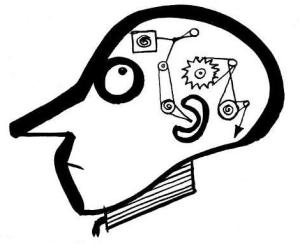
The best way to understand anything complex is to view it from more than one angle. Assimilating different perspectives provides insights not attainable in any other fashion. In that spirit, I offer a concise attempt to understand human psychology from the perspective of the creativity and human cognition researchers. I have positioned everything around the key concept of emotional cognitive structures, the brain’s way of storing its data in emotionally related clusters.

Inner Workings of the Brain

It can be useful to view psychology from the more concrete perspectives of creativity research and recent investigations into brain function and human cognition. (Image: public domain)

Continue reading “Revealing New Angles on Psychology”

Using Mood to Enhance Your Creativity

Scientists studying human cognition have found that memory and mood are inextricably intertwined. Even more interesting is that we can take advantage of this situation by using a simple technique known as nuance priming.

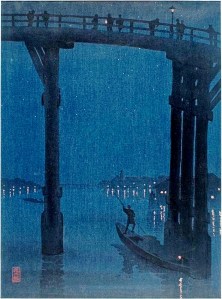
Moody Night Scene on the River

We can deliberately use mood to enhance our ability to notice relevant information within ourselves and in the world around us. (Image: Vintage Printable)

Nuance priming is also a creativity research term. It means recalling or getting into a particular mood in order to exploit the brain’s habit of using feeling tones to sort and store information in related clusters called emotional cognitive structures. This is a fancy way of saying that the brain files ideas and memories in groups according to their feeling tone. Recall feeling tone X and we will get access to other things stored with the same, or similar, mood. This is a kind of deliberate associative (as opposed to logical) thinking. However, we are not actually doing the associative thinking. We are setting up a scenario to make use of the brain’s natural associative way of doing things.

Continue reading “Using Mood to Enhance Your Creativity”

Creativity Can Cause Anxiety

Being Creative Means Taking Risks

Creativity involves a thought that goes beyond the generally accepted, provokes anxiety in others and tests the security of one’s own perceptions. – Peter Lomas in Cultivating Intuition

Anxiety is the hand maiden of creativity. – T. S. Eliot

Surreal image of a ghostly face, and a woman flying near the Eiffel Tower

Strong innovation, striking originality, and prolonged gestation periods can all generate feelings of anxiety.
(photo: publicdomainpictures.net)

These quotes may explain why so many great creators show signs of psychological stress. Depression is famously common among writers, for example. However, this is not to say that mental disorder is necessary for creativity to flourish.

Continue reading “Creativity Can Cause Anxiety”

Where Does Will Come From?

Einstein’s recipe for his success – curiosity, obsession, and stubbornness – might also be listed as curiosity, wilfulness, and headstrongness. He was self-willed, possessed a lot of willpower.

Coronation Chair for a King

Will occupies the seat of power in the psyche. But where is that seat? (Image: public domain.)

These days we say will or willpower does not work, pointing to those who fail to diet or quit smoking as proof. The trouble here is that the decision to diet or quit smoking is just that – a conscious decision – and not an act of will. What these folks will is to go on eating and smoking, so in truth, their “failures” are actually proof that willpower does work. To change something about oneself, or to accomplish some difficult thing, one must will that it be so – not decide – will.

Continue reading “Where Does Will Come From?”

Second-Hand Worldview

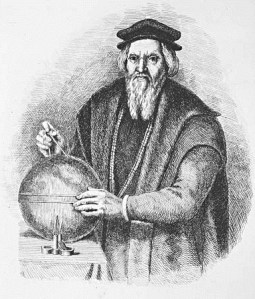
Explorer Sebastian Cabot with Globe

Most folks just buy into the consensus worldview of their time unquestioningly adopting it as they grow to maturity, but this means we have a second-hand worldview made by others. (Image: public domain.)

Human beings have an inborn need to make sense of their lives and the world around them. The drive is stronger in some (such as artists and philosophers) than in others, but generally, we all want to know what things signify. Knowing the meaning of something means knowing how things fit together. To make sense of our lives, to give them meaning, it is essential that we possess a comprehensive, consistent, unified worldview.

Worldview is defined (by COED) as “a particular philosophy of life or conception of the world.” At first glance, this suggests an objective view of things, something you could study in a book and learn, either by rote, or by understanding. Ideologues do just that, adopting viewpoints like the cultural Marxism currently so popular with the left. Religious people do the same, converting to one sect or another’s standard declared creed. Most folks just buy into the consensus worldview of their time unquestioningly adopting it as they grow to maturity.

Continue reading “Second-Hand Worldview”

Living the Creative Life

Creative people view life a little differently than does the average person. They manifest a much greater degree of commitment to their work. A notable result of this dedication is their highly selective attitude towards what they will and will not do with their time. Much more than the typical individual, they recognize that time is a limited resource and must not be squandered if something is to be accomplished.

Thomas Edison in His Lab

We have all heard the stories of how the creative Thomas Edison practically lived at his lab. (Photo: Wikimedia)

Creative individuals do not waste energy on unsolvable problems. They do not indulge in what Virginia Woolf so aptly referred to as “woolly thinking.” To achieve this efficiency, they develop the skill to recognize what is feasible and what is not. Going back another step, they are able to acquire the ability to assess feasibility because they immerse themselves completely in their work (commitment again) and learn its parameters and boundaries with unusual thoroughness. When they decide to tackle a project, they know it is workable in the long run.

Continue reading “Living the Creative Life”

How Do We Acquire a Calling?

A calling is a strong inner urge to become religious, or take up some specific way of life, vocation, or activity. I cannot speak for today’s churches, but the ancient concept prospers in the arts. Many writers, poets, composers, and painters will happily describe how they were “called” to their particular art form.

Romantic image of a ruined castle on a rugged coast.

The romantic landscape may summon the feeling. Call it joy, delight, enchantment, or bliss, we all spend more time chasing it than we realize. These special feelings point the way to our spiritual or vocational calling.

How does one acquire a calling? The old myth of the soul choosing its life before it is born presents us with an entertaining idea, but one that is, when one stops to think about it, not very enlightening. In the end, such easy mystical explanations leave one feeling unsatisfied. By hiding more than they reveal, they do not assuage the hunger to know and understand. Let us leave aside such colourful fancies and look for a more substantial way of coming to grips with our question.

Continue reading “How Do We Acquire a Calling?”

Are You Living Wilfully?

In this post, I want to take a brief look at one of the oldest philosophical questions: Do we humans enjoy free will or are we subject to what the ancients referred to as Fate? The West has long believed that free will prevails. Although confusion is growing – as this post will reveal – by and large both Western philosophical thought and the Christian religion have upheld the notion of humankind’s inherent right to self-determination. The philosophers do not believe in any limiting supernatural forces and, in the case of the religious, God can only judge.

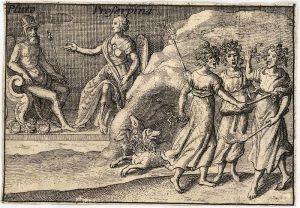
Hades, Persephone, and Cerberus with The Fates

In the ongoing explosion of irrationality, some modern thinkers are trying to deny the power of human wilfulness and restore the old notion of Fate. The ancient Greeks personified the belief as three goddesses called The Three Fates. (Image: public domain.)

Continue reading “Are You Living Wilfully?”

Did the Human Mind Create the Cosmos?

In the early days of the Christian era, a curious flip or reversal of reality occurred in the minds of the period’s thinkers. Faced with the insecurity engendered by the steady decline of the Roman Empire they decided the old assumption that “I die but the world goes on,” should actually read, “the world dies but I go on.” Thus the idea of immortality was born. Life continued eternally after death. The individual survived, while the world eventually ceased to exist.

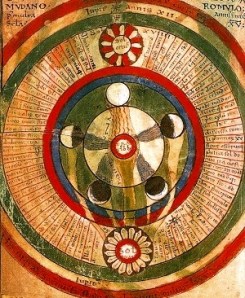
An Old Diagram depicting the cosmos

Do human beings literally create the cosmos by thinking and conceiving ideas about how it works? (Image: public domain.)

A similar phenomenon of reversal is growing in our own time. Faced with the rapid decline in the importance of humankind brought about by the discoveries of science, some of today’s “thinkers” have taken to reversing the idea that puny man discovers or uncovers a pre-existing universe and its preset laws. They offer instead the elevating concept of man-the-god, a being that creates the universe and its laws in an ongoing off-the-cuff manner simply by thinking about the cosmos and how it works. There were no black holes, according to this way of looking at things, until some astrophysicist thought them up! (A more likely explanation is that the concept came first and then someone juggled the facts to fit the concept, but we will leave such “cynical” considerations for a future post.)

Continue reading “Did the Human Mind Create the Cosmos?”