Tradition Can Ease the Fear of Death

Fear of death is mostly dread of the permanent loss of conscious awareness. We see that expiration, the snuffing out of the light, as the final irrevocable end of who we are, the irremediable dissolution of our identity. However, our consciousness is not who we are – it is only our way of knowing who we are. We prove this every night when we sleep and consciousness dissolves, only to magically reappear the next day. If consciousness is who we are, how do we survive this regular extinction? We survive because the self is who we really are.

Man with sword fighting Death

Tradition can ease the fear of death by overcoming social- and self-alienation and providing assurance that some part of us will live on.
(Image: wpclipart.com)

The self lives in the unconscious and the unconscious never sleeps. Picture it as a well-furnished room. We store our memories there. Consciousness is the light that enables us to see and know them. Switch off the light – as in sleep – and the furnished room remains, and we see it once more when consciousness, the light, returns.

Continue reading “Tradition Can Ease the Fear of Death”
When it Comes to Brains Are You on the Left or the Right?

Being these days a regular curmudgeon, I am always getting upset about the ceaseless attacks launched against reason and logic in these foolishly emotion-drenched times. The disciples of feeling would reduce human beings to unthinking bags of hormones. The taste for irrationality is growing.

Left and right brain hemispheres with coloured quadrants

The current popularity of intuition and irrationality says the left brain is inferior to the right brain. In reality, there are two sides to this question! (Image: public domain)

Annoyingly, I came across just such an “attack” in G. L. Rico’s, Writing the Natural Way. Rico lists two sets of very different character traits, inferring that each set resides in one hemisphere of the brain. A careful examination of these sets (the items in bold below) reveals a clear bias in favour of those traits associated with the right hemisphere, often considered the seat of feeling and other irrational – or non-rational – aspects of the mind. Traits associated with the thinking left hemisphere are couched in ways that sound negative by comparison. To amuse my(nasty)self – and to turn the tables on an unsuspecting G. L. Rico – I typed up the lists in bold and then set out my own alternative interpretations in plain text. Do not take what you find here too seriously, but at least think about what I am rather strenuously suggesting. Take a minute or two to compare Rico’s original lists.

Continue reading “When it Comes to Brains Are You on the Left or the Right?”

Do We Ever Really Change?

The authentic self is constant. This means that, at the more fundamental level of our being, we never change. There is much truth in the old English adage that “a leopard does not change its spots.” Yet there appear to be many cases of people who went through enormous transformations. I want to look at two notable examples and show that the shifts these famous men experienced are not what they seem.

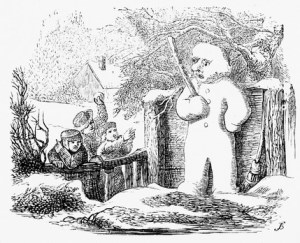
Snowman with Children

C. S. Lewis described his sudden religious conversion as “melting like a snowman,” but he was merely returning to his childhood roots. (Image: public domain)

Continue reading “Do We Ever Really Change?”

Are You Fed Up and Longing To Be a Hermit?

One frigid January night in 2002, while living a hermit’s life in my draughty shack nestled beside a ten-thousand acre tree farm, I turned on the radio at 2:30 AM to catch the CBC Radio rebroadcast of Radio Australia’s “The Religion Report.” I am a manic-depressive and sometimes keep strange hours in order to manage my mood swings. Staying up late to deprive myself of sleep shifts me (like everyone else) away from depression.

Forest Hermit and His Hut

The mindset of an anchorite can be useful in everyday life. (Image: public domain.)

On that particular gloomy night, I was delighted to hear Rowan Williams, the then Anglican Archbishop of Wales, do an interview about the ancient Christian concept of what it means to be a religious hermit or anchorite. Badly in need of some cheering up, the unusual topic seemed wonderfully appropriate!

Continue reading “Are You Fed Up and Longing To Be a Hermit?”

Did Feminism Kill Sylvia Plath?

In 1963, at the age of thirty, the brilliant American poet Sylvia Plath committed suicide in her London flat leaving behind two small children. She had suffered from depression since her early twenties and showed signs of considerable mental instability throughout most of her life. Some of her psychological difficulties arose from the death of her father when she was just eight, but feminism undoubtedly played a significant role in her untimely demise.

Sylvia Plath

Feminism may have played a role in Sylvia Plath’s chronic psychological difficulties. She felt oppressed by white men, especially her dead father. (Image: public domain)

Plath’s liberal use of her sharp tongue suggests serious trouble with an inner tyrant critic. Those who lash out at others are usually just as hard – or harder – on themselves. A prolonged habit of ruthless self-criticism leads to self-alienation. This would go a long way towards explaining her eager embracing of feminism, a belief system that would allow her to project both her rejected authentic self and her inner tyrant critic onto conveniently available (specifically) white males. If being so selective sounds farfetched, it is worth noting that Plath (who was Caucasian) identified with Jews, African Americans, and Orientals. Clearly, she believed herself to be the object of some kind of discrimination.

Continue reading “Did Feminism Kill Sylvia Plath?”

Disliking Yourself

Inner emptiness, the inability to tolerate being alone are symptomatic of a lack of self-knowledge, a poorly defined sense of self. Sufferers often describe the chronic condition as a feeling of loneliness. People with this problem usually have a desperate need for the regard and affection of others, said regard and affection providing the means to ward off, or at least ameliorate, painful self-dislike. Since they cannot accept themselves, they have a powerful need to forget themselves, to get out of themselves, to do something, anything, which will promote self-forgetfulness, self-oblivion. Psychologists claim that a lack of happy family life in childhood may lay the foundations for such a plight. A child unloved by its parents never learns to love itself.

Eleanor Rigby Statue in Liverpool

Like The Beatles’ “Eleanor Rigby,” you may experience self-alienation as a feeling of intense loneliness or inner emptiness. (photo: Erik Ribsskog)

Continue reading “Disliking Yourself”

The Purpose of Consciousness Is Language

The sense of loneliness and yearning for something beyond personal needs, something lost or forgotten, some Eden is the longing to return to a state of unconscious union with the world, an abolition of fretful ego in favour of carefree unknowing, a state like that of crocodiles basking on the river-bank with a belly full of fish. All is well! All is right with the world! We hunger for sheer, unadulterated, unexamined contentment. In short, we want to regain the childish condition Jung so aptly called the “participation mystique,” the situation where, as small children, we could not tell what was “us” and what was the world.

Painting depicting people in conversation

The purpose of consciousness is language which enables us to communicate and co-operate. (Photo: Wikimedia)

Continue reading “The Purpose of Consciousness Is Language”

Fishing Language from the Sensory Deprivation Tank

In recent decades, a great deal has been made of the notion that language and object are not related. That is to say, a signifier (word) can never fully capture or embody the signified (object). From this position, philosophers and others (such as psychiatrists) then draw the conclusion that language is somehow useless or dangerously misleading.

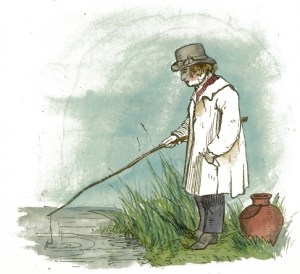
Man thoughtfully fishing with a stick

Language is essential for sustaining consciousness. Without it, we go into a coma. (Image: Reusable Art)

A vague mysticism sets in where we assume that humans are condemned to live in a world we can never properly describe or even conceptually grasp. Unless we can master something like the knowledge-obliterating Buddhist technique of direct perception, we are forever divorced from reality and therefore must live our lives in a language-induced haze of unreality, error, and arbitrary subjectivity. There exists a widespread opinion that what goes on inside our heads has little or nothing to do with what goes on around us. Solipsism, the philosophical theory that all we can be sure of is the self, gains credence.

Continue reading “Fishing Language from the Sensory Deprivation Tank”

The Zen Man

In her Diary of Vowels, Jungian analyst Helen M. Luke describes a type of person she refers to as “the Zen man.” According to Luke, “He is … one who does everything with his whole heart, with complete commitment and devotion – or, in Jung’s words, one who lives his hypothesis to the bitter end, to the death if need be.”

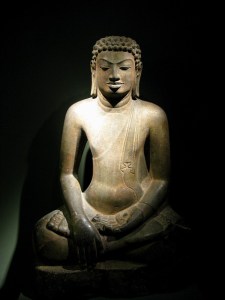
Buddha Statue

It is a mistake to compare Buddhism’s wholeheartedness with Jung’s idea of authenticity. (Image: public domain.)

The concept of wholeheartedness in Zen Buddhism refers to complete sincerity and commitment. Many in the West, including Luke, have tried to equate Zen wholeheartedness with Jung’s notion of wholeness and authenticity. Jung himself may have made the comparison, as Luke seems to suggest.

Continue reading “The Zen Man”

Epiphanies and Cascading System Failures

American science fiction writer Philip K. Dick (whose work inspired “Blade Runner”) got a bit crazy as he aged. He often believed that some small incident or accidentally seen image had radically altered his mind. While Dick may have been on his way to mental instability, there is nothing wrong with the concept of a seemingly insignificant “something” causing massive changes in the mind. The unconscious mind definitely works on associative principles, which means a small change in input can bring about a huge change in outcome, just the situation Dick foresaw and both feared and felt in awe of. In Dick’s case, the fear fed a growing sense of paranoia and spawned conspiracy theories featuring him as the target. The numinous awe convinced him he was getting messages from God.

Philip K. Dick

American science fiction writer Philip K. Dick fell victim to a mental cascading system failure and mistook it for an epiphany. (Photo: Wikipedia)

Continue reading “Epiphanies and Cascading System Failures”