Did Feminism Kill Sylvia Plath?

In 1963, at the age of thirty, the brilliant American poet Sylvia Plath committed suicide in her London flat leaving behind two small children. She had suffered from depression since her early twenties and showed signs of considerable mental instability throughout most of her life. Some of her psychological difficulties arose from the death of her father when she was just eight, but feminism undoubtedly played a significant role in her untimely demise.

Sylvia Plath

Feminism may have played a role in Sylvia Plath’s chronic psychological difficulties. She felt oppressed by white men, especially her dead father. (Image: public domain)

Plath’s liberal use of her sharp tongue suggests serious trouble with an inner tyrant critic. Those who lash out at others are usually just as hard – or harder – on themselves. A prolonged habit of ruthless self-criticism leads to self-alienation. This would go a long way towards explaining her eager embracing of feminism, a belief system that would allow her to project both her rejected authentic self and her inner tyrant critic onto conveniently available (specifically) white males. If being so selective sounds farfetched, it is worth noting that Plath (who was Caucasian) identified with Jews, African Americans, and Orientals. Clearly, she believed herself to be the object of some kind of discrimination.

Continue reading “Did Feminism Kill Sylvia Plath?”

Neo-Primitive Thinking

Progressives think in a crudely primitive way about projects that promote prosperity, but may impact the environment.

Whatever happened to the idea of progress? I do not mean “progressive,” as in ever more social spending and the inevitable national bankruptcy, ruin, and widespread poverty that follows – like the gold-plated “Club Med” European model which brought about so many national financial crises of a few years ago, or the Chavez/Maduro model responsible for the ongoing social and economic collapse in Venezuela. No, I mean the plain old-fashioned Anglo-American kind of progress.

Aerial view of Hoover Dam

Projects like the Hoover Dam, once considered “progress” are now condemned by crude environmental thinking that resembles the worldview of primitive societies. (Image: public domain)

If you are young, you may not remember, but there was a time when “progress” meant building things to make what we need more abundant and affordable. That would include structures like dams to generate loads of cheap electricity and to ensure everyone has plenty of inexpensive clean water. It would also include pipelines to provide ourselves with the affordable gasoline we need for our cars, or the inexpensive natural gas needed to heat our homes. Things like roads and bridges so we can get where we want to go and to open up new areas for the development that will continue to enhance our prosperity. We are talking about the kind of progress that makes everything more plentiful and less expensive; the kind of progress that makes our lives better, more convenient, and more prosperous; and the kind of progress that really is the only way to reduce poverty.

Continue reading “Neo-Primitive Thinking”

The Cult of the Individual

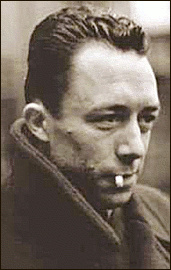
French journalist and philosopher Albert Camus said, “man in the world is absurd.” Like so many recent Western philosophers, he was thinking of the individual rather than the human race as a whole. Camus felt that he (like all individuals) was alone in the world, and the world, being cold and inanimate, cared nothing for him. In return, he owed the indifferent world nothing. While he does end on a defiant note (we must stand against the uncaring world and take possession of it) this is definitely not a philosophy designed to infuse your spirit with joy.

Albert Camus

Albert Camus’ emphasis on the individual left him with the feeling that “man in the world is absurd.” (Image: public domain)

Camus’ position arises from two sources: the human craving for meaning and the desire for individual immortality. In fact, he frames his entire argument from the perspective of the individual person. Nowhere does it occur to him that he might take a broader perspective, move to a higher level. When it comes to meaning and immortality, the concept of society (humans in organized groups) is not on the radar for Camus. There is only the wretched mortal individual and his pathetic lonely agony in a cruel world.

Continue reading “The Cult of the Individual”

Cargo Cults of the Unconscious Mind

We have all heard of the South Seas islanders who belong to bizarre cargo cults. The cults got started shortly after WW II when the Americans pulled out of their many military bases scattered across the Pacific. It was cheaper to leave large quantities of supplies and gear behind than to transport them home so, as is so often the case with the Americans, they generously donated the materiel to the inhabitants of the islands. Having seen all this abundance arrive in airplanes, but not understanding where it came from, the less sophisticated natives decided they could get more of this cargo (and thus secure eternal peace and happiness) by simply luring passing planes from the sky. All they had to do was clear a rough runway, build a wooden plane for a decoy, and set up some homemade landing lights by making fires lined up in neat parallel rows.

Douglas C-47 Cargo Plane

Not all cargo cults have to do with South Seas islanders and US supply planes. The West has its own peculiar cargo cults. (Image: public domain)

Continue reading “Cargo Cults of the Unconscious Mind”

Does the Self Have a Future?

The concept of self has become fundamental to our thinking about the human psyche. Drawn from the work of Carl Jung, I use the word constantly in my posts as I discuss writing, creativity, self-realization, will, genius, solitude, spirituality, and philosophy. I see the self as a core cluster of emotionally-important ideas that define who and what we are. It is the origin of will and a compass by which to steer through life. Others, including Jung himself, define it more broadly. My definition is tight because I believe that vague concepts can do nothing for you. As the creativity researchers have shown: concretization is power. When reading what follows, keep in mind this broad flexibility in the use of the word “self.”

Flowchart Depicting the Self's Problematic Future

Self-awareness makes life more worthwhile, but it can also be surprisingly destructive. Can we afford to indulge today’s luxurious sense of self? (Image: Thomas Cotterill)

The cultivation of various aspects of self has become immensely popular. We have self-discovery, self-realization, self-esteem, self-confidence, self-worth, self-improvement, and so on. Clearly, some of these concepts deal with consciousness while other focus on the unconscious. Yet they all use the word “self.” Central to all of these concepts is the sense of self itself. There are numerous theories about how that sense emerged, what (if anything) it does, and why we even need it. For the religious, the sense of self is the human soul, the thing that survives physical death and sets us apart from the animals.

Continue reading “Does the Self Have a Future?”

Natural Selection Works on Societies

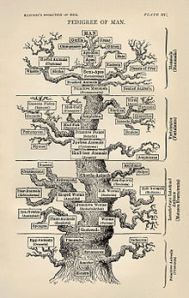
In nature, Darwinian evolution works at the level of individual creatures as they compete to survive and procreate. The process is ruthlessly simple and incredibly effective. Those individuals who leave behind the most offspring become the norm for their species. This is what we call “survival of the fittest.” On the surface, then, it would seem that the stress we humans place on individuality is the right thing to do; at least from a strict Darwinian perspective. Assuming we each make of our own brief lives what we can, evolution will select the most successful among us, and the species will prosper.

Drawing of the tree of life by Haeckel

Humans are much less subject to evolutionary pressures at the individual level. Those forces now apply at the level of society. (Image: public domain.)

Remember that those with the most children are the most successful. Like it or not, there are no other rules. Making more money and having a higher standard of living do not count unless you deploy that money and standard of living in the service of having, and successfully raising, more children. Mother Nature does just one thing. She counts heads.

Continue reading “Natural Selection Works on Societies”

Wisdom Nourishes the Human Spirit

For decades now, many in the West have suffered from a peculiar kind of spiritual anorexia. This disease of the spirit, extremely widespread, stems from our anti-introspection and anti-intellectual attitude. We favour extraversion over introversion and regard the pursuit of knowledge (as opposed to mere information) as the work of boring nerds and eccentric geeks. However, such wilful myopia comes at a cost. When we turn our backs on genuine understanding, we turn our backs on wisdom. But wisdom is the nourishing food of the spirit. Therefore, on the spiritual plane we are like anorexic girls — we refuse to “eat.”

Emblem depicting wisdom standing on the world.

Hard-won personal wisdom is the only cure for spiritual hunger. (Image: public domain.)

Continue reading “Wisdom Nourishes the Human Spirit”

Why Personal Philosophies of Life Are Becoming Rare

The Cosmos Fascinates Us

Einstein had his cosmic religious feeling, but today’s preference for emotion at the expense of reason represses or impairs the urge to work out a personal philosophy of life. (Photo: S. Brunier/ESO)

What Einstein referred to as the “cosmic religious feeling” is a drive, like sex, hunger, thirst, and so on. Fear exists to make one run when flight is necessary. Anger makes one fight when struggle is necessary. Thirst makes one drink to avoid death by dehydration. Hunger makes one eat to avoid death by starvation. Lust makes one copulate to ensure the survival of the species. The cosmic religious feeling makes one quest for answers – the purpose being to advance the cause of Man’s ever-growing consciousness and to enhance our scientific understanding of the cosmos. The tools of this quest or task are introspection and intellectual striving. One of its interesting by-products is art.

Continue reading “Why Personal Philosophies of Life Are Becoming Rare”

Socialism Tramples Unpopular Minorities

A herd of cows symbolizes herd mentality

Who shall we trample next? Socialism allows majority voting blocs to use government as a weapon against minorities. (Image: Public Domain Pictures)

More than ever before, people gleefully identify with and join “the herd.” I believe a lust for power in an age when individuals feel helpless drives this rapacious enthusiasm for joining the “majority.” Socialism is the major contributing factor here. When socialist democracies (and all Western nations are socialist democracies) espouse the idea that any majority has the right to control the property, money, and behaviour of any minority, it inevitably elevates herd thinking and values to the status of duly enacted law. The herd votes to clobber the rich, the one percent, the conservatives, Wall Street, the bankers, or big oil. Even smokers take it on the chin, as does anyone else who has unluckily aroused the herd’s anger or acquired a negative image in the leftist-dominated media. This observable fact makes participation in the herd a way to control others through the government. The aim is to restore, albeit ultimately at one’s own expense, one’s sense of personal empowerment.

Continue reading “Socialism Tramples Unpopular Minorities”

Are Culture Wars a Symptom of Western Decline?

Victory Arch of Emperor Constantine

The victory arch of Roman emperor Constantine. The arch once symbolized spectacular victory — there are many examples in European cities — but its shape does suggest a process of rise and inevitable fall. (Image: public domain.)

When I was a young man, a popular topic for intellectuals was the decline of the West. As liberal ideas spread and moral standards declined, many writers drew parallels with the Roman Empire in its last days. German historian and philosopher Oswald Spengler had popularized the notion in the 1920s. By the late 20th century, with the complete triumph of the left, the idea had fallen from favour.

As Winston Churchill said, “history is written by the victors.” Today, we see the left rewriting Western history and those who cause a decline seldom see reason to find fault with their role in it. As it happens, the left does not see a decline at all, only an incomplete change to leftist outlooks, values, and policies.

Continue reading “Are Culture Wars a Symptom of Western Decline?”