Reason and Emotion Clash in the Arts

Whether you write or work in the visual arts, or merely consume writing and objects of art, it is interesting to have some sense of the artistic tradition you follow or prefer. Often, writers and other artists simply get on with their work. While they consciously follow the inspiration of some particular artist or genre, they have no firm sense of where they fit into the artistic tradition. Consumers may also have no idea of where the works they favour fit into the grand scheme of things.
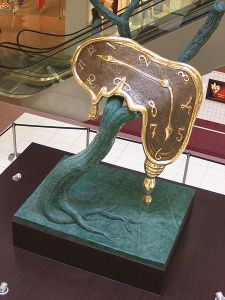
Salvador Dali's Profile of Time

Salvador Dali’s melting clocks and watches are the best known examples of surrealism, one of art’s less rational movements. (Image: Wikipedia)

When we look over the highlights of that artistic tradition, we see that it constitutes a kind of progression as one major art movement superseded another, often reacting against the one that went before. Perhaps unsurprisingly, given our rather eclectic times, all of them persist in one form or another. For example, in writing, the Gothic, fantasy, and science fiction genres draw heavily from the ideas and conventions of one of the oldest and most colourful movements – romanticism.

Continue reading “Reason and Emotion Clash in the Arts”
Ideas Are Key to Writing Success

We can accomplish nothing in life without an idea. However, before we can successfully act, we must have a clear concept of what we are trying to accomplish, a concept that goes beyond the basic idea itself to encompass the entire endeavour. This may sound obvious, but the point is this: using ideas is more complicated than having just one and then vaguely trying to do something with it.

Small Spiral Notebook ith words: Story Ideas Are Just the Start

To succeed as a writer you need more than just a notebook full of story ideas. You also need a clear idea of where you are going with your writing.

Many writers, for example, have plenty of ideas for stories and novels; yet never manage to do anything with them. Their work falters for want of a central, organizing, and motivating idea of what they are doing and why they are doing it. They write, not for well-understood reasons, but because they think they like the work, hope to make some money, and yearn for fame or respect. Unfortunately, it soon becomes apparent that there are other enjoyable things to do, far easier and more reliable ways to make money, and fame is famously elusive. They fall by the wayside. As it happens, thinking, hoping, and yearning are not powerful enough reasons for doing anything, let alone tackling a tough long-term project that requires hard work and dedication.

Continue reading “Ideas Are Key to Writing Success”

How to Recognize Cognitive Dissonance

Cognitive dissonance is usually defined as “the feeling of discomfort when simultaneously holding two or more conflicting cognitions: ideas, beliefs, values, or emotional reactions.” (Wikipedia) Or, “the state of having inconsistent thoughts, beliefs, or attitudes.” (COED) The less familiar aspect of the distressing mental state – that we can also get into trouble when our beliefs and our actions do not coincide – gets less attention. This situation may go beyond the simple case of conscience and morality, of doing something we know is wrong and then feeling guilty (moral cognitive dissonance). It is quite possible to stumble into serious and painful cognitive dissonance without realizing what has happened.

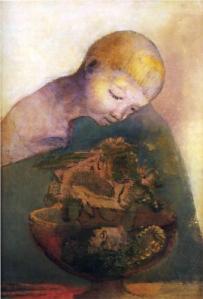
Cup of Cognition - The Childrens Cup, 1894

When we look upon our actions and see they do not coincide with our beliefs, we become distressed. This is one form of cognitive dissonance, a kind of jarring discord within the psyche. (Image: Wikipaintings)

Continue reading “How to Recognize Cognitive Dissonance”

Exploring the Sufi Concept of Nafs

Many religious beliefs address the discrepancy between the ego and the unconscious mind, although not all of them fully understand what they are dealing with. Sufism’s adherents claim that the sect represents the inner mystical dimension of Islam. As in so many mystical belief systems, the aim of the individual Sufi is direct experience of God, or as the Muslims say, Allah.

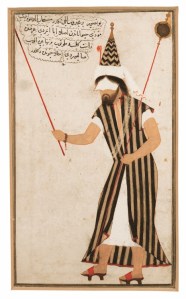
A Turkish Sufi in Traditional Garb

The Sufi sect represents the inner mystical dimension of Islam. The nafs is a sound psychological concept. (Photo: Wikimedia)

One of Sufism’s key concepts is an aspect of the psyche referred to as “nafs,” which is confusingly translated as either the self, psyche, ego, or soul. In English, a similar confusion surrounds the word “self,” with some people using it to mean the psychological concept of the self (the definition of which also varies), while others are merely referring to the conscious “I” or ego. For the sake of clarity, let me say that I use the word “self” in the psychological sense that includes the unconscious mind.

Continue reading “Exploring the Sufi Concept of Nafs”

Janusian and Synergistic Thinking

Creative people are famously unstable, both emotionally and in their thinking; the artistic temperament is moody, and creators openly tolerate polarities in ideas and viewpoints that others reject, and then try to bury. Oscillations between two distinctly different modes of thinking may account for a lot of this instability and openness. Creators are more skilled in the combined use of two kinds of thought processes: linear thinking, which is verbal, logical, sequential, and analytic; and non-linear thinking, which is associative, more image oriented, non-sequential, and non-logical (but not irrational).

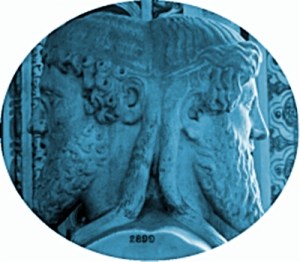
The two-faced Roman god Janus

Janusian thinking is the combined use of logical and associative thinking. It can make a creative person appear unstable.

Continue reading “Janusian and Synergistic Thinking”

Inspired by The Wind in the Willows

Who among us has not read, and /or seen some film production of, The Wind in the Willows by British author Kenneth Grahame? The memorable children’s classic was inspired by two enchanted years of Graham’s own childhood. During those magical years, he lived a remarkably free and unfettered life at the rambling home of his Granny Ingles in Cookham, a tiny village nestled in the lovely Berkshire countryside. His uncle introduced him to boating on the nearby river. He roamed the surrounding woods and farmland at will letting his young imagination run wild.

Kenneth Grahame Sketch Portrait

The Wind in the Willows author Kenneth Grahame was obsessed with recapturing the rustic magic of his childhood in Berkshire, not only in his works but in his life. (Image: public domain)

Grahame treasured those special years and the experience became lodged in his mind as the high point of his life. He longed to recapture the nuanced feeling tone or subtle mood associated with them. At twenty, he began to write stories and books drawn from his youthful adventures, a classic case of an artist driven by the hunger to relive a lost yet cherished feeling tone. Many artists produce their works for precisely this reason.

Continue reading “Inspired by The Wind in the Willows”

The Search for Personal Moral and Ethical Truth

German philosopher, mathematician and man of affairs (i.e. businessman), Gottfried Wilhelm Leibniz always said that he found no book so bad that he could get nothing from it. He was referring to serious works of non-fiction and meant that he could glean a few bits of worthwhile material from any book he read. There is a more powerful way to think about bad books. The fact that they are obviously wrong helps you to clarify your own thinking. (Perhaps Leibniz had this in mind as well.) You can view your own notions in the light of the wrong ideas in the bad book, make comparisons, and work out arguments to knock down what you are reading. I make a habit of reading books (not necessarily bad ones!) that present views opposed to my own.

Portrait of German philosopher Gottfried Wilhelm von Leibniz

Philosophers such as Leibniz work out entire philosophical systems. Ordinary people settle for a set of personal values. (Image: wpclipart.com)

There is a vital clue to being an intellectual in this.

Continue reading “The Search for Personal Moral and Ethical Truth”

Schiller’s Idea of the Heroic

German poet, philosopher, historian, and playwright Friedrich Schiller had some strange notions about the nature of the heroic. He singled out Medea, in Greek mythology the princess of Colchis who aided Jason in taking the Golden Fleece from her father. However, rather than the daring deed of fleecing Papa, it is boiling her own children alive that earns Schiller’s accolade of heroism. She is heroic because she “defies nature, defies her maternal instinct, defies her own affection for her children, she rises above nature and acts freely.” (Berlin, 1999) The argument is, because she is able to set aside her genetically inherited emotions and maternal instincts, she has transcended the natural limitations of being human and somehow heroically liberated herself. Observe the assumption that the natural limitations of being human are somehow undesirable.

Portrait of Friedrich Schiller

Schiller thought Medea’s boiling of her children alive was an act of heroism! (Image: Wikipedia)

Continue reading “Schiller’s Idea of the Heroic”

Review: The Quickening by Mari Biella

The Quickening is above all a novel of mood. It has a pleasing quality of intriguing familiarity that brings other writers and their works to mind while at the same time setting out its own unique ambiance. As an old-fashioned atmospheric ghost story, the author’s style suggests that of a young Wilkie Collins or a less-ornate Edgar Allan Poe. The feel and theme of the story inevitably bring to mind Henry James’ classic, “The Turn of the Screw.” The isolated house and flat marshy landscape of the setting remind one of William Hope Hodgson’s The House on the Borderland, although Biella’s story is pure horror without the science-fiction elements introduced to such tales by Hodgson. The intelligent cosy conversations between Fairweather and the local medic, Doctor Devonald, echo similar talks between those in charge in the upper-class adventure novels of John Buchan. The creepy spiritualist, Mrs. Marchant, with her dramatic séance (one of the novel’s most powerful scenes) recalls the supernatural thrillers of Charles Williams. In short, The Quickening rests comfortably among the works of some of the English language’s most entertaining writers.

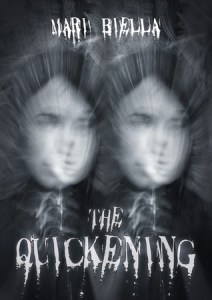
The Quickening Cover

If you enjoy period ghost stories that generate a sustained atmosphere or mood, The Quickening is a feast.

Continue reading “Review: The Quickening by Mari Biella”

Monotheism Ends Religion

Monotheism inevitably leads to agnosticism, and then atheism, because it cannot adequately explain the origins of evil. As Christians became increasingly better educated and more sophisticated they realized that the concept of an incredibly powerful evil spirit (the Devil) with a domain of his own (Hell) gave their religion a distinctly dualistic air. Since dualism is incompatible with monotheism, the notion of an evil entity opposed to God and responsible for the world’s and humanity’s evils had to be rejected. This left the concept of evil without an explanation.

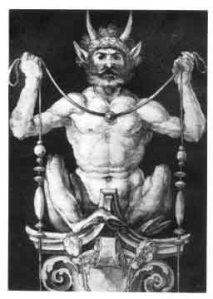
Portrayal of the Devil

Monotheism weakens religion by removing the Devil as an explanation for evil. (Image: public domain)

The blame for all that was evil in the world then fell upon human beings. However, the idea that all evil comes from humankind while all good comes from God seems unsatisfying to most. The notion that humans alone originate evil leads many to question why an omnipotent God does not cure them of their evil ways, or why such a God tolerates evil in the first place. The idea of God granting free will does not evade these questions. Why allow humanity to do wrong and then judge them for having gone astray? Why not create morally-good people to start with and shield all the tempted sinners from falling into wicked ways? What are we to make of the victims of the evildoers? Why should they suffer for the crimes of others? An incredibly complex web of dubious explanations is required to deal with these issues.

Continue reading “Monotheism Ends Religion”