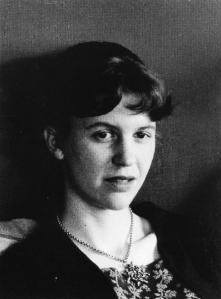
Sartre on Freedom

French existentialist philosopher Jean-Paul Sartre saw freedom, not just as a state of being or of mind, but as something with a distinct psychological or philosophical purpose. In his existential classic, Being and Nothingness, he writes, “Freedom is the way human beings put their past out of play by secreting their own nothingness.”
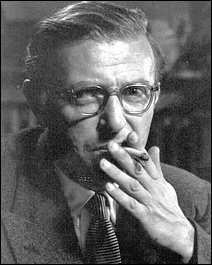
Jean Paul Sartre

Sartre had an exaggerated need for freedom, which may have come from his experiences in Nazi-occupied France. (Photo: WPClipart)

Sartre proposed that “nothing” is both the ground of human existence and what makes human existence possible. Unfortunately, this strange reality also generates an anxiety so unbearable that we all yearn to fill the nothing with something. From the psychological perspective, arbitrarily filling the nothing with something is an attempt to falsify ourselves and become what we are not. The something with which we choose (using our freedom) to replace the nothing is the foundation of our personal inauthenticity. In other words, there is nothing within us so we must “fill the vacuum,” so to speak, with an artificially constructed sense of self. Sartre’s motive for taking this unusual line is his desire to eliminate the old notion of dualism and replace it with a new monistic vision. To eliminate the perceived inside versus outside duality of the human being, he had to propose a situation where there was but one thing.

Continue reading “Sartre on Freedom”
How Van Gogh Lost His Artistic Vision

Why do art? For the immense intrinsic reward and the hope of touching others as the artist himself has undoubtedly been touched. The artist hopes to share his own attempt to make sense of his experience, with the aim of adding meaning to the lives of others. Vincent van Gogh was a perfect example of this artistic vision. He is also an example of how it can all go wrong. His early works depict toiling peasants and nature, but as he developed as an artist, he became obsessed with bright colour. He ended his tormented life by shooting himself with a revolver in a field filled with ripe golden wheat, the colour of which must surely have reminded him of the huge yellow sunflowers he loved so much and is so famous for painting.

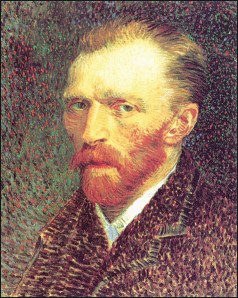
Vincent van Gogh - Self Portrait

Vincent van Gogh is a sobering example of how artistic vision can lead a creative person into difficulties. (Image: WPClipart)

Continue reading “How Van Gogh Lost His Artistic Vision”

Ego Is Only a Supervisor in the Psyche

The source of personal wisdom and effective guidance in the psyche is the self, which comprises the emotionally important ideas that form our authentic character and worldview. However, human beings are a social species and must work together in various kinds of complex groups in order to survive. This means we need consciousness and the communication tool we call language. In turn, this means ego, the source of consciousness and language, must supervise the psyche. However, like a construction-site supervisor, the ego is not responsible for deciding what to build; it is not in charge of overall governing and course setting. Those more general functions are the purview of the self. Ego’s proper role is to be aware of the self and the genuine will that emerges from there. The old aphorism, “know thyself” is very apropos.

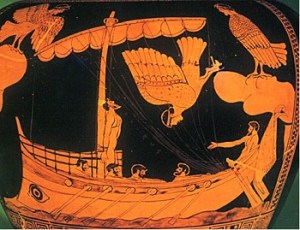
Odysseus and the Sirens

Odysseus resisting the song of the sirens symbolizes ego’s struggle with unconscious contents. (Image Wikimedia)

Continue reading “Ego Is Only a Supervisor in the Psyche”

Tradition Can Ease the Fear of Death

Fear of death is mostly dread of the permanent loss of conscious awareness. We see that expiration, the snuffing out of the light, as the final irrevocable end of who we are, the irremediable dissolution of our identity. However, our consciousness is not who we are – it is only our way of knowing who we are. We prove this every night when we sleep and consciousness dissolves, only to magically reappear the next day. If consciousness is who we are, how do we survive this regular extinction? We survive because the self is who we really are.

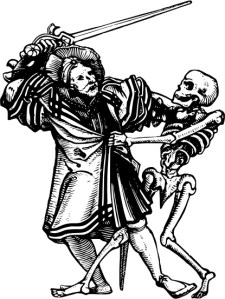
Man with sword fighting Death

Tradition can ease the fear of death by overcoming social- and self-alienation and providing assurance that some part of us will live on.
(Image: wpclipart.com)

The self lives in the unconscious and the unconscious never sleeps. Picture it as a well-furnished room. We store our memories there. Consciousness is the light that enables us to see and know them. Switch off the light – as in sleep – and the furnished room remains, and we see it once more when consciousness, the light, returns.

Continue reading “Tradition Can Ease the Fear of Death”

We Live in Baroque Times

Every age acquires a label of some kind, a word or phrase designed to capture the essence of the times. We have seen “the post-industrial society” and the “information age,” the one indicating what we have left behind, the other where we have arrived. Yet neither of these economic descriptors truly captures the irrational emotional state that now permeates, and so powerfully disturbs, the troubled Western World.

Illustration from Danse Macabre

The modern taste for shock, irrationality, the supernatural, and everything to excess remarkably resembles the earlier Baroque period. (Image: Wikimedia)

We in the West should seriously consider labelling our present era the “neo-Baroque.” In their landmark work, Theory of Literature, Weller and Warren claim that the Baroque period was in love with paradox, the oxymoron (e.g. deafening silence), and catachresis (deliberate wrong use of words), and not just in the sphere of literature, which is, after all, philosophy for its time, but at large in society as well. Today, we see the same tastes running amok in all Western societies.

Continue reading “We Live in Baroque Times”

When it Comes to Brains Are You on the Left or the Right?

Being these days a regular curmudgeon, I am always getting upset about the ceaseless attacks launched against reason and logic in these foolishly emotion-drenched times. The disciples of feeling would reduce human beings to unthinking bags of hormones. The taste for irrationality is growing.

Left and right brain hemispheres with coloured quadrants

The current popularity of intuition and irrationality says the left brain is inferior to the right brain. In reality, there are two sides to this question! (Image: public domain)

Annoyingly, I came across just such an “attack” in G. L. Rico’s, Writing the Natural Way. Rico lists two sets of very different character traits, inferring that each set resides in one hemisphere of the brain. A careful examination of these sets (the items in bold below) reveals a clear bias in favour of those traits associated with the right hemisphere, often considered the seat of feeling and other irrational – or non-rational – aspects of the mind. Traits associated with the thinking left hemisphere are couched in ways that sound negative by comparison. To amuse my(nasty)self – and to turn the tables on an unsuspecting G. L. Rico – I typed up the lists in bold and then set out my own alternative interpretations in plain text. Do not take what you find here too seriously, but at least think about what I am rather strenuously suggesting. Take a minute or two to compare Rico’s original lists.

Continue reading “When it Comes to Brains Are You on the Left or the Right?”

Review: Hidden Boundaries by C.S. McClellan

With its homosexual relationships and dominant slavery theme, this powerful well-written novel seems a challenging read for those of us who are in the mainstream. Yet George Orwell’s 1984 hardly slots into the norm and we have no trouble reading about Winston Smith’s brutal torments at the hands of the virtual slave-state known as Big Brother. Most Goodreads members who have read Hidden Boundaries classify the novel as M/M (male on male) Romance, but that trivializes a work that may best be described as homosexual literature. The question remains as to whether we really need to make a literary sub-category based on sexual orientation.

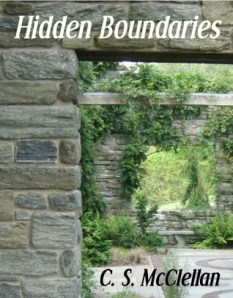
Hidden Boundaries - cover

If you relish a thought-provoking read that will open your eyes to aspects of life you may not be familiar with, Hidden Boundaries is highly recommended.

Continue reading “Review: Hidden Boundaries by C.S. McClellan”

Do We Ever Really Change?

The authentic self is constant. This means that, at the more fundamental level of our being, we never change. There is much truth in the old English adage that “a leopard does not change its spots.” Yet there appear to be many cases of people who went through enormous transformations. I want to look at two notable examples and show that the shifts these famous men experienced are not what they seem.

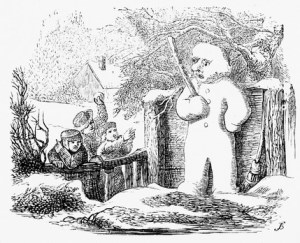
Snowman with Children

C. S. Lewis described his sudden religious conversion as “melting like a snowman,” but he was merely returning to his childhood roots. (Image: public domain)

Continue reading “Do We Ever Really Change?”

Are You Fed Up and Longing To Be a Hermit?

One frigid January night in 2002, while living a hermit’s life in my draughty shack nestled beside a ten-thousand acre tree farm, I turned on the radio at 2:30 AM to catch the CBC Radio rebroadcast of Radio Australia’s “The Religion Report.” I am a manic-depressive and sometimes keep strange hours in order to manage my mood swings. Staying up late to deprive myself of sleep shifts me (like everyone else) away from depression.

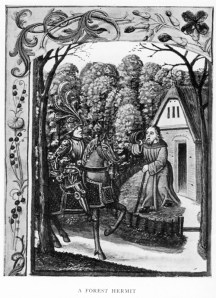
Forest Hermit and His Hut

The mindset of an anchorite can be useful in everyday life. (Image: public domain.)

On that particular gloomy night, I was delighted to hear Rowan Williams, the then Anglican Archbishop of Wales, do an interview about the ancient Christian concept of what it means to be a religious hermit or anchorite. Badly in need of some cheering up, the unusual topic seemed wonderfully appropriate!

Continue reading “Are You Fed Up and Longing To Be a Hermit?”

Did Feminism Kill Sylvia Plath?

In 1963, at the age of thirty, the brilliant American poet Sylvia Plath committed suicide in her London flat leaving behind two small children. She had suffered from depression since her early twenties and showed signs of considerable mental instability throughout most of her life. Some of her psychological difficulties arose from the death of her father when she was just eight, but feminism undoubtedly played a significant role in her untimely demise.

Sylvia Plath

Feminism may have played a role in Sylvia Plath’s chronic psychological difficulties. She felt oppressed by white men, especially her dead father. (Image: public domain)

Plath’s liberal use of her sharp tongue suggests serious trouble with an inner tyrant critic. Those who lash out at others are usually just as hard – or harder – on themselves. A prolonged habit of ruthless self-criticism leads to self-alienation. This would go a long way towards explaining her eager embracing of feminism, a belief system that would allow her to project both her rejected authentic self and her inner tyrant critic onto conveniently available (specifically) white males. If being so selective sounds farfetched, it is worth noting that Plath (who was Caucasian) identified with Jews, African Americans, and Orientals. Clearly, she believed herself to be the object of some kind of discrimination.

Continue reading “Did Feminism Kill Sylvia Plath?”