Deal Creatively with the Inner Critic

Creative people worth their salt have an inner critic. This critical faculty is essential for the production of high quality work. External criticism can point to larger problems, but only after the work in hand has reached a certain point. The moment-to-moment decision making (keeping this, discarding that) of the creative process must be based on an internal critical assessment. Furthermore, while most creators value feedback from others, they recognize that ultimately the work as a whole must meet their own standards and satisfy their own inner critic.
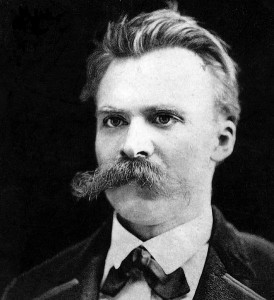
Friedrich Nietzsche

German philosopher Friedrich Nietzsche suspended his inner critic, decided his writings were spectacular, and suffered a massive ego inflation. (Photo: public domain)

Continue reading “Deal Creatively with the Inner Critic”

The Creative Eureka Experience

One of the most commonly talked about aspects of the creative process is the phenomenon of having sudden key insights after one has carefully considered the facts and, unable to find a solution, turned to other things – the famous “eureka” experience. There are many entertaining anecdotes revealing how famous creators experienced a sudden flash of insight, often while doing something quite ordinary. Because of three particularly well-known stories, one might call this the bed, bath, and bus scenario.

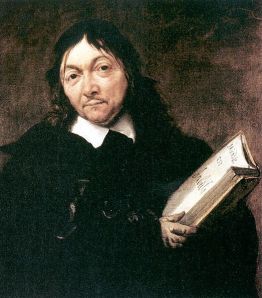
Portrait of René Descartes by Jan Baptist Weenix

Rene Descartes had one of his greatest eureka moments while lying in bed idly watching a fly hover in the air. (Image: public domain.)

It all began in Greece. Archimedes supposedly had his eureka moment while relaxing in the public baths and ran home naked shouting “eureka” (I found it) thereby giving the experience its name. The bit about running au naturel through the streets is probably Roman hokum, but it does vividly capture the sense of intense excitement that accompanies the unexpected breakthrough. Henri Poincaré had his seminal insight into non-Euclidean geometry just as he boarded a bus. The idea seemed to come out of nowhere. The French mathematician attributed his insight to “unconscious work” and claimed an ability to ruminate on math problems while engaged in unrelated activities like chatting with a friend on a bus. Descartes suddenly envisioned his Cartesian co-ordinate system while lying in bed idly watching a fly hovering in the air. In all three cases, the insight followed considerable foundation-laying work that had as yet borne no fruit.

Continue reading “The Creative Eureka Experience”

Why Creative People Once Feared Psychoanalysis

Vancouver Olympic Flame 2010

Some highly creative people once believed that psychoanalysis would extinguish their creative flame and impair achievement. (Photo: public domain)

In his psychiatric practice, Carl Jung dealt with many creative individuals. Jung noted how often his patients’ psychological difficulties arose from the creative process itself. The ground-breaking physicist Wolfgang Pauli was one of these troubled creators. Jung analyzed Pauli’s dream imagery after the scientist’s unconventional and tumultuous life brought him to the brink of mental breakdown. Pauli had become obsessed with where the insights for his greatest discovery had come from. He felt that he had drawn upon something beyond physics. Swiss-German author, Hermann Hesse was another of Jung’s notably creative patients. Already a famous writer when treated by Jung, Hesse – like Pauli – went on to win a Nobel Prize. Hesse suffered from recurring bouts of depression that tended to strike when his writing had reached an impasse.

Continue reading “Why Creative People Once Feared Psychoanalysis”

The Happiness of Constant Striving

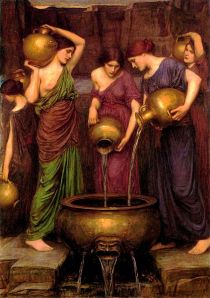
Philosophers of happiness have often said that humanity’s eternally recurring and seemingly insatiable desires are a crushing burden and a debilitating problem. To live with an unsatisfied desire, the argument goes, makes one unhappy. Therefore, if one is to be content, expunging desires is of the utmost importance. This dubious notion is the foundation of entire self-denying spiritual practices. Advocates of self-denial invoke the myth of Sisyphus, the king in ancient Greece who offended Zeus. As punishment, he was condemned to push a huge boulder to the top of a hill. However, the simple (but sweaty) game was rigged. Whenever the boulder neared the top of the hill, it rolled back down to the bottom. Some prefer the less strenuous, but equally frustrating Danaidean example. In Greek legend, the Danaides were daughters of the Egyptian prince, Danaus. After they had murdered their husbands, they were condemned in Hades to fill water jars with holes in the bottom.

The Danaides by John William Waterhouse, 1903

Success may not be necessary to attain happiness. For many, the striving itself becomes a fulfilling and satisfying way of life. (Image: public domain.)

Continue reading “The Happiness of Constant Striving”

What Makes Some People Become Extraordinary?

What makes some people become extraordinary? There have always been child prodigies, but the majority of exceptional human beings are not born with a noticeable gift. Instead, they develop into outstanding achievers as they mature. The explanation for why they reach the creative heights seems to lie with self-alienation and psychological distress, a fact that for centuries has surrounded creativity with myths of wild inspiration and “divine” madness. Research has shown that exceptional individuals come more often from homes where there has been a lot of bickering and conflict.

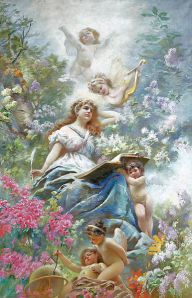
Painting of the Muses Bringing Inspiration

Formerly, the Muses were thought to make people extraordinary. Nowadays we see inner bickering as the cause. (Image: public domain.)

Yet being troubled is not enough. The extraordinary person also possesses the ability to use that suffering to propel themselves down the long hard road of self-discovery and self-realization. It would seem that inner bickering and conflict are a necessary part of the creative process, leading one to speculate that creative people internalize the chaotic home life when they are children, and then exploit it as a resource when they become adults. When they are young, they raise their eyes from their embattled immediate surroundings. They look up to role models who seem to offer better ideas, better ways of looking at life, better and more interesting ways of living; they hero worship.

Continue reading “What Makes Some People Become Extraordinary?”

Potent Personal Images Drive Creativity

Creativity research has revealed that creative individuals often try to recapture a nuanced feeling tone or subtle mood that has captivated them when they were children. It has also shown that creators repeatedly make use of something called an “image of wide scope.” Like the treasured mood, the creator acquires their image of wide scope when they are young, typically before the age of eighteen. The desire to recapture a specific mood and the urge to create something incorporating the image of wide scope are driving forces propelling the creator down particular paths. Mood and image can meld and their role in the creative process is complex.

Devils Tower Is a Potent Image

Like the fellow in Close Encounters of the Third Kind, creative people struggle to express a significant “image of wide scope.”  (Image: public domain.)

Continue reading “Potent Personal Images Drive Creativity”

Your Worldview Will Sneak into Your Novel

The Concept of “World” in a Novel

A novel’s “world” is the general impression readers absorb from the interwoven effects of plot, characters, authorial tone, atmosphere, and setting. Writers impart this vital yet elusive quality as their own worldview inevitably pervades the work. The process is partially inadvertent and the resulting worldview may differ somewhat from the worldview purposely expressed in the work. For example, authors who write religious thrillers may or may not be religious people themselves. An unbeliever’s attitude towards the clergy may lack the sympathy of a believer. We pick up the author’s “true” worldview by sensing their way of presenting the story. We detect subtle philosophical clues such as what an author chooses to emphasize and how they go about ordering events and tying the story together.

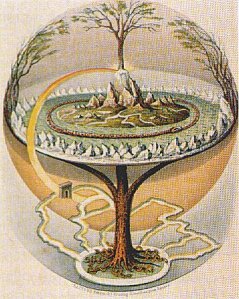
Yggdrasil by Oluf Olufsen Bagge 1847

Yggdrasil, the world tree, was the Nordic symbolic representation of the world. These days, worldview varies on an individual basis, but always has an underlying humanness shared by all. (Image: public domain)

Continue reading “Your Worldview Will Sneak into Your Novel”

Creative Individuals Are Promethean Rebels

Prometheus Bound

Prometheus stole the gods’ fire. Creative individuals steal the gods’ thunder by exercising free will. (Image: public domain.)

Resistance Is Not Futile

“It is the possibility of resistance to the needs of desire, on the one hand, and the dictates of intellect and reason, on the other, that constitutes human freedom.” The quote is from Hannah Arendt’s Willing. My own rewording of the idea goes like this: Human will is able to steer a course between the powerful urges of instinct on the one hand and the incessant petitioning of reason on the other. It reminds me of the old Greek legend of Scylla and Charybdis. Will is like a ship traversing the narrow strait with the devouring monster of instinct on one side and the drowning whirlpool of nagging reason on the other.

Continue reading “Creative Individuals Are Promethean Rebels”

Writers Are Often Early Birds or Night Owls

At what time of the day do you prefer to write? Do you have a choice as to when you do your writing or are you limited by a day job and other important responsibilities? Constraints can be a problem since writers often have unusually strong preferences for when they like to get the work done. In fact, it may go beyond being just a preference. There is good evidence from creativity research that people function best at certain times of the day, and what time that is varies on an individual basis.

Owls are the quintessential image for the night person

Writers can use hours of the day when little is happening. The need for a more certain income may leave them no choice. (Image: public domain.)

As for preference, there are two main camps: the morning crowd and the late evening / nighttime set. There are even philosophical and psychological arguments supporting the two strategies.

Continue reading “Writers Are Often Early Birds or Night Owls”

Creative People Explore “Hidden Realities”

For centuries, philosophers have made mention of a “hidden reality” and then speculated as to its nature and how one might dispel illusion and bring what is hidden within sight. Those given to metaphysical speculation posit another world reached by passing through a portal. We have all seen the movies and television series inspired by the old tales of magical caves or fairy rings that, once entered, transport one to another place not of this Earth. Spiritual types speak of supernatural beings inhabiting spirit worlds “beyond” our normal ken. The belief gave rise to some of the world’s largest religions.

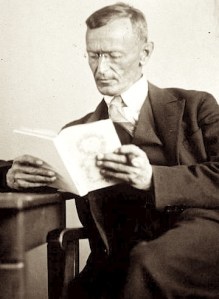
Hermann Hesse reading a book

Hermann Hesse used simple doors to symbolize the entrance to hidden realities in his controversial novel, Steppenwolf. (Photo: Wikimedia)

The idea of a hidden reality or an unseen place where spirits dwell is so prevalent in human cultures that one must assume it has some basis in human psychology.

Continue reading “Creative People Explore “Hidden Realities””