The Difference between Being and Identity

Modern man has reached a “fallen” state by becoming obsessed with being when what we really need is to know who we are. We cannot learn who we are through being. Being is a kind of essence; a state of awareness or consciousness of our surroundings and our own existence; it simply is; it has no identity. We discover who we are by learning about our own culture, about our own society, about the history of our own people, about our own personal past. To have an identity, to define ourselves, we must first put ourselves firmly in context.

Radio Tower with Outgoing Waves

Being is analogous to a radio carrier wave. Identity is the music that modulates the wave and gives it meaning. (Image: public domain)

Continue reading “The Difference between Being and Identity”

Reason and Emotion Clash in the Arts

Whether you write or work in the visual arts, or merely consume writing and objects of art, it is interesting to have some sense of the artistic tradition you follow or prefer. Often, writers and other artists simply get on with their work. While they consciously follow the inspiration of some particular artist or genre, they have no firm sense of where they fit into the artistic tradition. Consumers may also have no idea of where the works they favour fit into the grand scheme of things.

Salvador Dali's Profile of Time

Salvador Dali’s melting clocks and watches are the best known examples of surrealism, one of art’s less rational movements. (Image: Wikipedia)

When we look over the highlights of that artistic tradition, we see that it constitutes a kind of progression as one major art movement superseded another, often reacting against the one that went before. Perhaps unsurprisingly, given our rather eclectic times, all of them persist in one form or another. For example, in writing, the Gothic, fantasy, and science fiction genres draw heavily from the ideas and conventions of one of the oldest and most colourful movements – romanticism.

Continue reading “Reason and Emotion Clash in the Arts”

How to Recognize Cognitive Dissonance

Cognitive dissonance is usually defined as “the feeling of discomfort when simultaneously holding two or more conflicting cognitions: ideas, beliefs, values, or emotional reactions.” (Wikipedia) Or, “the state of having inconsistent thoughts, beliefs, or attitudes.” (COED) The less familiar aspect of the distressing mental state – that we can also get into trouble when our beliefs and our actions do not coincide – gets less attention. This situation may go beyond the simple case of conscience and morality, of doing something we know is wrong and then feeling guilty (moral cognitive dissonance). It is quite possible to stumble into serious and painful cognitive dissonance without realizing what has happened.

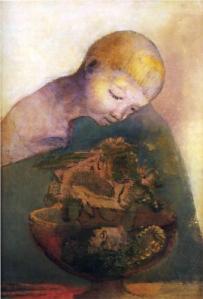
Cup of Cognition - The Childrens Cup, 1894

When we look upon our actions and see they do not coincide with our beliefs, we become distressed. This is one form of cognitive dissonance, a kind of jarring discord within the psyche. (Image: Wikipaintings)

Continue reading “How to Recognize Cognitive Dissonance”

Exploring the Sufi Concept of Nafs

Many religious beliefs address the discrepancy between the ego and the unconscious mind, although not all of them fully understand what they are dealing with. Sufism’s adherents claim that the sect represents the inner mystical dimension of Islam. As in so many mystical belief systems, the aim of the individual Sufi is direct experience of God, or as the Muslims say, Allah.

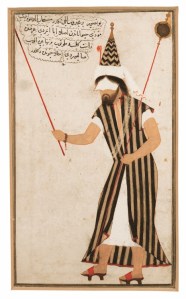
A Turkish Sufi in Traditional Garb

The Sufi sect represents the inner mystical dimension of Islam. The nafs is a sound psychological concept. (Photo: Wikimedia)

One of Sufism’s key concepts is an aspect of the psyche referred to as “nafs,” which is confusingly translated as either the self, psyche, ego, or soul. In English, a similar confusion surrounds the word “self,” with some people using it to mean the psychological concept of the self (the definition of which also varies), while others are merely referring to the conscious “I” or ego. For the sake of clarity, let me say that I use the word “self” in the psychological sense that includes the unconscious mind.

Continue reading “Exploring the Sufi Concept of Nafs”

Janusian and Synergistic Thinking

Creative people are famously unstable, both emotionally and in their thinking; the artistic temperament is moody, and creators openly tolerate polarities in ideas and viewpoints that others reject, and then try to bury. Oscillations between two distinctly different modes of thinking may account for a lot of this instability and openness. Creators are more skilled in the combined use of two kinds of thought processes: linear thinking, which is verbal, logical, sequential, and analytic; and non-linear thinking, which is associative, more image oriented, non-sequential, and non-logical (but not irrational).

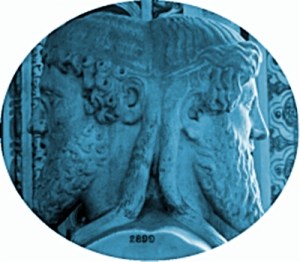
The two-faced Roman god Janus

Janusian thinking is the combined use of logical and associative thinking. It can make a creative person appear unstable.

Continue reading “Janusian and Synergistic Thinking”

The Search for Personal Moral and Ethical Truth

German philosopher, mathematician and man of affairs (i.e. businessman), Gottfried Wilhelm Leibniz always said that he found no book so bad that he could get nothing from it. He was referring to serious works of non-fiction and meant that he could glean a few bits of worthwhile material from any book he read. There is a more powerful way to think about bad books. The fact that they are obviously wrong helps you to clarify your own thinking. (Perhaps Leibniz had this in mind as well.) You can view your own notions in the light of the wrong ideas in the bad book, make comparisons, and work out arguments to knock down what you are reading. I make a habit of reading books (not necessarily bad ones!) that present views opposed to my own.

Portrait of German philosopher Gottfried Wilhelm von Leibniz

Philosophers such as Leibniz work out entire philosophical systems. Ordinary people settle for a set of personal values. (Image: wpclipart.com)

There is a vital clue to being an intellectual in this.

Continue reading “The Search for Personal Moral and Ethical Truth”

Schiller’s Idea of the Heroic

German poet, philosopher, historian, and playwright Friedrich Schiller had some strange notions about the nature of the heroic. He singled out Medea, in Greek mythology the princess of Colchis who aided Jason in taking the Golden Fleece from her father. However, rather than the daring deed of fleecing Papa, it is boiling her own children alive that earns Schiller’s accolade of heroism. She is heroic because she “defies nature, defies her maternal instinct, defies her own affection for her children, she rises above nature and acts freely.” (Berlin, 1999) The argument is, because she is able to set aside her genetically inherited emotions and maternal instincts, she has transcended the natural limitations of being human and somehow heroically liberated herself. Observe the assumption that the natural limitations of being human are somehow undesirable.

Portrait of Friedrich Schiller

Schiller thought Medea’s boiling of her children alive was an act of heroism! (Image: Wikipedia)

Continue reading “Schiller’s Idea of the Heroic”

Sartre on Freedom

French existentialist philosopher Jean-Paul Sartre saw freedom, not just as a state of being or of mind, but as something with a distinct psychological or philosophical purpose. In his existential classic, Being and Nothingness, he writes, “Freedom is the way human beings put their past out of play by secreting their own nothingness.”

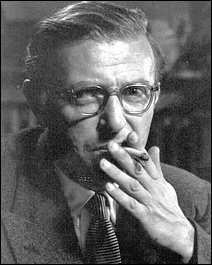
Jean Paul Sartre

Sartre had an exaggerated need for freedom, which may have come from his experiences in Nazi-occupied France. (Photo: WPClipart)

Sartre proposed that “nothing” is both the ground of human existence and what makes human existence possible. Unfortunately, this strange reality also generates an anxiety so unbearable that we all yearn to fill the nothing with something. From the psychological perspective, arbitrarily filling the nothing with something is an attempt to falsify ourselves and become what we are not. The something with which we choose (using our freedom) to replace the nothing is the foundation of our personal inauthenticity. In other words, there is nothing within us so we must “fill the vacuum,” so to speak, with an artificially constructed sense of self. Sartre’s motive for taking this unusual line is his desire to eliminate the old notion of dualism and replace it with a new monistic vision. To eliminate the perceived inside versus outside duality of the human being, he had to propose a situation where there was but one thing.

Continue reading “Sartre on Freedom”

How Van Gogh Lost His Artistic Vision

Why do art? For the immense intrinsic reward and the hope of touching others as the artist himself has undoubtedly been touched. The artist hopes to share his own attempt to make sense of his experience, with the aim of adding meaning to the lives of others. Vincent van Gogh was a perfect example of this artistic vision. He is also an example of how it can all go wrong. His early works depict toiling peasants and nature, but as he developed as an artist, he became obsessed with bright colour. He ended his tormented life by shooting himself with a revolver in a field filled with ripe golden wheat, the colour of which must surely have reminded him of the huge yellow sunflowers he loved so much and is so famous for painting.

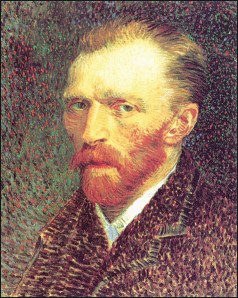
Vincent van Gogh - Self Portrait

Vincent van Gogh is a sobering example of how artistic vision can lead a creative person into difficulties. (Image: WPClipart)

Continue reading “How Van Gogh Lost His Artistic Vision”

Ego Is Only a Supervisor in the Psyche

The source of personal wisdom and effective guidance in the psyche is the self, which comprises the emotionally important ideas that form our authentic character and worldview. However, human beings are a social species and must work together in various kinds of complex groups in order to survive. This means we need consciousness and the communication tool we call language. In turn, this means ego, the source of consciousness and language, must supervise the psyche. However, like a construction-site supervisor, the ego is not responsible for deciding what to build; it is not in charge of overall governing and course setting. Those more general functions are the purview of the self. Ego’s proper role is to be aware of the self and the genuine will that emerges from there. The old aphorism, “know thyself” is very apropos.

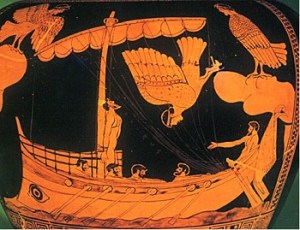
Odysseus and the Sirens

Odysseus resisting the song of the sirens symbolizes ego’s struggle with unconscious contents. (Image Wikimedia)

Continue reading “Ego Is Only a Supervisor in the Psyche”