Creative Individuals Are Promethean Rebels

Prometheus Bound

Prometheus stole the gods’ fire. Creative individuals steal the gods’ thunder by exercising free will. (Image: public domain.)

Resistance Is Not Futile

“It is the possibility of resistance to the needs of desire, on the one hand, and the dictates of intellect and reason, on the other, that constitutes human freedom.” The quote is from Hannah Arendt’s Willing. My own rewording of the idea goes like this: Human will is able to steer a course between the powerful urges of instinct on the one hand and the incessant petitioning of reason on the other. It reminds me of the old Greek legend of Scylla and Charybdis. Will is like a ship traversing the narrow strait with the devouring monster of instinct on one side and the drowning whirlpool of nagging reason on the other.

Continue reading “Creative Individuals Are Promethean Rebels”
Creative People Explore “Hidden Realities”

For centuries, philosophers have made mention of a “hidden reality” and then speculated as to its nature and how one might dispel illusion and bring what is hidden within sight. Those given to metaphysical speculation posit another world reached by passing through a portal. We have all seen the movies and television series inspired by the old tales of magical caves or fairy rings that, once entered, transport one to another place not of this Earth. Spiritual types speak of supernatural beings inhabiting spirit worlds “beyond” our normal ken. The belief gave rise to some of the world’s largest religions.

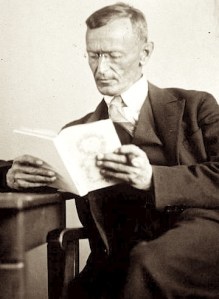
Hermann Hesse reading a book

Hermann Hesse used simple doors to symbolize the entrance to hidden realities in his controversial novel, Steppenwolf. (Photo: Wikimedia)

The idea of a hidden reality or an unseen place where spirits dwell is so prevalent in human cultures that one must assume it has some basis in human psychology.

Continue reading “Creative People Explore “Hidden Realities””

Only the Strong Can Be Solitary Thinkers

Thinking requires solitude. It is a simple fact that it is impossible to think – deeply at any rate – while interacting with others. Add another mind and right away, the path ahead becomes tortuous. Human minds tend to diverge. Opinions seem always to vary. Except when they are trying hard to get along, minds agree on precious little. Inevitably, discussing any topic will lead to disagreement and the taking up of positions. This can be interesting and enlightening, but conversation definitely will not take one where one would go on one’s own. To think anything through to one’s own fully developed conclusions, one needs to be alone.

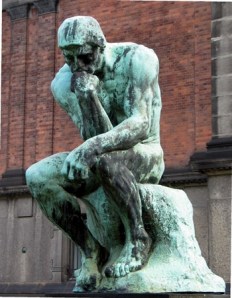
The Thinker by Auguste Rodin

Rodin’s famous statue of the thinker shows him alone. Sustained solitude is a requisite for insightful thinking. (Image: public domain.)

We are walking a lightly trod, yet millennia-old path here. The thinking tradition is illustrious and those given to habitual thinking have left us a fine legacy of insights into the nature of solitude.

Continue reading “Only the Strong Can Be Solitary Thinkers”

Popular Creativity Theories

We Have Not Always Been “Creative”

The Greeks and Romans ascribed the source of what we call creativity to a “genius” (Roman) or “daemon” (Greek) linked to the gods. The concept of creativity as we know it did not yet exist and the ancients regarded being “inventive” as an external process. The modern concept of creativity appeared during the Renaissance when, for the first time, Europeans saw creativity not as a gift from a god, but as arising from the abilities of “great men.” However, the shift from divine origins to mortal was gradual and did not become widespread until the Enlightenment.

Graham Wallas, 1920s

English social psychologist Graham Wallas gave us the famous five-stage theory of the creative process. (Image: public domain.)

English mathematician and philosopher Alfred North Whitehead coined the term creativity in 1927 while delivering the Gifford Lectures at the University of Edinburgh. Almost immediately, it became the word of choice in literature, the arts, and science. In fact, the term went into wide use so quickly, we have forgotten its recent origins in the twentieth century.

Continue reading “Popular Creativity Theories”

Being Creative with Associative Thinking

The Unconscious Observes and Comments

In earlier posts, I have written about synergistic thinking, the deliberate combining of logical (linear) and associative (non-linear) thinking. Logic is a product of the conscious mind and as such it is a thinking tool we all, with varying degrees of skill, deliberately employ. Associative thinking is how the unconscious works and can be both hard to understand and elusive in its actual – often powerful – workings. As a result, in the last few decades, a great deal of confusing superstition has gathered around the unconscious. Here is a gem from page 39 of Susan Shaughnessy’s excellent book about writing, Walking on Alligators: “The only thing we know for sure about the unconscious is that it isn’t like us. It is different from the conscious mind. It looks through our eyes, but it sees differently. It uses other rules to organize what it sees. And then it passes along its conclusions in a tantalizingly inexplicit way.”

Side View of the Brain

The unconscious mind produces an associative running commentary on our thoughts and surroundings. (Image: public domain.)

Continue reading “Being Creative with Associative Thinking”

Are Creative People Less Sane?

Are creative people less or more sane than ordinary people? Creative types are unusually sensitive to the nuances in tone of voice, body language, innuendo, and so forth. They notice more than does the average person; they are perceptive. Regrettably, this ability has a drawback in that it means creators are more vulnerable. Already at risk simply because they are who they are, creators often have a hard life, which, being sensitive, they feel keenly. If their work does not sell, they may suffer poverty. If it challenges accepted views, it may attract enough opprobrium to diminish their self-confidence and dislodge their sometimes-precarious self-esteem. For these reasons, a creator may develop a set of psychological difficulties that resemble insanity. Yet in spite of this, creators retain their special ability with nuance. They remain better equipped to test reality than more ordinary types who, at least on the surface, appear much saner. That sensitivity to nuance, to subtle differences confers upon the creator a remarkable ability to see what others overlook. Those who see more understand more.

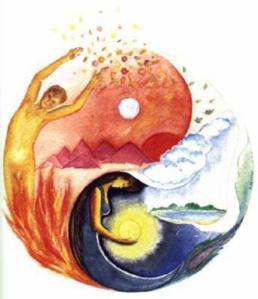
Man Woman Yin Yang Symbol

Creative people tolerate awareness of polarities and contradictions rather than trying to bury one side or the other. This can make them seem unpredictable. (Image: public domain.)

Continue reading “Are Creative People Less Sane?”

Outrunning the Hound of Heaven

There are philosophers and psychologists who claim that we can never be truly happy without some sort of spiritual (meaning religious) life. Writers eagerly turn out books about the human mind having an innate religious impulse, or explain how we all carry the “God gene.” In their view, irrationality is entirely justified. They summarily dismiss reason and enlightenment. My own experience does not support these assertions. I spent years wrestling with a spiritual crisis and found that, far from being a comfort, the pursuit of the religious generates paranoia, the feeling of being perpetually watched and harassed. A crippling excess of conscience settles in and makes one’s life a misery. It becomes necessary to eliminate the awful feelings, and to do that, one needs the opposite of religion. One must extirpate all religious feeling.

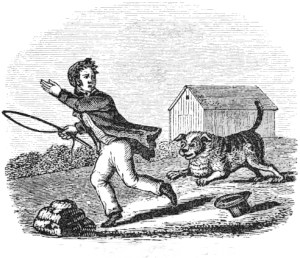
Hound of Heaven Illustration

Some religious converts claim they felt hunted or fished for by God. Others liken the God sense to being pursued by a dangerous hound. (Image: public domain)

Continue reading “Outrunning the Hound of Heaven”

The Lonely Thinker’s Path

Nowadays, we strongly emphasize emotion. Our IQs seem to matter little while our EQs loom large. I thought it would be useful to remind ourselves of what it means to be a thinker.

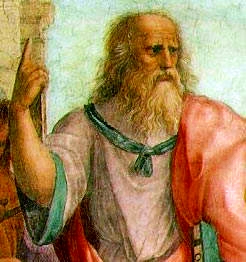
Plato as Imagined by Raphael

With the emphasis now on feelings are we, as a society, losing sight of the value of thinking? (Image: public domain)

The Desire of Knowledge

French philosopher and spiritual writer Antonin Sertillanges writes: “The desire of knowledge defines our intelligence as a vital force … it is the thinker’s special characteristic to be obsessed by the desire for knowledge.”

In other words, for the thinker, the acquisition of knowledge is an emotionally important idea. It is what American psychologist Carl Rogers would call a “subjectively formed guiding principle.” This means acquiring knowledge is one of the primary objects of the thinker’s authentic will. The activity is not an add-on, an external “interest” he has acquired; it is a fundamental part of his self and personality. The behaviour will have been there from early childhood remaining unrecognized until the thinker matures and turns to matters that are more serious and noteworthy.

Continue reading “The Lonely Thinker’s Path”

The Troubled Hero Is a Champion of Individuality

The heroes we see in today’s action movies are quite different from the heroes of legend and literature. Film – being short and dealing largely with externals – does not easily allow for deep insights into a character’s inner life. Heroes played by the likes of Arnold Schwarzenegger or Bruce Willis are neither thoughtful nor subtle. They are never inwardly complex. Their heroism is all in the external world and conflicts are always struggles with other people or life-threatening situations. Such tales are certainly entertaining, but they provide nothing to illuminate the more psychological aspects of being human.

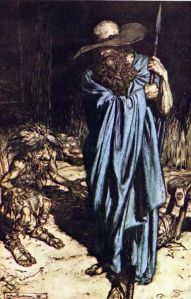
Wotan Visits Mime

Heroes in myth, legend and literature are often profoundly troubled and provide deeper insights than action heroes. (Image: public Domain.)

In myths, legends, and literature heroes serve a greater purpose. Through their heroic struggles, they demonstrate more than just singular physical feats or acts of physical courage. There is an inward component to their heroic adventures. These heroes are often profoundly troubled people. They have inner conflicts that have rendered them social misfits. They may be unusually sensitive, and/or intelligent, and because they are so different from the “well-adjusted” they suffer. Their suffering forces them into seldom-used paths quite far from the collective ones approved by society. They strive for things never attempted by the ordinary person. The battles along the way provide a great opportunity for strengthening personal growth. By trying to ease their pain, they have become extraordinary. They have inadvertently become heroic.

Continue reading “The Troubled Hero Is a Champion of Individuality”

Do You Know What You Really Want?

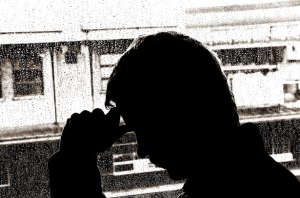
Have you become discouraged in life? Has it occurred to you to question what you are doing, or where you are going? Does the nagging feeling that “there must be more to life than this” eat away at you? Worse, have you entered the “midlife crisis” or had a full-blown psychological breakdown? All these things are distressing to one degree or another, and all, even the less pressing, require a remedy. They all stem from a loss of personal vision. That loss has come about because of an inner conflict, a conflict that probably remains below the threshold of conscious awareness.

Silhouette of depressed man

Not knowing what you want can cause debilitating depression. There is a remedy, and you are already carrying it around with you. (Photo: Public Domain Pictures)

Continue reading “Do You Know What You Really Want?”