Filter the Junk from Your Experience

The reliability of the senses, perception, and memory has long been the subject of debate. A great many thinkers have weighed in with their opinions on these essential functions of the brain. Science is currently expending enormous effort in making experimental assessments. A lot is at stake. It is vital that we know just how far we can trust our innate abilities to collect information about the world around us. We need to know how well we convert sensory data into basic concepts (tree, rock, person, and so on). We must also have some idea of how well we remember those reflexive perceptions once we have formed them.

Cloud Resembling a UFO

UFO or cloud? It is foolish to be uncritical of your own experiences; you must make them a matter of conscience and knowledge. How you choose to interpret and remember the experience does matter.
Continue reading “Filter the Junk from Your Experience”

Repressed Wishes Can Sink You

For all the blocked writers and troubled individuals out there, here is something useful from Susan Quinn’s biography of psychologist Karen Horney. The book is titled, A Mind of Her Own. Quinn writes, “Only guilt feelings toward repressed wishes have an inimical influence on life, restrictive, making for illness.” In other words, all other psychological (as opposed to medical) scenarios are not severe enough to generate mental illness. Anyone who enters psychoanalysis is feeling guilty about repressed wishes. Many people not in analysis have the same problem.

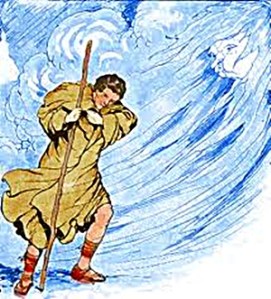
Traveller with a staff leaning into a stiff headwind.

Trying to press on when you want to do something else can feel like battling a stiff headwind. You are waging war on yourself.

Once someone has entered analysis there are four key aspects to the procedure:

Continue reading “Repressed Wishes Can Sink You”

Blogger Idol Award

Blogger Idol Logo

Thanks to that stellar blogger Adam S for the award nomination. May his beat go on.

Thanks to Adam S for nominating me as a recipient of the Blogger Idol Award. Such nods between bloggers are gestures of respect. I especially like the tagline on this award’s logo, “because writers are the new rock stars.” Whatever truth there may be in this, the Internet made it so. Much of what we post to blogs would have found no outlet in the traditional print world. In the same way that the rock revolution of the fifties and sixties changed the way we think about music, the Internet revolution has changed the way we regard the written word. Reversing a decades-long downward trend, more people read now than have ever read before.

Continue reading “Blogger Idol Award”

The Useless Passion

French writer and feminist intellectual Simone de Beauvoir was Jean Paul Sartre’s long-time lover and companion. She did not consider herself a philosopher, but nevertheless advanced some challenging ideas. One of these was her concept of the “useless passion,” the desire to be God. De Beauvoir posited two sides to this passion: violence and merging. Violence, the attempt to wound or destroy others is a bid for omnipotence. Merging with the world or cosmos, what we might call the “all-is-one” philosophy is a bid for omnipresence and omniscience. At the philosophical level, the useless passion stems from the truth of human existence; that is, that we are finite and that we will die. The useless passion is our desire to escape from our finiteness. It is important to realize that those who espouse violence and the all-is-one philosophy may be unaware of their true motives for doing so.

Simone de Beauvoir

Simone de Beauvoir’s useless passion is the desire to escape death by becoming God.

Continue reading “The Useless Passion”

Review: The Snowmelt River by Frank P. Ryan

The Snowmelt River spans the Earth we know and a strange magical world called Tir. The tale opens in the picturesque Irish countryside (beautifully depicted by the author) where four young people meet and discover they are all orphans. Right away, we feel that, while quite ordinary in outward appearance, these youngsters are somehow special. Fate or some uncanny power has marked them out for a purpose as yet unknown. They have been drawn together to fulfill a great destiny. Soon they are mysteriously “called” by the nearby mountain, Slievenamon, with its ancient stone cairn and legendary portal to another world.

The Snowmelt River cover

A captivating epic fantasy with a unique modern twist: mobile phones are magically transformed into objects of immense power.

Ireland blooms as never before. Timeless tombs reveal long kept secrets. Surging magical forces swirl through leafy woods and green fields. The secrets of the portal have a guardian who is none other than the wise old grandfather of one of the youngsters. Armed with his advice and an eldritch sword, the four young adventurers battle evil beings and face death as they traverse the portal to the world of Tir. The story that unfolds in that wild, primitive, and rugged land is crammed with magic, excitement, and danger.

Continue reading “Review: The Snowmelt River by Frank P. Ryan”

Idealism and Perfectionism Are Enemies of Creativity

Idealists can only love, respect, or admire that which they recognize as superior. Nothing else will do. The impractical idealist routinely overestimates some of the people and things around them. They want to believe they have found something or someone who is ideal rather than ordinary. Naturally, when idealists indulge in this behaviour they are inevitably disappointed. Rather than learning their lesson, the idealist sets out on an endless quest for the superior. Once established, the habit of idealization spreads into all areas of the idealist’s life making mischief wherever it goes. The true situation can be hard to grasp since many consider idealism a virtue. It is high-mindedness or even noble-mindedness. How could something so wonderful-sounding be a problem? The ego-enhancing benefits of being “an idealist” obscure the actual damage done by holding the belief.

Lady Justice with sword and scales

Idealism and perfectionism prevent creative people from seeing their work objectively, thereby impairing the ability to assess its worth. (Image: public domain)

Continue reading “Idealism and Perfectionism Are Enemies of Creativity”

The Guiding Hand of the Unconscious Mind

Many people who work with, or are simply aware of, the unconscious see this portion of the mind in a reverential way. Jungian psychologist Helen M. Luke called it the “mystery within.” This inner mystery is thought to harbour all sorts of powers, some wonderful, some potentially dangerous. For Luke, one wonderful power was dreams. All her life she assiduously recorded and analyzed her dreams, and used them as a guide. Reading her journals and diaries, we acquire the distinct impression that her dream life meant more to her than her waking one. Luke also venerated the unconscious powers of creation that inspired her writing.

Galahad by George Frederic Watts

The sense of the numinous generated by the unconscious mind can lead us on a great quest for self-discovery and lifelong self-realization. (Photo: Wikimedia)

Continue reading “The Guiding Hand of the Unconscious Mind”

Does the Self Have a Future?

The concept of self has become fundamental to our thinking about the human psyche. Drawn from the work of Carl Jung, I use the word constantly in my posts as I discuss writing, creativity, self-realization, will, genius, solitude, spirituality, and philosophy. I see the self as a core cluster of emotionally-important ideas that define who and what we are. It is the origin of will and a compass by which to steer through life. Others, including Jung himself, define it more broadly. My definition is tight because I believe that vague concepts can do nothing for you. As the creativity researchers have shown: concretization is power. When reading what follows, keep in mind this broad flexibility in the use of the word “self.”

Flowchart Depicting the Self's Problematic Future

Self-awareness makes life more worthwhile, but it can also be surprisingly destructive. Can we afford to indulge today’s luxurious sense of self? (Image: Thomas Cotterill)

The cultivation of various aspects of self has become immensely popular. We have self-discovery, self-realization, self-esteem, self-confidence, self-worth, self-improvement, and so on. Clearly, some of these concepts deal with consciousness while other focus on the unconscious. Yet they all use the word “self.” Central to all of these concepts is the sense of self itself. There are numerous theories about how that sense emerged, what (if anything) it does, and why we even need it. For the religious, the sense of self is the human soul, the thing that survives physical death and sets us apart from the animals.

Continue reading “Does the Self Have a Future?”

Natural Selection Works on Societies

In nature, Darwinian evolution works at the level of individual creatures as they compete to survive and procreate. The process is ruthlessly simple and incredibly effective. Those individuals who leave behind the most offspring become the norm for their species. This is what we call “survival of the fittest.” On the surface, then, it would seem that the stress we humans place on individuality is the right thing to do; at least from a strict Darwinian perspective. Assuming we each make of our own brief lives what we can, evolution will select the most successful among us, and the species will prosper.

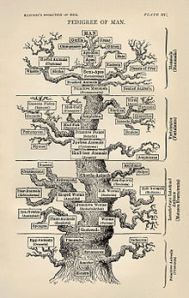
Drawing of the tree of life by Haeckel

Humans are much less subject to evolutionary pressures at the individual level. Those forces now apply at the level of society. (Image: public domain.)

Remember that those with the most children are the most successful. Like it or not, there are no other rules. Making more money and having a higher standard of living do not count unless you deploy that money and standard of living in the service of having, and successfully raising, more children. Mother Nature does just one thing. She counts heads.

Continue reading “Natural Selection Works on Societies”

Wisdom Nourishes the Human Spirit

For decades now, many in the West have suffered from a peculiar kind of spiritual anorexia. This disease of the spirit, extremely widespread, stems from our anti-introspection and anti-intellectual attitude. We favour extraversion over introversion and regard the pursuit of knowledge (as opposed to mere information) as the work of boring nerds and eccentric geeks. However, such wilful myopia comes at a cost. When we turn our backs on genuine understanding, we turn our backs on wisdom. But wisdom is the nourishing food of the spirit. Therefore, on the spiritual plane we are like anorexic girls — we refuse to “eat.”

Emblem depicting wisdom standing on the world.

Hard-won personal wisdom is the only cure for spiritual hunger. (Image: public domain.)

Continue reading “Wisdom Nourishes the Human Spirit”