Being Creative with Associative Thinking

The Unconscious Observes and Comments

In earlier posts, I have written about synergistic thinking, the deliberate combining of logical (linear) and associative (non-linear) thinking. Logic is a product of the conscious mind and as such it is a thinking tool we all, with varying degrees of skill, deliberately employ. Associative thinking is how the unconscious works and can be both hard to understand and elusive in its actual – often powerful – workings. As a result, in the last few decades, a great deal of confusing superstition has gathered around the unconscious. Here is a gem from page 39 of Susan Shaughnessy’s excellent book about writing, Walking on Alligators: “The only thing we know for sure about the unconscious is that it isn’t like us. It is different from the conscious mind. It looks through our eyes, but it sees differently. It uses other rules to organize what it sees. And then it passes along its conclusions in a tantalizingly inexplicit way.”

Side View of the Brain

The unconscious mind produces an associative running commentary on our thoughts and surroundings. (Image: public domain.)


Continue reading “Being Creative with Associative Thinking”

Synergize Your Creativity with Concurrent Projects

Creativity research has a lot to say about the work habits of creative people. Let us look at the issue of working on one thing at a time versus having a number of projects going all at once. What approach do you take with your creative process? Are you among those who single-mindedly work on just one project and carefully avoid being “sidetracked” by something else? Or do you happily juggle several projects at once, switching back and forth among them as you see fit or the mood takes you?

Repeating mirror images of a woman

Creators often have several intuitively-related projects in progress at the same time and exploit the situation to synergize their creative powers with constant cross-fertilization. (Image: public domain)

The Power of Monomania

It can be tempting to insist on working with just one project at a time, starting it, and then continuing with it until it is completed. The idea is simple, straightforward, and produces finished work faster than any other technique. If you can keep going, that is. It may surprise you to learn that many creators are unable to do this. At some point, for any number of reasons, they run into difficulties that prevent them from finishing what they have started. Sometimes they abandon the project and start another – hopefully more easily completed – work. A small number cease working altogether and go through a period of renewed gestation or learning before resuming the interrupted project. Among authors, writer’s block is a frustrating form of this poorly understood process. In the situations with the best outcome, the creator will set the stalled work aside and begin with something else, something new, yet thematically related to what they had previously been doing.

Continue reading “Synergize Your Creativity with Concurrent Projects”

Are Creative People Less Sane?

Are creative people less or more sane than ordinary people? Creative types are unusually sensitive to the nuances in tone of voice, body language, innuendo, and so forth. They notice more than does the average person; they are perceptive. Regrettably, this ability has a drawback in that it means creators are more vulnerable. Already at risk simply because they are who they are, creators often have a hard life, which, being sensitive, they feel keenly. If their work does not sell, they may suffer poverty. If it challenges accepted views, it may attract enough opprobrium to diminish their self-confidence and dislodge their sometimes-precarious self-esteem. For these reasons, a creator may develop a set of psychological difficulties that resemble insanity. Yet in spite of this, creators retain their special ability with nuance. They remain better equipped to test reality than more ordinary types who, at least on the surface, appear much saner. That sensitivity to nuance, to subtle differences confers upon the creator a remarkable ability to see what others overlook. Those who see more understand more.

Man Woman Yin Yang Symbol

Creative people tolerate awareness of polarities and contradictions rather than trying to bury one side or the other. This can make them seem unpredictable. (Image: public domain.)

Continue reading “Are Creative People Less Sane?”

Outrunning the Hound of Heaven

There are philosophers and psychologists who claim that we can never be truly happy without some sort of spiritual (meaning religious) life. Writers eagerly turn out books about the human mind having an innate religious impulse, or explain how we all carry the “God gene.” In their view, irrationality is entirely justified. They summarily dismiss reason and enlightenment. My own experience does not support these assertions. I spent years wrestling with a spiritual crisis and found that, far from being a comfort, the pursuit of the religious generates paranoia, the feeling of being perpetually watched and harassed. A crippling excess of conscience settles in and makes one’s life a misery. It becomes necessary to eliminate the awful feelings, and to do that, one needs the opposite of religion. One must extirpate all religious feeling.

Hound of Heaven Illustration

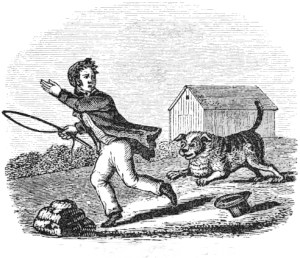
Some religious converts claim they felt hunted or fished for by God. Others liken the God sense to being pursued by a dangerous hound. (Image: public domain)

Continue reading “Outrunning the Hound of Heaven”

The Lonely Thinker’s Path

Nowadays, we strongly emphasize emotion. Our IQs seem to matter little while our EQs loom large. I thought it would be useful to remind ourselves of what it means to be a thinker.

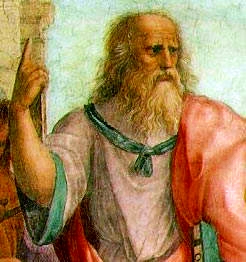
Plato as Imagined by Raphael

With the emphasis now on feelings are we, as a society, losing sight of the value of thinking? (Image: public domain)

The Desire of Knowledge

French philosopher and spiritual writer Antonin Sertillanges writes: “The desire of knowledge defines our intelligence as a vital force … it is the thinker’s special characteristic to be obsessed by the desire for knowledge.”

In other words, for the thinker, the acquisition of knowledge is an emotionally important idea. It is what American psychologist Carl Rogers would call a “subjectively formed guiding principle.” This means acquiring knowledge is one of the primary objects of the thinker’s authentic will. The activity is not an add-on, an external “interest” he has acquired; it is a fundamental part of his self and personality. The behaviour will have been there from early childhood remaining unrecognized until the thinker matures and turns to matters that are more serious and noteworthy.

Continue reading “The Lonely Thinker’s Path”

How to Ensure You Finish Your Writing Project

One of the most common mistakes made by inexperienced creators is putting too much material in one work. No one is immune to this problem. Later in life, Beethoven himself ruefully remarked that his Symphony No. 1 had enough musical ideas crammed into it to make several symphonies. Having too much going on in a project will make it unnecessarily complex, large, and unwieldy. For those who lack experience, this puts them at serious risk of not finishing the work. They have unwittingly bitten off more than they can chew.

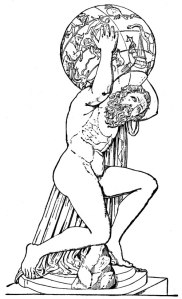
The Roman god Atlas holding up the world

Unless you are the Roman god Atlas, too much material in your work could put you at risk of not finishing it. (Image credit: public domain)

Luckily, there are remedies. Once creators have an idea in mind for a project, they can take steps to keep things at a manageable scale. Here are a few of those steps specifically aimed at writers. The technique essentially generates a simple outline.

Continue reading “How to Ensure You Finish Your Writing Project”

Stephen King’s Work Habits

One of the oldest battles in the arena of writing technique is the debate over outlining versus writing off the cuff. When I read Stephen King’s book, On Writing: A Memoir of the Craft, I learned he had some unusual ideas about how to get the work done. In fact, his work habits are so different from my own that I took the time to write up a little summary of how he went about things. While I carefully keep notes and create outlines, King just heroically plunges right in. For years, I believed that outlining was the most common approach to writing longer works, but wider experience on the web has taught me that a great many people come at writing in somewhat the same way as the famous horror writer. While King has his detractors, his remarkable output and amazing success indicate that his methods warrant some consideration.

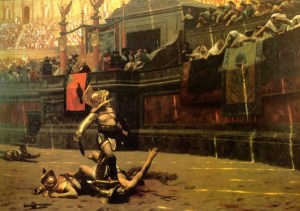
Jean-Leon Gerome's Famous Gladiator Painting (Pollice Verso) of 1872

Outline or extempore? Which writing gladiator do you favour? (Image: Wikimedia)

Continue reading “Stephen King’s Work Habits”

Creative Freedom Is Overrated

Many myths surround the creative process. One of these is the notion of creative freedom. It seems obvious that having a free rein could only be beneficial. So prevalent is the attitude that many contemporary creators will refuse to tackle a project that has restrictions. They turn up their noses and stalk haughtily away proclaiming that they could not possibly compromise their artistic vision and personal integrity by acquiescing to anything as philistine as limitations.

H. G. Wells

Where anything is possible, nothing is interesting. — H. G. Wells (Photo: public domain)

I am going to argue the counter-intuitive idea that restrictions are actually an asset. You may be surprised to learn that many famous creators share the point of view.

H. G. Wells expressed a related sentiment when he said, “Where anything is possible, nothing is interesting.” He was referring to stories, of course. He believed that a hero who could do anything or a situation where anything was possible meant there were no challenges to overcome, no obstacles to surmount, and no dangers to survive. Where is the interest in such a scenario? Who wants to read a story where there are no limits on what a hero can accomplish? Where is the suspense in a story based on the assumption that at any moment some miraculous turn of events will save the day? Only a story where the hero faces the possibility of humiliation, failure, or even death can engage the reader’s concern.

Continue reading “Creative Freedom Is Overrated”

The Troubled Hero Is a Champion of Individuality

The heroes we see in today’s action movies are quite different from the heroes of legend and literature. Film – being short and dealing largely with externals – does not easily allow for deep insights into a character’s inner life. Heroes played by the likes of Arnold Schwarzenegger or Bruce Willis are neither thoughtful nor subtle. They are never inwardly complex. Their heroism is all in the external world and conflicts are always struggles with other people or life-threatening situations. Such tales are certainly entertaining, but they provide nothing to illuminate the more psychological aspects of being human.

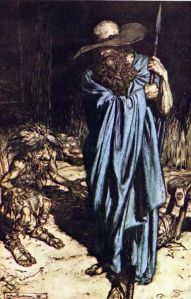
Wotan Visits Mime

Heroes in myth, legend and literature are often profoundly troubled and provide deeper insights than action heroes. (Image: public Domain.)

In myths, legends, and literature heroes serve a greater purpose. Through their heroic struggles, they demonstrate more than just singular physical feats or acts of physical courage. There is an inward component to their heroic adventures. These heroes are often profoundly troubled people. They have inner conflicts that have rendered them social misfits. They may be unusually sensitive, and/or intelligent, and because they are so different from the “well-adjusted” they suffer. Their suffering forces them into seldom-used paths quite far from the collective ones approved by society. They strive for things never attempted by the ordinary person. The battles along the way provide a great opportunity for strengthening personal growth. By trying to ease their pain, they have become extraordinary. They have inadvertently become heroic.

Continue reading “The Troubled Hero Is a Champion of Individuality”

In the Comic Footsteps of Douglas Adams

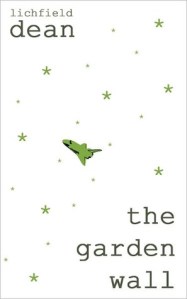
The Garden Wall - cover

A good comic science fiction novel by a university student. Available for free at the time of this writing, and an entertaining read.

The Garden Wall is Lichfield Dean’s first full-length novel. Reminiscent of works by Terry Pratchett or Douglas Adams, the humorous science fiction tale is entertaining enough to be a decent read. A young female university student named simply Eradani is probably the main character. I say “probably” because the book opens with scenes featuring a number of characters and it takes a fair bit of reading before the young woman emerges as the most likely prospect for the job. This approach seems popular with indie writers. One wonders whether this is a deliberate ploy or today’s young authors suffer from a chronic inability to focus. Perhaps the idea is to demonstrate a new kind of “inclusive” storytelling. The influence of film, with its numerous short sequences and shifting viewpoints, may also be a factor here. In any case, the lack of a consistent viewpoint character gives the book a rambling incoherent feel that detracts from what could have been a much stronger tale.

Continue reading “In the Comic Footsteps of Douglas Adams”