Socialism Tramples Unpopular Minorities

A herd of cows symbolizes herd mentality

Who shall we trample next? Socialism allows majority voting blocs to use government as a weapon against minorities. (Image: Public Domain Pictures)

More than ever before, people gleefully identify with and join “the herd.” I believe a lust for power in an age when individuals feel helpless drives this rapacious enthusiasm for joining the “majority.” Socialism is the major contributing factor here. When socialist democracies (and all Western nations are socialist democracies) espouse the idea that any majority has the right to control the property, money, and behaviour of any minority, it inevitably elevates herd thinking and values to the status of duly enacted law. The herd votes to clobber the rich, the one percent, the conservatives, Wall Street, the bankers, or big oil. Even smokers take it on the chin, as does anyone else who has unluckily aroused the herd’s anger or acquired a negative image in the leftist-dominated media. This observable fact makes participation in the herd a way to control others through the government. The aim is to restore, albeit ultimately at one’s own expense, one’s sense of personal empowerment.

Continue reading “Socialism Tramples Unpopular Minorities”

Where Does Will Come From?

Einstein’s recipe for his success – curiosity, obsession, and stubbornness – might also be listed as curiosity, wilfulness, and headstrongness. He was self-willed, possessed a lot of willpower.

Coronation Chair for a King

Will occupies the seat of power in the psyche. But where is that seat? (Image: public domain.)

These days we say will or willpower does not work, pointing to those who fail to diet or quit smoking as proof. The trouble here is that the decision to diet or quit smoking is just that – a conscious decision – and not an act of will. What these folks will is to go on eating and smoking, so in truth, their “failures” are actually proof that willpower does work. To change something about oneself, or to accomplish some difficult thing, one must will that it be so – not decide – will.

Continue reading “Where Does Will Come From?”

How Artists and Scientists Explain the World

The Cosmos We Seek to Explain

Artists and scientists explain the world in very different ways. Surprisingly, scientists are abstract while artists are concrete. (Image: public domain.)

A crucial aspect of all creative work is the attempt to garner, and then communicate, insights into our lives and the world in which we live. The shallower forms of popular psychology seem to have influenced many creativity researchers and authors who write books about the creative process. One commonly meets the claim that the creative process is identical in both artists and scientists. In fact, to wander just a bit, some writers go so far as to say everyone probably has the same capacity for creativity. It just manifests in different ways depending on where the individual’s interests lie or what his life situation is. These notions may sell books by making the average person feel they are as creative as anyone else is, but they do nothing to explain the obvious reality that some folks stand far above the rest when it comes to creative ability.

Continue reading “How Artists and Scientists Explain the World”

Ebook Pricing Strategies for Indie Authors

Please note that material such as this is time sensitive and may vary somewhat from one genre to another. I offer what is here as a framework for your own research and thinking. Do your homework.

State of Confusion with capital buildings and overlaid by "state of confusion."

Confusion abounds when deciding the best price for ebooks. (Image: public domain.)

Many fairy tales surround pricing for indie ebooks. Looking over the first four pages of the Smashwords bestseller list for full length science fiction, I see only one title for sale at the often-recommended price of $1.99 – everything else is higher, most of it much higher. I have been studying the price issue for months and have concluded the following:

Continue reading “Ebook Pricing Strategies for Indie Authors”

Second-Hand Worldview

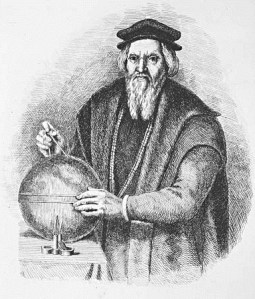
Explorer Sebastian Cabot with Globe

Most folks just buy into the consensus worldview of their time unquestioningly adopting it as they grow to maturity, but this means we have a second-hand worldview made by others. (Image: public domain.)

Human beings have an inborn need to make sense of their lives and the world around them. The drive is stronger in some (such as artists and philosophers) than in others, but generally, we all want to know what things signify. Knowing the meaning of something means knowing how things fit together. To make sense of our lives, to give them meaning, it is essential that we possess a comprehensive, consistent, unified worldview.

Worldview is defined (by COED) as “a particular philosophy of life or conception of the world.” At first glance, this suggests an objective view of things, something you could study in a book and learn, either by rote, or by understanding. Ideologues do just that, adopting viewpoints like the cultural Marxism currently so popular with the left. Religious people do the same, converting to one sect or another’s standard declared creed. Most folks just buy into the consensus worldview of their time unquestioningly adopting it as they grow to maturity.

Continue reading “Second-Hand Worldview”

Writing Gives Thoughts Value

A few useful thoughts and inspiring insights on creativity and the writing process.

 An Illustrated Version of William Blake's Poem, The Tyger

Do your thoughts have any value if you keep them to yourself? (Image: public domain.)

Writing Begins Things

Writing is about making beginnings. It is about bringing something into existence that did not exist before. All true art works in this way.

Finding a Way In

The hardest part of any task is getting started, finding a way in. This can be especially true with writing where one must establish so much early on.

Plan Writing Ahead

It is easier to get out of bed in the morning if one has a clear and precise knowledge of the work one will be doing that day. I think it a wise thing to plan the next day’s work the evening before.

Continue reading “Writing Gives Thoughts Value”

Living the Creative Life

Creative people view life a little differently than does the average person. They manifest a much greater degree of commitment to their work. A notable result of this dedication is their highly selective attitude towards what they will and will not do with their time. Much more than the typical individual, they recognize that time is a limited resource and must not be squandered if something is to be accomplished.

Thomas Edison in His Lab

We have all heard the stories of how the creative Thomas Edison practically lived at his lab. (Photo: Wikimedia)

Creative individuals do not waste energy on unsolvable problems. They do not indulge in what Virginia Woolf so aptly referred to as “woolly thinking.” To achieve this efficiency, they develop the skill to recognize what is feasible and what is not. Going back another step, they are able to acquire the ability to assess feasibility because they immerse themselves completely in their work (commitment again) and learn its parameters and boundaries with unusual thoroughness. When they decide to tackle a project, they know it is workable in the long run.

Continue reading “Living the Creative Life”

Are Culture Wars a Symptom of Western Decline?

Victory Arch of Emperor Constantine

The victory arch of Roman emperor Constantine. The arch once symbolized spectacular victory — there are many examples in European cities — but its shape does suggest a process of rise and inevitable fall. (Image: public domain.)

When I was a young man, a popular topic for intellectuals was the decline of the West. As liberal ideas spread and moral standards declined, many writers drew parallels with the Roman Empire in its last days. German historian and philosopher Oswald Spengler had popularized the notion in the 1920s. By the late 20th century, with the complete triumph of the left, the idea had fallen from favour.

As Winston Churchill said, “history is written by the victors.” Today, we see the left rewriting Western history and those who cause a decline seldom see reason to find fault with their role in it. As it happens, the left does not see a decline at all, only an incomplete change to leftist outlooks, values, and policies.

Continue reading “Are Culture Wars a Symptom of Western Decline?”

How Do We Acquire a Calling?

A calling is a strong inner urge to become religious, or take up some specific way of life, vocation, or activity. I cannot speak for today’s churches, but the ancient concept prospers in the arts. Many writers, poets, composers, and painters will happily describe how they were “called” to their particular art form.

Romantic image of a ruined castle on a rugged coast.

The romantic landscape may summon the feeling. Call it joy, delight, enchantment, or bliss, we all spend more time chasing it than we realize. These special feelings point the way to our spiritual or vocational calling.

How does one acquire a calling? The old myth of the soul choosing its life before it is born presents us with an entertaining idea, but one that is, when one stops to think about it, not very enlightening. In the end, such easy mystical explanations leave one feeling unsatisfied. By hiding more than they reveal, they do not assuage the hunger to know and understand. Let us leave aside such colourful fancies and look for a more substantial way of coming to grips with our question.

Continue reading “How Do We Acquire a Calling?”

Are You Living Wilfully?

In this post, I want to take a brief look at one of the oldest philosophical questions: Do we humans enjoy free will or are we subject to what the ancients referred to as Fate? The West has long believed that free will prevails. Although confusion is growing – as this post will reveal – by and large both Western philosophical thought and the Christian religion have upheld the notion of humankind’s inherent right to self-determination. The philosophers do not believe in any limiting supernatural forces and, in the case of the religious, God can only judge.

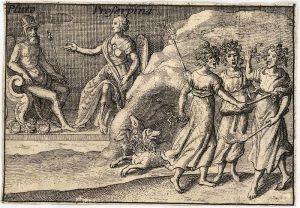
Hades, Persephone, and Cerberus with The Fates

In the ongoing explosion of irrationality, some modern thinkers are trying to deny the power of human wilfulness and restore the old notion of Fate. The ancient Greeks personified the belief as three goddesses called The Three Fates. (Image: public domain.)

Continue reading “Are You Living Wilfully?”