Potent Personal Images Drive Creativity

Creativity research has revealed that creative individuals often try to recapture a nuanced feeling tone or subtle mood that has captivated them when they were children. It has also shown that creators repeatedly make use of something called an “image of wide scope.” Like the treasured mood, the creator acquires their image of wide scope when they are young, typically before the age of eighteen. The desire to recapture a specific mood and the urge to create something incorporating the image of wide scope are driving forces propelling the creator down particular paths. Mood and image can meld and their role in the creative process is complex.

Devils Tower Is a Potent Image

Like the fellow in Close Encounters of the Third Kind, creative people struggle to express a significant “image of wide scope.”  (Image: public domain.)
Continue reading “Potent Personal Images Drive Creativity”

Writers Are Often Early Birds or Night Owls

At what time of the day do you prefer to write? Do you have a choice as to when you do your writing or are you limited by a day job and other important responsibilities? Constraints can be a problem since writers often have unusually strong preferences for when they like to get the work done. In fact, it may go beyond being just a preference. There is good evidence from creativity research that people function best at certain times of the day, and what time that is varies on an individual basis.

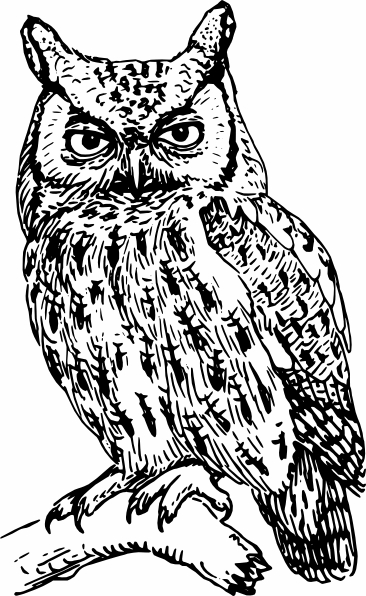
Owls are the quintessential image for the night person

Writers can use hours of the day when little is happening. The need for a more certain income may leave them no choice. (Image: public domain.)

As for preference, there are two main camps: the morning crowd and the late evening / nighttime set. There are even philosophical and psychological arguments supporting the two strategies.

Continue reading “Writers Are Often Early Birds or Night Owls”

Being Creative with Associative Thinking

The Unconscious Observes and Comments

In earlier posts, I have written about synergistic thinking, the deliberate combining of logical (linear) and associative (non-linear) thinking. Logic is a product of the conscious mind and as such it is a thinking tool we all, with varying degrees of skill, deliberately employ. Associative thinking is how the unconscious works and can be both hard to understand and elusive in its actual – often powerful – workings. As a result, in the last few decades, a great deal of confusing superstition has gathered around the unconscious. Here is a gem from page 39 of Susan Shaughnessy’s excellent book about writing, Walking on Alligators: “The only thing we know for sure about the unconscious is that it isn’t like us. It is different from the conscious mind. It looks through our eyes, but it sees differently. It uses other rules to organize what it sees. And then it passes along its conclusions in a tantalizingly inexplicit way.”

Side View of the Brain

The unconscious mind produces an associative running commentary on our thoughts and surroundings. (Image: public domain.)

Continue reading “Being Creative with Associative Thinking”

Androgynous Minds Generate Synergistic Thinking

I have written elsewhere that the most creative among us possess the power to combine linear conceptual thinking with non-linear associative thinking. This ability to unite the two thinking modes works the creative magic that sets these people apart. A person who heavily favours one mode of thought over the other will inevitably lack outstanding creative powers.

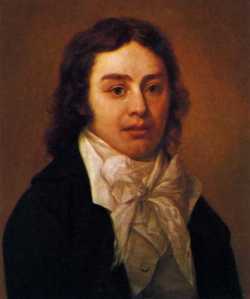
Samuel Taylor Coleridge

Samuel Taylor Coleridge claimed that a “great mind must be androgynous.” (Image: Wikimedia)

Just such a situation exists in the minds of ordinary men and women. It is unfashionable to say so, but the fact remains that, overall, men favour a preponderance of abstract, conceptual, linear thinking while women prefer a greater reliance on associative non-linear thinking, source of the old-fashioned, and misnamed, “women’s intuition.” Therefore, being normally one-sided, most of us are limited in our creative reach.

Continue reading “Androgynous Minds Generate Synergistic Thinking”

Using Mood to Enhance Your Creativity

Scientists studying human cognition have found that memory and mood are inextricably intertwined. Even more interesting is that we can take advantage of this situation by using a simple technique known as nuance priming.

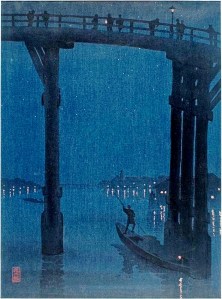
Moody Night Scene on the River

We can deliberately use mood to enhance our ability to notice relevant information within ourselves and in the world around us. (Image: Vintage Printable)

Nuance priming is also a creativity research term. It means recalling or getting into a particular mood in order to exploit the brain’s habit of using feeling tones to sort and store information in related clusters called emotional cognitive structures. This is a fancy way of saying that the brain files ideas and memories in groups according to their feeling tone. Recall feeling tone X and we will get access to other things stored with the same, or similar, mood. This is a kind of deliberate associative (as opposed to logical) thinking. However, we are not actually doing the associative thinking. We are setting up a scenario to make use of the brain’s natural associative way of doing things.

Continue reading “Using Mood to Enhance Your Creativity”

Synergistic Thinking

Creative thinking requires the skilful blending of linear and non-linear thinking. In more commonly used language, this means we must combine logical thinking with associative thinking. Before we go on, let us be clear that associative thinking is not the same as intuition. Associative thinking brings related ideas and events together in imagination or memory in ways that are not necessarily logical. Association may link a red barn with a red car (because they are both red) even though there is no logical reason to connect them. The associative connection may not be rigorously logical, but it is definite and understandable. Intuition is more emotional, more vague, a mere feeling or inarticulate hunch.

3D image of black and white swirls.

Synergistic thinking makes a synthesis of linear and non-linear thinking. In other words, it blends logic and association.  (Image: public domain)

Continue reading “Synergistic Thinking”

How Creative People Think

Highly creative people are different from the average person. It is not that the typical man or woman on the street is not creative. It is just that the quality creator functions at a greater level of sophistication and (often) output.

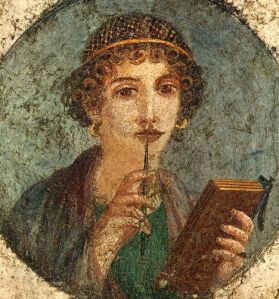
Thoughtful Young Woman of Pompei

Creative people are both more flexible and more selective in the way they think. (Image: public domain.)

Three factors make these creators stand out.

First, such people possess the ability to think profitably by a variety of means. That is, they have at their disposal a range of thinking techniques. There is a characteristic flexibility to their thinking not usually seen in ordinary life. In most cases, they did not consciously acquire this powerful set of thought tools. They picked them up unknowingly as they pursued one interest or another. Often they have explored a series of interests. The primary thinking tools are contradictions, comparisons, images, and metaphors.

Continue reading “How Creative People Think”

Remembering a Falling Leaf

I have kept a diary on and off for over twenty years. The other day, while glancing through some pages, I came across an unusual entry from November 16, 1997. At that time, Carl Jung’s ideas about the unconscious mind had taken over as my primary interest. His notions of archetypes, the anima / animus, and the collective unconscious intrigued me. I had begun to notice the little clues the unconscious always leaves for those who are paying attention.

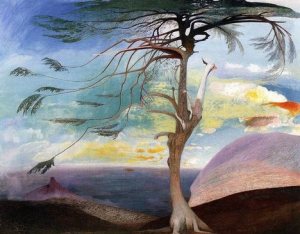
Tree by Varadi Zsolt

On a still autumn evening I could hear withered leaves slithering to the ground. My unconscious mind began making associations…
(Image: public domain.)

Some Christians believe that to be close to the unconscious is to be close to God. I am not religious, but I do understand why they might feel that way. In 1997, I was living in the country on a heavily wooded five-acre hillside lot. Young cottonwood trees surrounded the house. Placid deer grazed clover at my back door. Elusive cougars, following the deer herd, left huge paw prints on the driveway’s soft sandy edges. In that wilderness setting, one remarkably calm autumn evening in November, I experienced a particularly charming example of unconscious magic.

Continue reading “Remembering a Falling Leaf”

The Nature of Genius

What is genius? There is no such thing in the usual usage of the word. Genius is a title we confer on those who do remarkable things in their field. It is like being knighted, made a Commander of the British Empire, or winning a lifetime achievement award. In a way similar to such honours, which persons are awarded the status of genius is largely a matter of circumstance.

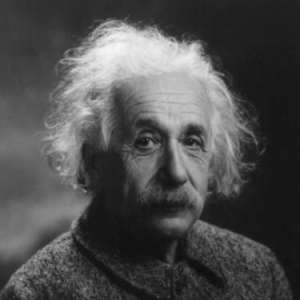
Albert Einstein

Genius combines reason with imagination, a unity most easily seen in the visual arts, but also there in the ground-breaking work of scientists such as Albert Einstein. (Image: public domain.)

What we ultimately label as genius is the product of a highly evolved mind. We are not born with such minds. We acquire them through long effort. To become a genius one must pursue some line of enquiry, or some art, long enough and thoroughly enough to acquire a high degree of sophisticated knowledge. In turn, that accumulating knowledge generates increasingly powerful thinking about the enquiry or art. Creativity research has shown that the mind is self-organizing. The process of becoming skilled enough to earn the title “genius” happens without our conscious awareness.

Continue reading “The Nature of Genius”